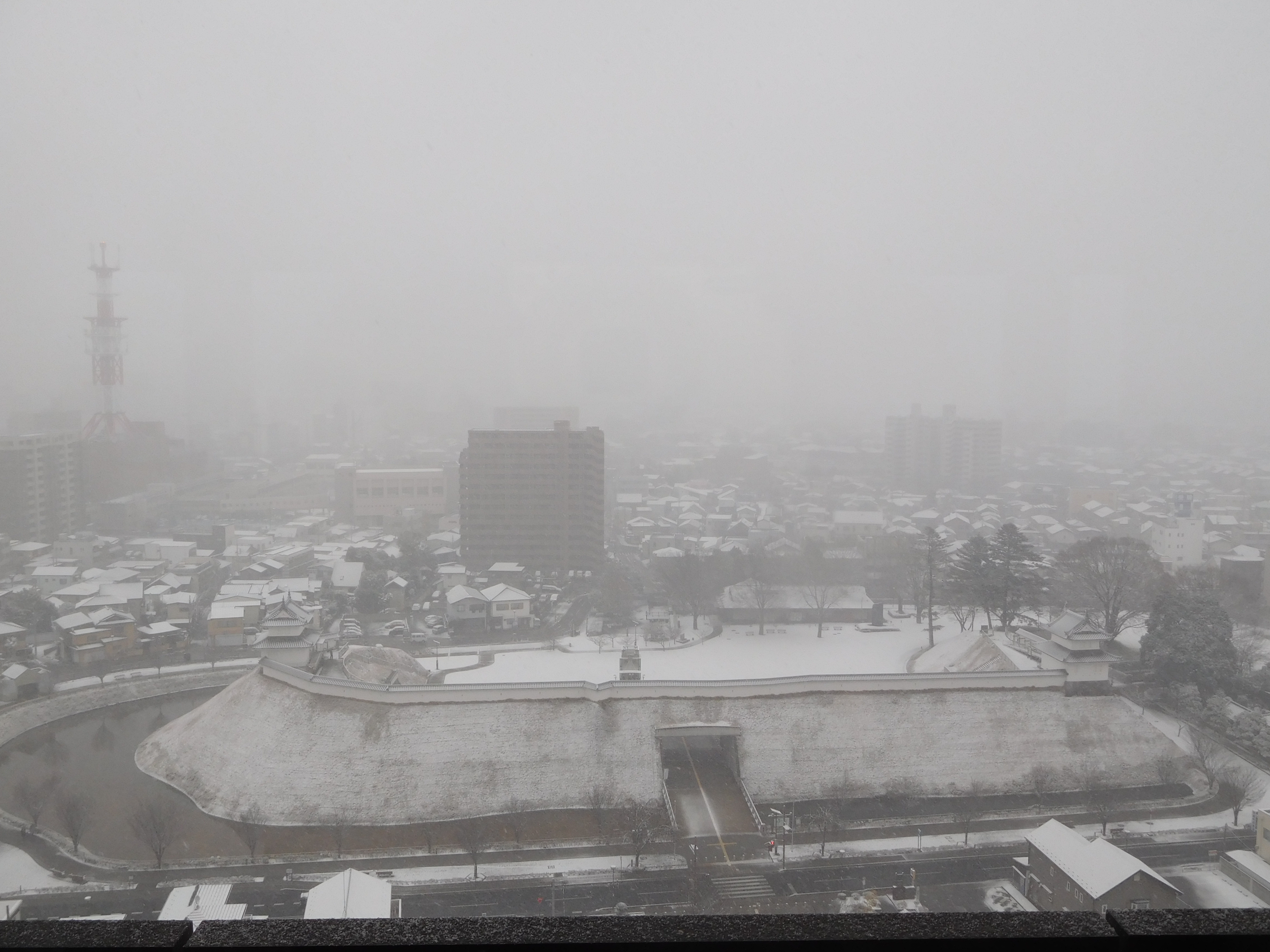
Utsunomiya Castle
In 1622, a lord named Honda Masazumi stood accused of hiding a trap in his own castle -- a ceiling rigged to collapse on the visiting shogun. The charges were fabricated by political rivals, but the punishment was real: exile to the frozen north of Dewa Province. The story grew so infamous that a 1956 horror film immortalized it as The Ceiling at Utsunomiya. But the castle at the center of this intrigue had already weathered centuries of conflict by then, perched on its low hill in central Tochigi Prefecture where two of old Japan's most important highways crossed.
Where the Roads Converge
Utsunomiya Castle was first raised around 1063, during the Heian period, on a modest hill just south of the Futarayama Shrine -- the most important Shinto shrine in all of Shimotsuke Province. The site was no accident. Two great highways met here: the Oshu Kaido running north toward the frontier, and the Nikko Kaido leading to the sacred mountains. Whoever held this junction controlled travel across the Kanto Plain. The builder was Fujiwara Soen, a warrior who had distinguished himself in the Former Nine Years War, and his descendants -- the Utsunomiya clan -- would rule from this hilltop for the next five centuries.
The Seven Great Castles
During the Sengoku period, the age of warring states, Utsunomiya Castle grew into something formidable. Concentric moats ringed an area more than four kilometers across, backed by towering earthen ramparts. It became known as one of the seven great castles of the Kanto region, and the Utsunomiya clan successfully repelled repeated assaults by the powerful Odawara Hojo clan. But political maneuvering succeeded where siege warfare had failed. In 1597, Toyotomi Hideyoshi stripped the Utsunomiya of their ancestral holdings. The castle passed to the Gamo clan and then, under the Tokugawa shogunate, became the seat of Utsunomiya Domain, ruled by a rotating series of appointed daimyo beginning with the Okudaira in 1601.
A Ceiling, a Shogun, and a Scandal
Honda Masazumi arrived as lord in 1619 and poured resources into rebuilding the castle. When Shogun Tokugawa Hidetada passed through on his pilgrimage to the Nikko Tosho-gu, Masazumi hosted him in a lavish new palace. But in 1622, political enemies accused Masazumi of planting a collapsible ceiling in the guest chamber -- an assassination device straight from a spy novel. The charges were baseless, but Masazumi was stripped of his domain and exiled. The guest palace itself would burn to the ground in 1683, leaving behind only the story -- one so theatrically sinister that director Nobuo Nakagawa turned it into a film three centuries later.
The Last Battle
When Japan tore itself apart in the Boshin War of 1868, Utsunomiya Domain declared for the Emperor. Pro-Tokugawa forces led by Otori Keisuke and the legendary former Shinsengumi commander Hijikata Toshizo stormed the castle in a fierce assault. Most of the remaining structures were destroyed in the fighting. But the pro-shogunal army, too small to hold what they had taken, abandoned the smoldering ruins and retreated northward. It was the castle's final battle after eight centuries of conflict.
Ramparts Reborn
After the Meiji government took power, the site served as a garrison for the Imperial Japanese Army until 1890, when it was released to private ownership and its central bailey became a public park. For over a century, Utsunomiya Castle existed mostly in memory -- walls eroded, moats silted over, structures gone. Then in 2007, a major reconstruction restored a large section of stone walls, moats, and two yagura watchtowers on the original central bailey. Today the rebuilt fortifications stand at the heart of modern Utsunomiya, a quiet green island amid the city, offering a tangible connection to the warriors and schemers who once paced these ramparts.
From the Air
Located at 36.554N, 139.886E in central Utsunomiya, Tochigi Prefecture. The castle site sits as a green park area amid urban development. Nearest airport: Utsunomiya Air Field (RJTU), a JGSDF military aerodrome approximately 10 km to the north. Narita International Airport (RJAA) is roughly 120 km to the south. From altitude, look for the park area with reconstructed walls and moats just south of the prominent Futarayama Shrine hilltop in the city center. Best viewed at 3,000-5,000 ft AGL for context within the urban grid.