Uzbin Valley Ambush
The patrol was supposed to be routine. On August 18, 2008, roughly 100 ISAF troops -- mostly French paratroopers of the 8th Marine Infantry Parachute Regiment, accompanied by Afghan National Army soldiers and a U.S. Special Forces team -- left Forward Operating Base Tora in Afghanistan's Surobi District to assess militant activity in the Uzbin Valley. The region had been considered relatively quiet. The Italians who preceded the French had managed it as a stabilization zone for two years. What the French column encountered ten kilometers from base, at 1,750 meters altitude on a mountain pass, would become France's deadliest day in combat since 58 soldiers died in the Beirut barracks bombing of 1983.
An Inherited Calm
The Surobi District had been under Italian ISAF control from 2006 to 2008. Italian troops had treated their mandate as a stabilization mission, undertaking development projects and largely avoiding armed operations in the more remote areas where militants loyal to Gulbuddin Hekmatyar were known to operate. The district was considered a success story. In August 2008, French forces took over as part of President Nicolas Sarkozy's pledge to deepen France's commitment to the Afghan war. Later reporting by The Times alleged that the region's calm had been purchased through Italian intelligence bribes to local Taliban groups -- a claim Italy denied as "totally baseless" and which the French military also rejected. Whatever the truth, the threat assessment the French inherited was optimistic. General Michel Stollsteiner, the Allied commander in the Kabul region, would later acknowledge an "excess of confidence" in deeming the zone largely secured.
Fifty Meters from the Summit
The column, designated Carmin 2, advanced up the valley until the road ended, forcing the paratroopers to dismount and continue on foot along a narrow path toward a pass east of the valley. Under Adjutant Gaetan Evrard, twenty-four men pushed uphill while four VAB armored vehicles and their crews held a support position below. At approximately 3:30 in the afternoon, with the lead element just fifty meters from the peak, around fifty militants opened fire with Dragunov sniper rifles, AK-47s, and RPG-7s. The squad's deputy leader, the radio operator, and the Afghan interpreter were killed almost immediately. Corporal Rodolphe Penon, a medic from the 2nd Foreign Parachute Regiment, was shot in the leg while treating the wounded; a second bullet killed him as a fellow soldier tried to reach him. The survivors of Carmin 2 crawled back toward the village below, sometimes passing within meters of Taliban fighters.
A Day of Reckoning
By nightfall, ten French soldiers were dead -- eight killed by bullets or shrapnel, one by a bladed weapon, and one in a vehicle accident rushing to join the fight. Twenty-one French and two to four Afghan soldiers were wounded. The Afghan interpreter who had accompanied Carmin 2 was found dead, his body reportedly mutilated. A leaked NATO report, initially denied by both NATO and the French government before being acknowledged as a "field report" written by the embedded U.S. team leader, painted a grim picture: the patrol had run low on ammunition ninety minutes into the fight, possessed only a single radio, and lacked adequate preparation. Afghan forces, the report stated, had abandoned their weapons and fled. French officers both in-country and at home criticized the shortage of ammunition, radios, and mortars, and the failure to provide air reconnaissance or helicopter reinforcements.
Trophies and Recriminations
The aftermath was as contested as the battle itself. Paris Match photographer Veronique de Viguerie and reporter Eric de la Varenne tracked down Taliban fighters who claimed to have participated in the ambush. Two were photographed wearing French flak jackets, helmets, and FAMAS rifles in Camouflage Central-Europe patterns. Their leader, Faruki, warned that the French had crossed a red line. The photographs, published on September 4, provoked outrage in France -- from grieving families, from the government, and from commentators who accused Paris Match of serving as a propaganda vehicle. President Sarkozy flew to Kabul two days after the ambush, reaffirming France's commitment to the war. The ten fallen soldiers were posthumously named knights of the Legion d'honneur. But public opinion had shifted: a CSA poll found 55 percent of the French public now favored withdrawing troops from Afghanistan.
The Valley Endures
Sixteen months after the ambush, French forces returned to the Uzbin Valley in Operation Septentrion, planting an Afghan flag in a key village -- the furthest north coalition troops had ventured in the valley. A French spokesperson declared the operation was meant to show insurgents "that we can go where we want when we want." But in August 2010, another French soldier was killed in the same valley. The Uzbin remained what it had been for years: a narrow, steep-sided corridor where 30,000 people lived under the shadow of competing powers. For the families of the ten soldiers and their interpreter, the valley became something more personal -- a place where confidence outran preparation, where a routine patrol became a catastrophe, and where the cost of a distant war was paid in full.
From the Air
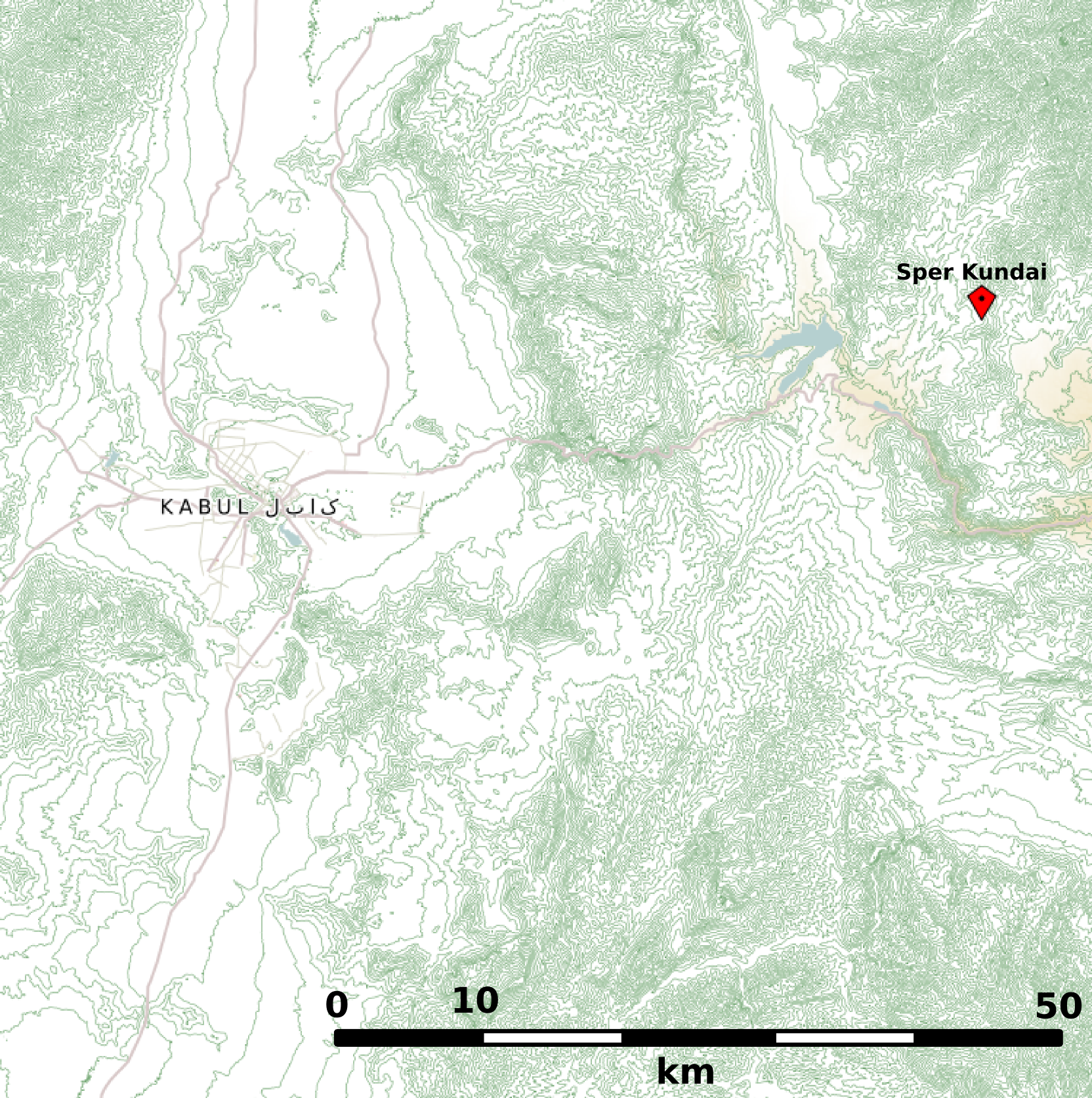
Located at 34.66N, 69.85E in the Uzbin Valley, Surobi District, Kabul Province. The narrow valley runs through steep mountainous terrain east of Kabul. FOB Tora in Surobi is approximately 10 km to the southwest. Bagram Air Base (OABG) lies to the northwest. The ambush site is on a mountain pass at approximately 1,750 meters altitude. The terrain is rugged with limited road access -- the road ends partway up the valley, giving way to footpaths.