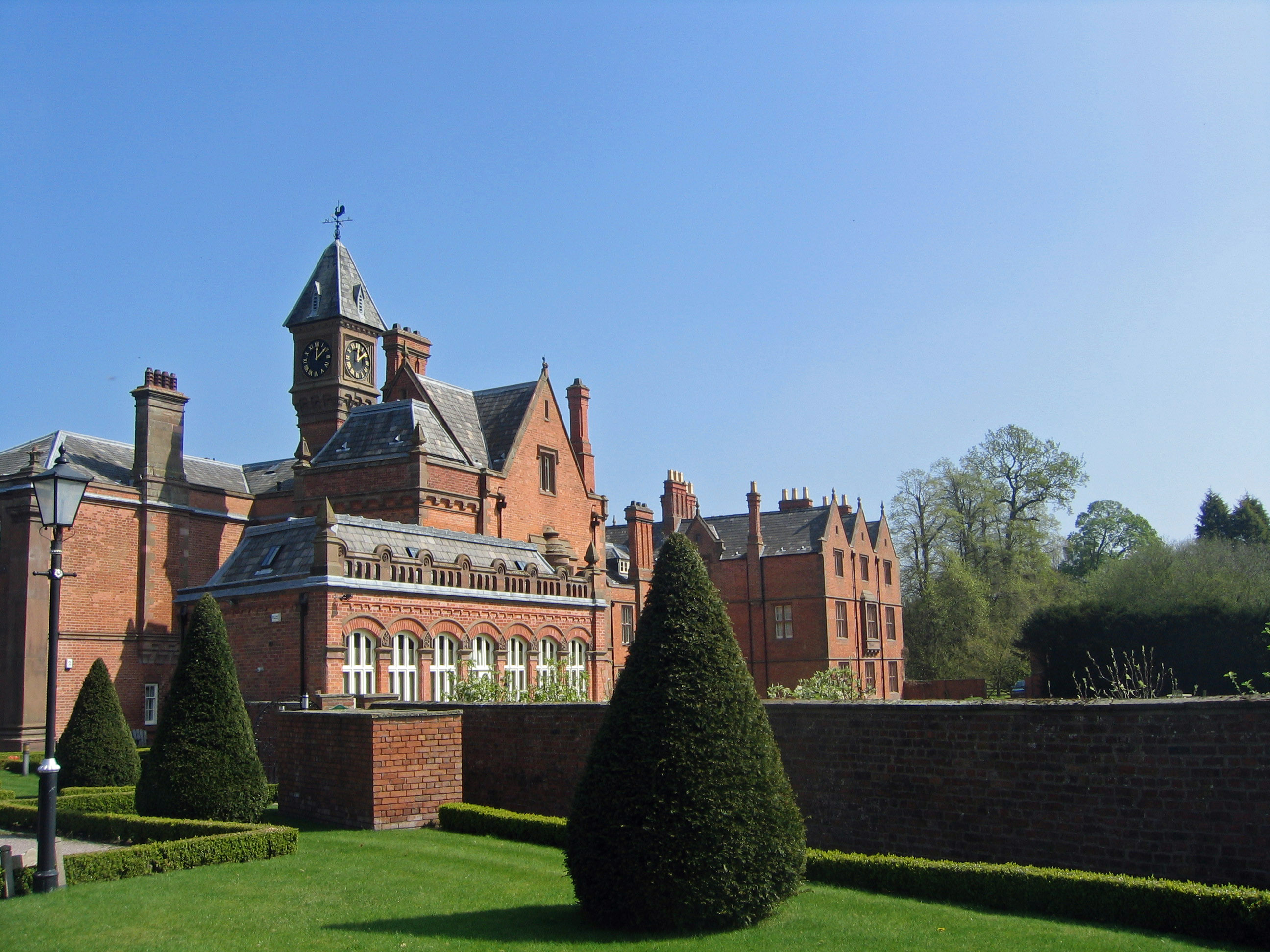
Vale Royal Abbey
The story of Vale Royal Abbey begins with a terrified prince on a storm-tossed ship. Sometime in the early 1260s, the future Edward I was crossing the English Channel when violent weather threatened to send him to the bottom. Gripping the rail, he made a vow to the Virgin Mary: save him, and he would found an abbey in her name. The sea calmed. Edward survived. And for the next several decades, he struggled to keep his promise, battling wars, empty treasuries, and rebellious tenants to build what he intended as the grandest Cistercian monastery in England. It never came close.
A King's Ambition, A Kingdom's Reality
Edward initially founded the abbey at Darnhall in Cheshire, but the site proved unsatisfactory and construction moved a few miles north into the Delamere Forest. His vision was immense: Vale Royal would surpass even his grandfather King John's abbey at Beaulieu in scale and splendour, a monument to royal piety and Plantagenet power. Construction began in earnest after Edward inherited the throne in 1272. But ambitions collide with reality, and Edward's collided violently. War with Wales erupted in 1282, and the king diverted Vale Royal's money, masons, and skilled builders to construct military castles like Harlech. When work resumed in the late thirteenth century, the building was significantly smaller than planned. The marble columns intended for the monks' cloister never arrived. The grandest Cistercian church in England became, instead, a monument to good intentions undone by geopolitics.
Murder in the Cloister
Vale Royal's troubles went well beyond architecture. The abbey depended on income from its tenants, and from its founding, the monks aggressively tightened legal definitions of servile status to extract maximum labour and dues from the surrounding population. The tenants resisted with equal determination. Violent clashes broke out repeatedly, escalating into a crisis in 1336 when the abbot was killed during one such confrontation. This was not a simple robbery or random act; it reflected a deep, structural hostility between a monastic institution asserting feudal rights and a population that refused to accept them. The conflict continued to simmer for decades, foreshadowing the wider social upheavals of the Peasants' Revolt in 1381, during which Vale Royal's tenants again rose up, temporarily winning concessions before the abbey reasserted control.
Dissolution and Reinvention
Henry VIII's Dissolution of the Monasteries reached Vale Royal in 1538, when it was among the last Cistercian houses to surrender. The Crown granted the site to Sir Thomas Holcroft, who demolished the church and conventual buildings and converted the remaining structures into a country house. Over the following centuries, the property passed through several families, each adapting it further. The house became the seat of the Cholmondeley family and later served as a centre for country life in Cheshire. By the nineteenth century, little of the medieval abbey remained visible, its grand nave and choir buried beneath lawns and later construction. Archaeological excavations in 1958 revealed the outlines of the original church in heavily wooded ground that bore an uncanny resemblance to its medieval appearance.
The Ghost of Grandeur
What remains at Vale Royal today is primarily the country house that absorbed the abbey's bones, set in the Cheshire landscape of the Delamere Forest. The precise boundaries and layout of the original monastery are difficult to trace in the modern terrain. Had Edward I's full plans been realised, Vale Royal would have been the largest Cistercian church in England, a statement of royal devotion and dynastic ambition. Instead, it stands as a reminder that medieval building projects were at the mercy of forces their founders could not control: war, weather, money, and the stubborn resistance of ordinary people who refused to pay for someone else's piety. The prince's vow was kept, technically. But the sea had exacted a different kind of payment.
From the Air
Located at 53.225N, 2.543W in Whitegate, Cheshire, within the Delamere Forest area. Nearest airports: Liverpool John Lennon (EGGP, 20nm northwest), Manchester (EGCC, 25nm east), Hawarden (EGNR, 15nm west). The country house and grounds are set in wooded terrain. Best viewed at 2,000-3,000ft AGL.