Valencia
Valencia reinvented itself. This Mediterranean metropolis of 800,000 transformed a dry riverbed into an urban park, then built the City of Arts and Sciences and suddenly appeared on global maps. Paella was born here. Las Fallas still lights the March sky with fire and gunpowder. The cathedral claims to hold the Holy Grail. Along the coast, beaches stretch toward the horizon, while the old town preserves Gothic architecture just blocks from Santiago Calatrava's futuristic structures. Past and future exist in productive tension here, and Valencia is what happens when a city decides to stop being overlooked.
City of Arts and Sciences
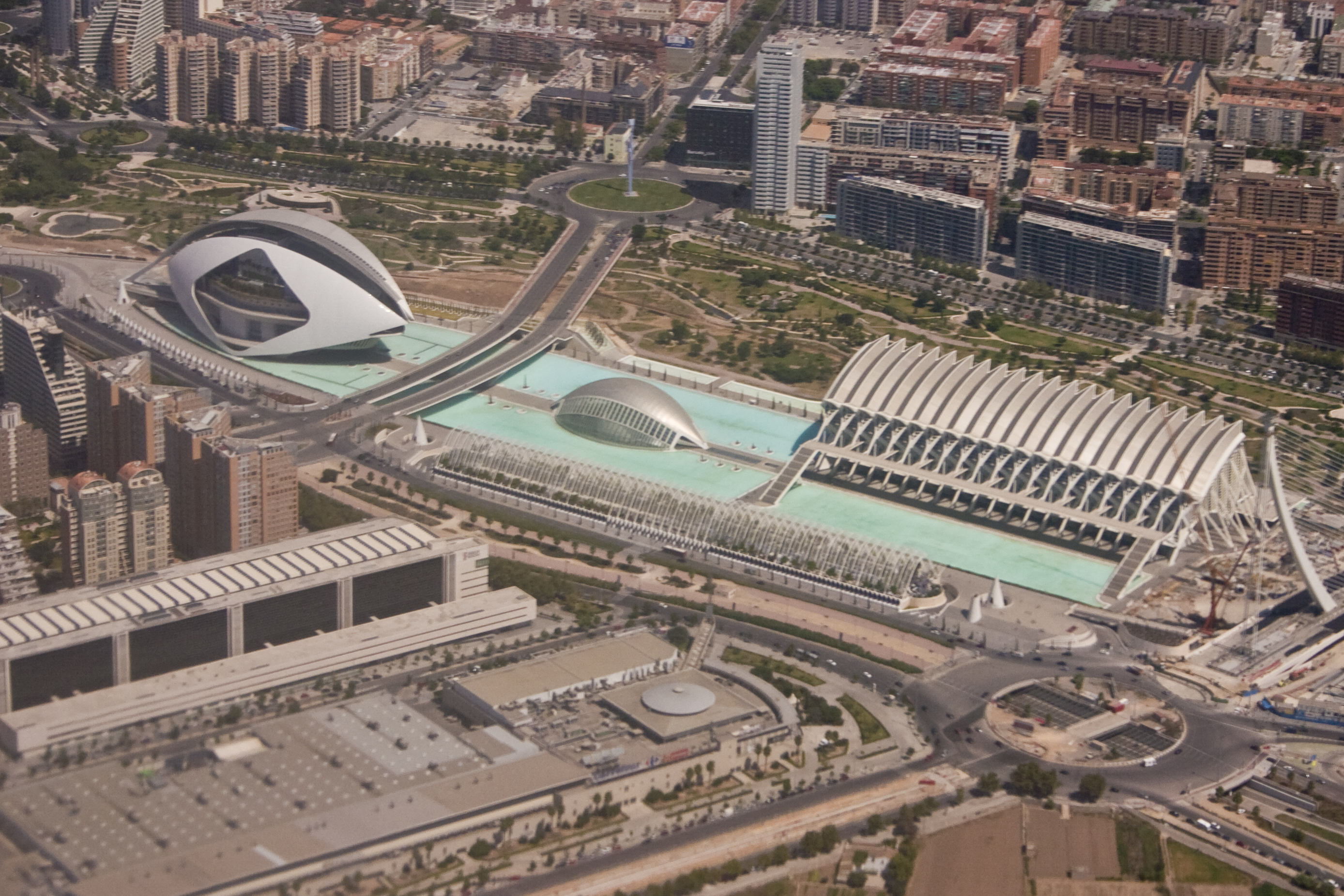
In the dry bed of the Turia River, Santiago Calatrava designed Valencia's statement to the world. The City of Arts and Sciences sprawls across a complex of museums, theaters, and an aquarium, its white concrete forms suggesting bones or shells or sails. Reflecting pools double their impact. At night, lighting transforms the entire ensemble into something otherworldly.
The complex houses the Oceanografic, Europe's largest aquarium, alongside the Hemisferic IMAX theater, a science museum, and the Palau de les Arts opera house. Valencia committed heavily to this investment, and the tourism it attracts has justified the gamble. This is what urban reinvention looks like when a city goes all in.
The Turia Gardens
Nine kilometers of green corridor run through Valencia where a river once flowed. After catastrophic flooding in 1957 convinced the city to divert the Turia, someone had the boldness to reimagine the empty riverbed as public space. Playgrounds, sports facilities, and paths now connect neighborhoods along what became Valencia's green spine. Flood risk became gathering place.
Walk or cycle the length of the gardens and you trace a path from the old city to the City of Arts and Sciences, following the course water once took. What can cities do with abandoned infrastructure? Valencia built one of Europe's finest urban parks as its answer.
The Paella
Paella was invented here, and Valencians will tell you the world has adopted it poorly. Forget the seafood version tourists expect. Original Valencian paella contains rabbit, snails, beans, and rosemary - a dish of the countryside rather than the coast. Seafood paella is valid, restaurants serve it freely, but purists insist on the distinction.
Near the Albufera lagoon where the rice grows, restaurants cook paella over orange wood as tradition requires. The dish is ritual as much as meal. Valencians take their paella seriously and dismiss what other cities serve with cheerful contempt. Food nationalism, it turns out, finds vivid expression in rice.
Las Fallas
Every March, neighborhoods across Valencia spend months building elaborate sculptures only to burn them on the final night. This is Las Fallas, the festival of fire. Giant fallas satirize politicians and celebrities, demonstrating extraordinary craftsmanship destined for the flames. Streets fill with visitors who come specifically to watch destruction, and Valencians would not have it any other way.
The tradition stretches back to the 18th century and now holds UNESCO Intangible Heritage status. During the day, mascletas assault the ears with percussive fireworks. Then comes the crema, when flames consume a year's creative work in a single evening. Las Fallas defines Valencia's identity - controlled chaos celebrating creativity through destruction.
The Old Town
Before the reinvention came history. Valencia's old town holds what the City of Arts and Sciences cannot offer: a Gothic cathedral where the Holy Grail may rest, a Silk Exchange whose soaring Gothic hall earned UNESCO status, a ceramics museum housed inside a Baroque palace. Locals shop at the markets. Tapas culture thrives in narrow-street bars. The plazas breathe with centuries of layered life.
Old town and futuristic new exist in deliberate relationship. The past grounds the present; the present refuses to abandon the past. Valencia carries both identities at once, a city that reinvented itself without destroying what made reinvention worth building upon.
From the Air
Valencia (39.47N, 0.38W) lies on Spain's Mediterranean coast at the mouth of the Turia River. Valencia Airport (LEVC/VLC) sits 8km west, with one runway 12/30 measuring 3,215m. From the air, both the old town and the City of Arts and Sciences stand out clearly. South of the city, the Albufera lagoon spreads across the coastal plain. The Turia Gardens form a green corridor cutting through the urban grid, and the port dominates the eastern shoreline. Expect Mediterranean weather: hot dry summers and mild wet winters. Sea breezes moderate summer temperatures, though autumn can bring heavy rainfall.