Valletta
Valletta began as a fortress and became a monument to peace. After surviving the Great Siege of 1565, the Knights of St. John raised a fortified capital on a barren rocky peninsula. Within years, the most advanced fortifications in Europe crowned those cliffs, and Baroque architecture rivaling Rome's filled the streets between them. Just 6,000 residents live in this capital smaller than many neighborhoods. The entire city holds UNESCO World Heritage status - deservedly, since every street is lined with buildings worthy of it. No enemy army ever returned to test Valletta's defenses. Instead, visitors now walk its honey-colored limestone corridors, discovering a concentration of European history compressed into a few walkable blocks.
The Knights
Founded in Jerusalem during the Crusades, the Knights of St. John were warrior monks sworn to defend pilgrims to the Holy Land. Expulsion followed expulsion - Jerusalem, then Cyprus, then Rhodes - until Charles V granted them Malta in 1530. They transformed the island into their final fortress. During the Great Siege of 1565, some 40,000 Ottoman troops tried to dislodge 6,000 defenders. The Knights survived, becoming legends, and building Valletta became inevitable.
Outwardly austere, inwardly magnificent: the city reflected its builders' character. Behind plain limestone facades lay palaces whose interiors dripped with gold. The Order's eight langues (national divisions) competed fiercely to build the grandest auberges (national headquarters), channeling political rivalries into architecture. Napoleon expelled the Knights in 1798, but the buildings they left behind still define what Valletta is.
St. John's Co-Cathedral
Step inside St. John's Co-Cathedral and you encounter the Knights' supreme monument. Two Caravaggio paintings hang here. Four hundred marble tombstones pave the floor, each commemorating a Knight who died in the Order's service. From outside, the church looks deliberately humble - plain limestone, nothing more. Then the interior explodes in Baroque excess: every surface gilded, painted, or carved. The Knights intended this contrast, keeping their magnificence hidden behind public austerity.
The Caravaggio paintings - The Beheading of John the Baptist and St. Jerome Writing - rank among Malta's greatest treasures. The troubled genius came to the island seeking refuge and painted these works in exchange for being made a Knight. His time in Malta ended badly, as most chapters of his life did. But the paintings endure, their darkness and intensity a perfect match for the church's overwhelming decoration.
The Fortifications
No fortifications in Europe matched Valletta's when they were built. Bastions, ditches, and curtain walls rose in response to the artillery that had proven so deadly during the 1565 siege. Sixty meters above the harbors below, the walls zigzag in calculated patterns, creating killing zones where attackers would face fire from multiple directions. Yet the fortifications were never tested. No enemy attempted what the Ottomans had failed to achieve.
Today, those same walls provide the walks and views visitors treasure most. From the Upper Barrakka Gardens atop the bastions, the Grand Harbour spreads out below. A noon cannon fires daily, continuing a tradition that once signaled time to ships in port. What was built to exclude now frames the views that draw people in. Military engineering has become scenic infrastructure.
The Grand Harbour
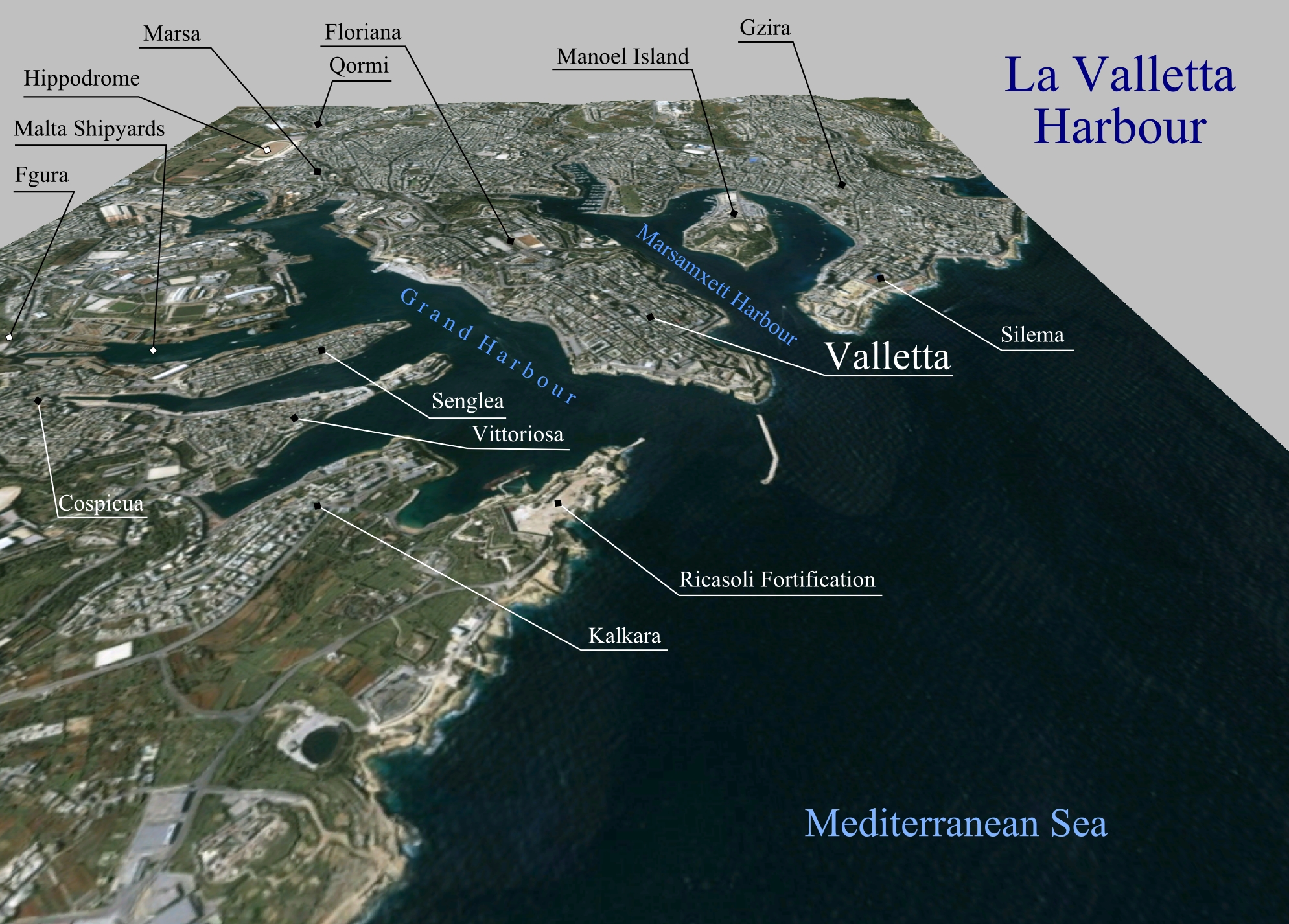
Without the Grand Harbour, Valletta would not exist. Deep enough to shelter entire fleets, strategically vital for controlling Mediterranean trade, it drew every maritime power's attention. The Knights chose this peninsula precisely because the harbour could be defended, then built the city that made defending it possible. Across the water stand the Three Cities - Vittoriosa, Senglea, Cospicua - older settlements where the Knights first established their fortifications.
The harbour has never gone quiet. Cruise ships dock where galleys once moored. Container vessels feeding Malta's economy share the waterways with yacht marinas. Stand on Valletta's ramparts and look across to the Three Cities, and you see the geography that shaped Malta's entire history: harbours worth fighting for, ringed by fortifications built to hold them.
The Streets
Europe's first planned city took shape here. Where medieval cities grew organically, the Knights imposed a grid. Republic Street runs along the peninsula's spine, and side streets descend in straight lines to the harbours on either side. The logic was military - defenders could move quickly and fire down those corridors at attackers. But the effect is civic, creating a legibility that visitors immediately appreciate.
Beyond the geometry, the streets hold a life no planner could have designed. Cafes spill onto pavements. Shops cater to residents and tourists alike. Churches hold masses following traditions older than the city itself. How quickly does Valletta become familiar? After a few days, every street feels like home. That intimacy is the reward of a capital small enough to know completely.
From the Air
Valletta (35.90N, 14.51E) occupies a narrow peninsula between Malta's Grand Harbour and Marsamxett Harbour. Malta International Airport (LMML/MLA) lies 8km south, offering one runway 13/31 (3,544m). From the air, the fortified city and its bastions stand out sharply, and the Three Cities are clearly visible across the Grand Harbour. Malta sits as an island nation between Sicily and North Africa. Expect Mediterranean weather - hot dry summers, mild wet winters. Strong winds are possible, particularly the gregale from the northeast.