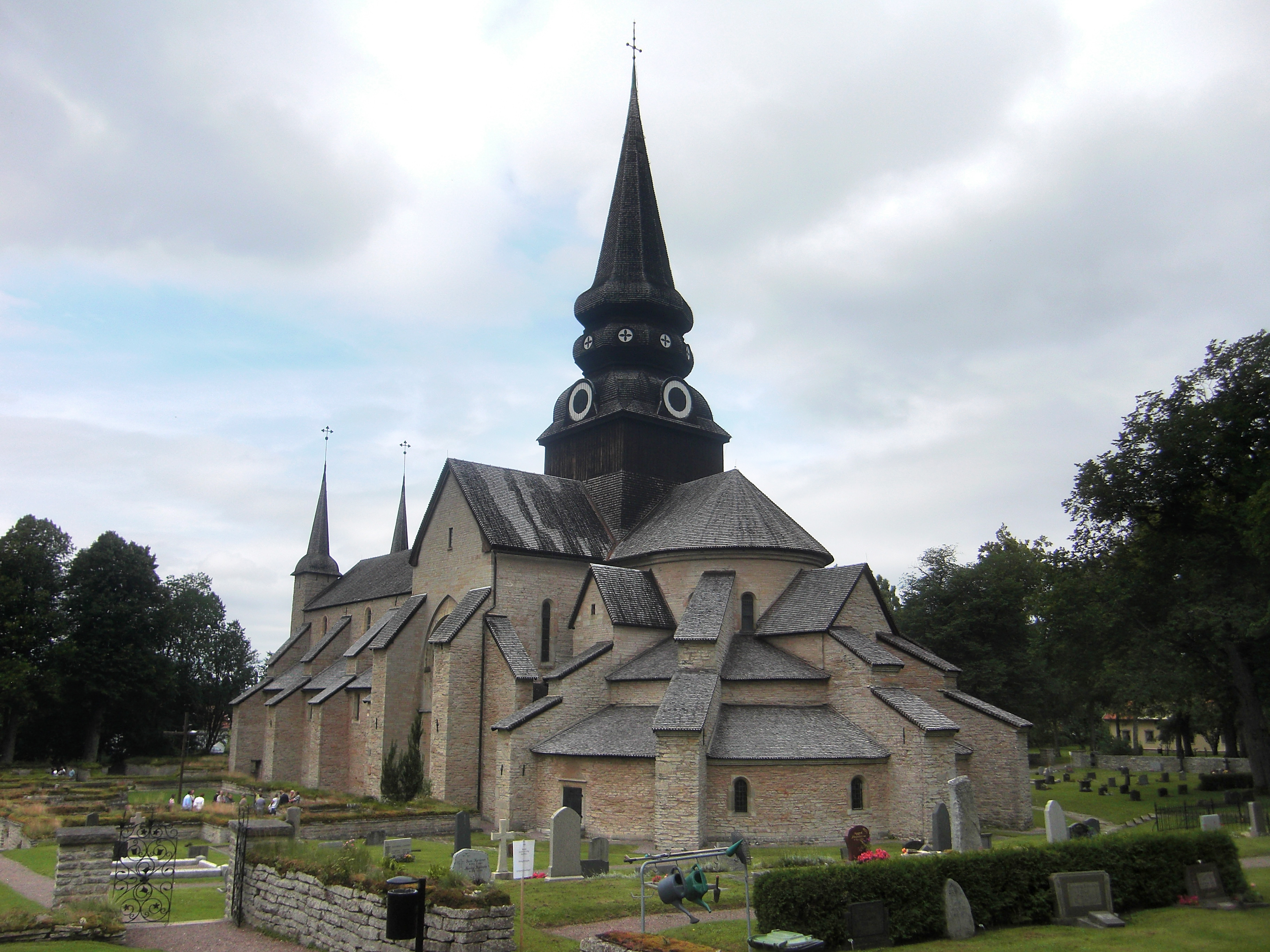
Varnhem Abbey
In May 2002, archaeologists opened a grave that had been sealed for over 700 years. Inside lay three skeletons: Birger jarl, the founder of Stockholm and the most powerful man in 13th-century Sweden; his wife Mechtild of Holstein; and their son Duke Eric. Their resting place, Varnhem Abbey, holds even older secrets. Radiocarbon dating reveals Christian burials here as early as the 10th century, and the stone church erected on this site in the 1040s is the oldest known in Sweden outside of Skåne. Long before the Cistercian monks arrived, Varnhem was already sacred ground.
Before the Monks
Christianity came to Varnhem before there was an abbey to receive it. A wooden church stood here first, followed by a stone church built in the 1040s at the latest, making it the oldest known stone church in Sweden proper. Radiocarbon dating of burials suggests Christian worship began at this site during the 10th century, with the oldest confirmed Christian burial dating to somewhere between 780 and 970 AD. By the time Cistercian monks from Alvastra Abbey arrived around 1150, Varnhem had already been a place of prayer for generations.
A Noble Gift and Royal Favor
The abbey's founding involved both generosity and controversy. A wealthy widow named Sigrid donated the property to the Cistercian monks, but Queen Christina Björnsdotter attempted to revoke the gift and seize the land for herself. The queen's efforts failed, and in 1150 the monks established their abbey. The House of Eric became the abbey's patron, sponsoring its construction in exchange for burial privileges. Three kings of this royal house now rest within the abbey church: Canute I, Eric X, and Eric XI of Sweden. The Cistercians built according to their standard floor plan, used in abbeys across Europe, making it possible to navigate any Cistercian monastery by knowing the layout of one.
Fire and Rebirth
In 1234, fire destroyed the abbey. What rose from the ashes surpassed the original. Birger jarl and other medieval benefactors financed reconstruction, transforming the abbey into something more beautiful and imposing than before. The church, originally Romanesque in style, was completed in Gothic splendor after the fire. The 1260 dedication ceremony celebrated the largest church in Sweden at that time. Birger jarl's patronage earned him and his family their burial place here, their bones resting beneath stones until the 2002 excavation confirmed their identities through scientific analysis.
Reformation, War, and Revival
The abbey's prosperity ended with the Swedish Reformation. In 1527, King Gustav I confiscated the property, and in 1566 Danish forces burned the buildings during the Northern Seven Years' War. Varnhem might have vanished entirely had not Magnus Gabriel De la Gardie received the ruins as a gift from Queen Christina in the mid-17th century. De la Gardie restored the church and created a family mausoleum within its walls, where he now rests alongside his wife Princess Maria Euphrosyne and other family members. The surrounding abbey buildings were left to crumble. Major restoration efforts between 1911 and 1923 saved the church, while archaeological excavations in the 1920s and 1970s uncovered the extent of the medieval monastery.
Modern Pilgrimage
Today, Varnhem Abbey church stands solitary among ruins, the only structure still intact from the medieval complex. The number of visitors has multiplied dramatically since Swedish author Jan Guillou published his novels about Arn Magnusson, a fictional Templar knight whose story intersects with Varnhem. These books, and their film adaptations, have transformed the abbey into a pilgrimage site for readers seeking the landscapes of Guillou's medieval Sweden. From the air, the lone church and its surrounding stone remnants mark where three kings, one of Sweden's most powerful rulers, and countless monks lived, prayed, and were laid to rest over nearly a millennium of continuous sacred use.
From the Air
Located at 58.384°N, 13.654°E in Västergötland, approximately 20km east of Skara. The abbey church stands alone amid ruins in the rural landscape, providing a distinctive visual marker. Lake Hornborgasjön lies about 5km to the east and serves as an excellent navigation reference. Nearest significant airport is Trollhättan-Vänersborg (ESGT), approximately 65km southwest. The flat agricultural terrain makes the church structure easily identifiable from altitude.