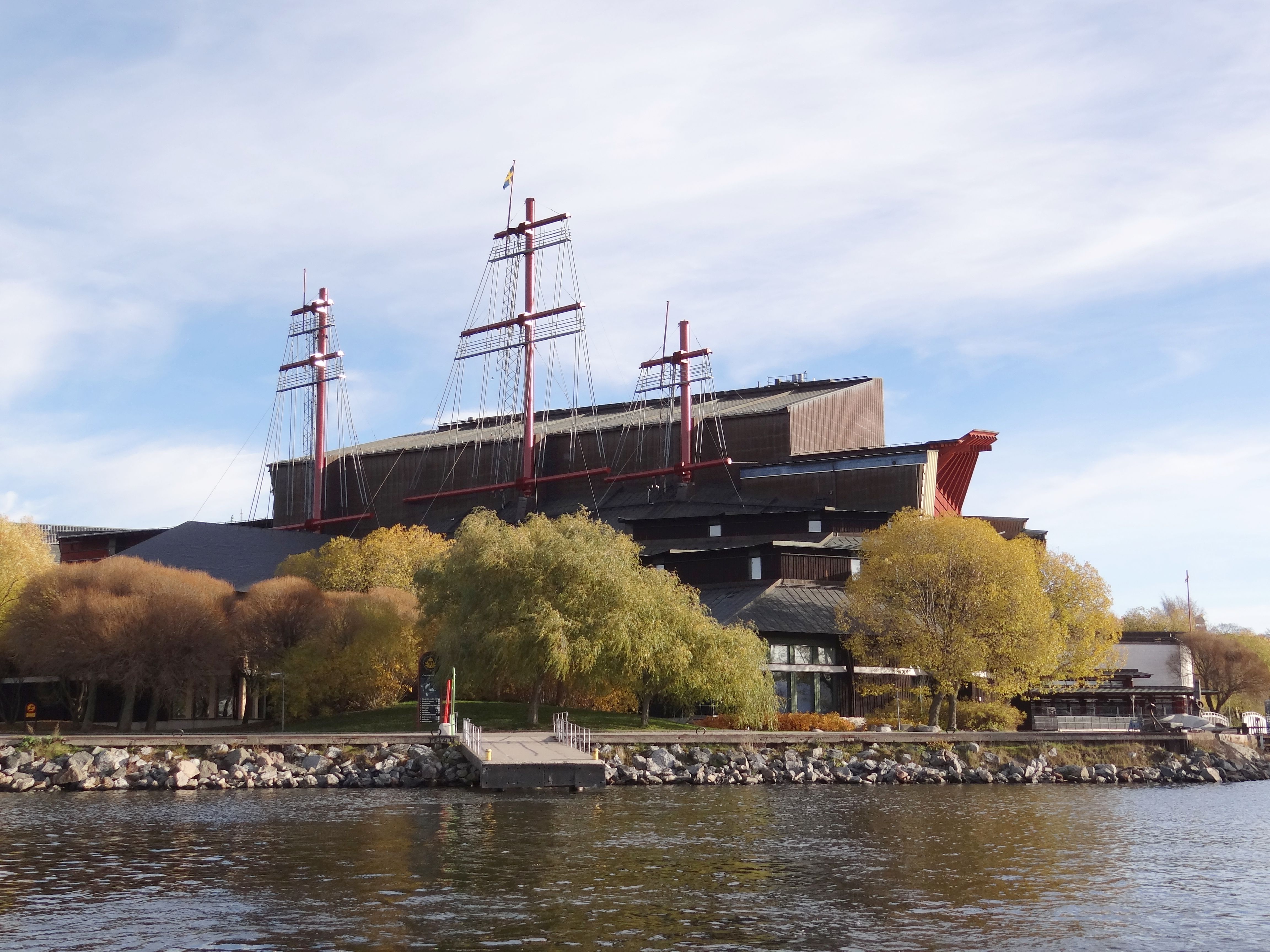
Vasa Museum
She sailed less than a mile. On August 10, 1628, the 64-gun warship Vasa set out from Stockholm harbor on her maiden voyage, pride of the Swedish navy and symbol of King Gustavus Adolphus's military ambitions. A gust of wind caught her sails, and the magnificent vessel heeled over, water flooding through open gun ports. Within minutes, the most expensive ship ever built for the Swedish fleet settled into the mud of Stockholm harbor, taking perhaps 30 sailors with her. There she would remain for 333 years, preserved by the cold, dark, brackish waters of the Baltic, until divers located her in 1956 and engineers raised her intact in 1961. Today the Vasa stands in her own custom-built museum on the island of Djurgarden, the only almost fully intact 17th-century ship ever salvaged.
A Ship Built to Impress
The Vasa was never designed for practicality alone. King Gustavus Adolphus wanted a floating symbol of Swedish power during the Thirty Years' War, and the shipwrights delivered a vessel covered in hundreds of carved wooden sculptures painted in vivid colors. Lions, mermaids, Roman emperors, and biblical figures adorned every surface. The ship carried 64 bronze cannons arranged on two gun decks, a configuration that made her top-heavy and unstable. Contemporary investigations after the sinking revealed fundamental design flaws, but no one dared contradict the king's specifications. The ship measured 69 meters from bow to stern and could carry 300 soldiers in addition to her crew. She was meant to dominate the Baltic through sheer intimidation.
Resurrection from the Deep
Amateur archaeologist Anders Franzen spent years searching for the Vasa, convinced the cold Baltic waters might have preserved her unlike wooden wrecks in warmer seas. In 1956, he found her resting upright on the harbor floor at 32 meters depth, remarkably intact. The salvage operation that followed was unprecedented. Engineers tunneled beneath the hull to thread steel cables through the sediment. In a series of careful lifts over 18 months, the Vasa rose from the bottom. On April 24, 1961, she broke the surface for the first time since 1628. Inside, archaeologists discovered a time capsule: personal belongings of the crew, clothing, tools, coins, and even food stores that had survived three centuries underwater.
A Museum Takes Shape
For over two decades after her recovery, the Vasa sat in a temporary structure called Wasavarvet while conservators slowly treated her timbers with polyethylene glycol, replacing the water in the wood to prevent collapse. Visitors could only view the ship from two levels, never more than five meters away. In 1981, the Swedish government announced a competition for a permanent museum. Of 384 architectural proposals, Marianne Dahlback and Goran Mansson won with their design called Ask, meaning 'box.' Construction began around the dry dock of Stockholm's old naval yard. In December 1987, the Vasa was towed into the flooded dock beneath the partially completed building. Even half-finished, the museum drew 228,000 visitors during the summer of 1989. The museum officially opened on June 15, 1990.
Seeing History at Six Levels
The museum was built around the ship, not the reverse. Inside, visitors can view the Vasa from six different levels, from her keel to the top of the sterncastle. The building's copper roof rises to stylized masts that mark the height the ship would have reached when fully rigged. Dark colors dominate the exterior: panels painted in red, blue, tar black, ochre yellow, and dark green. The ship herself has been fitted with the lower sections of all three masts and a new bowsprit. Replacement parts stand out clearly against original timbers darkened by three centuries underwater. Surrounding exhibits detail the construction, sinking, discovery, and salvage, while others provide context on 17th-century Swedish life. By 2025, over 45 million people had visited the Vasa across her two homes. In 2024 alone, the museum welcomed 1.35 million visitors, making it Scandinavia's most visited museum.
From the Air
Located at 59.328N, 18.091E on the island of Djurgarden in central Stockholm. The museum building is identifiable by its large copper roof with stylized mast structures. Djurgarden is the green island east of Gamla Stan, separated from the mainland by narrow waterways. Four historic ships are moored at the dock outside: the icebreaker Sankt Erik, lightvessel Finngrundet, torpedo boat Spica, and rescue boat Bernhard Ingelsson. Stockholm Bromma Airport (ESSB) lies 10km west, Stockholm Arlanda (ESSA) 40km north. The distinctive archipelago pattern of Stockholm's waterways makes navigation straightforward from altitude.