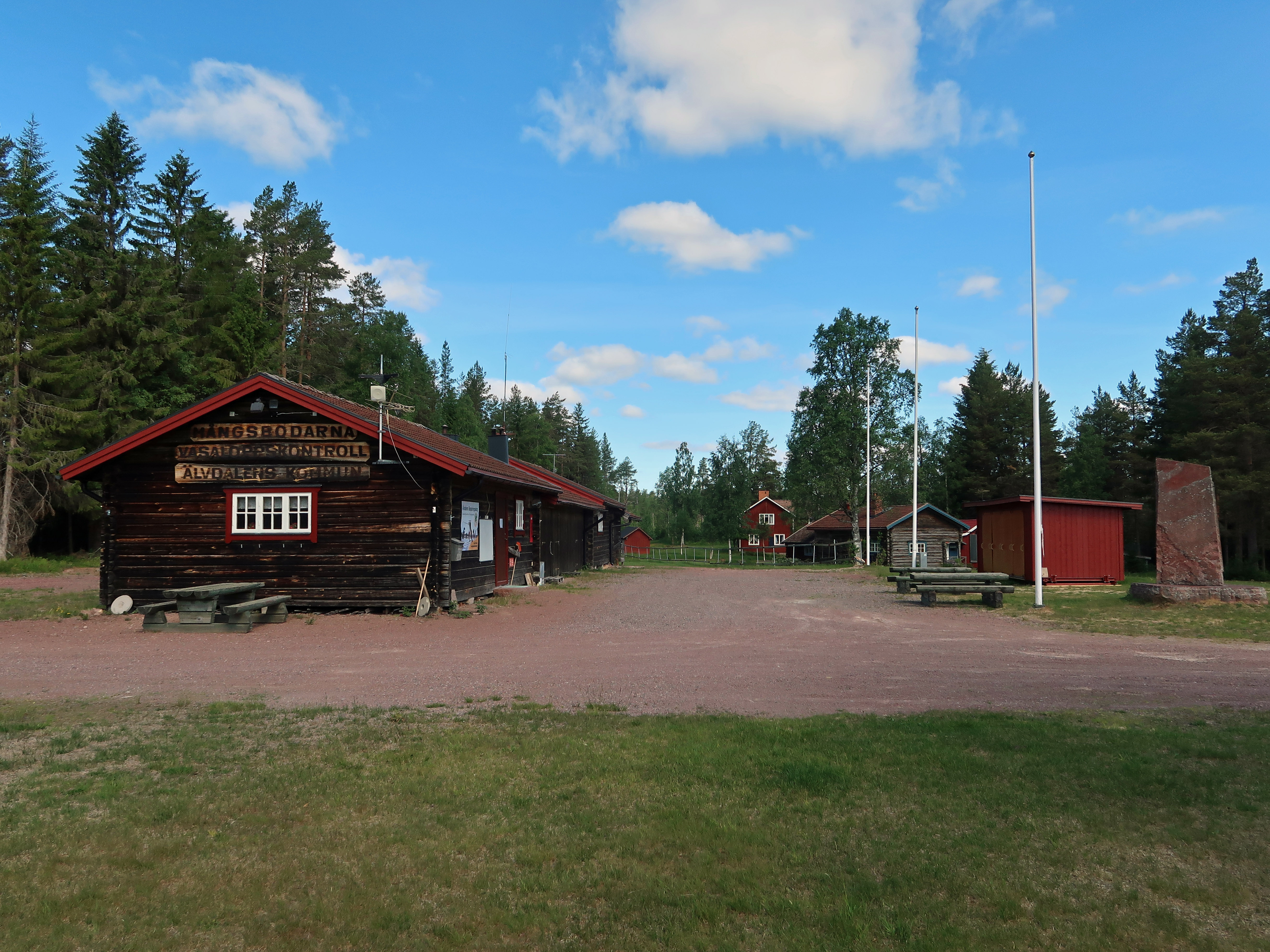
Vasaloppet
In the bitter winter of 1520, a young Swedish nobleman fled for his life through the frozen forests of Dalarna. Gustav Vasa had just learned that his parents lay dead in Stockholm, massacred alongside eighty nobles at what history would call the Stockholm Bloodbath. Danish soldiers hunted him through the snow. According to legend, he escaped on skis, covering the ninety kilometers between Mora and Sälen in a desperate bid for survival. Four centuries later, fifteen thousand skiers retrace that flight every March, transforming one man's terror into Sweden's most celebrated athletic event.
Born from Bloodshed
The Vasaloppet's origin story reads like medieval thriller. King Christian II of Denmark, ruling the Kalmar Union with an iron fist, invited the Swedish aristocracy to a reconciliation feast in Stockholm. It was a trap. Over three days in November 1520, he executed some eighty nobles, bishops, and burghers. Gustav Vasa's father and brother-in-law numbered among the dead. The young man fled north, skiing through Dalarna's forests to rally the peasantry against Danish rule. Whether Gustav actually skied the route is debated by historians, but the legend proved powerful enough to birth a nation and, eventually, a race. He would become King Gustav I, founder of modern Sweden.
The Course Through Winter
The ninety-kilometer course begins at Berga, just south of Sälen in western Dalarna, and finishes in the town of Mora. Skiers pass through nine stations along the way: Smågan, Mångsbodarna, Risberg, Evertsberg, Oxberg, Hökberg, and Eldris before reaching the finish. Since 1958, volunteers have served blåbärssoppa, bilberry soup, at each station. About 50,000 liters of the sweet purple liquid fuel the field during Vasaloppet week. The course undulates through forest and open terrain, with 'The Dreaded Rope' cutoff times enforced at seven stations. Miss the rope, and your race ends there.
Speed and Endurance
The record stands at 3 hours, 28 minutes, and 18 seconds, set by Norwegian Tord Asle Gjerdalen in 2021. That works out to 2 minutes and 19 seconds per kilometer over ninety kilometers of variable terrain. Only seventeen winners have finished under four hours. The legendary Nils 'Mora-Nisse' Karlsson dominated the race with nine victories, a record that still stands. Sweden has claimed ninety percent of the titles since 1922, though Norwegian specialists have increasingly challenged Swedish dominance in recent decades. The average winning time has dropped steadily, with the 2020s producing four of the ten fastest times ever recorded.
The Battle for Inclusion
Margit Nordin from Grängesberg became the first woman to complete Vasaloppet in 1923, finishing in 10 hours and 9 minutes. The crowd lifted her on their shoulders and showered her with flowers. Then the organizers banned women from competing. Officials claimed the race endangered female health, though others admitted they feared women would diminish the event's reputation as a masculine test. The ban lasted fifty-six years. Some women competed anyway, disguised as men. When one was interviewed on television during the 1978 race, the issue could no longer be ignored. Women were officially readmitted in 1980, though they did not receive awards until 1997. Sofia Lind now holds the women's record with four victories.
A Swedish Rite of Passage
The finish portal in Mora bears the race motto: 'I fädrens spår för framtids segrar,' meaning 'In our fathers' tracks for future victories.' A kranskulla, a woman dressed in traditional Dalarna folk costume, places a laurel wreath around each winner's neck. Since the introduction of the women's race Tjejvasan in 1988, a kransmas performs the same honor for the women's champion. King Carl XVI Gustaf has completed the race, as have princes and politicians, actors and athletes. Vasaloppet has grown into a week-long festival including shorter races, relays, and a nighttime event where two-person teams ski the original course in darkness. The race has spawned sister events in Minnesota, Japan, China, Finland, and Canada, spreading Gustav's legend across the globe.
From the Air
The course runs between coordinates 61.11N, 13.30E (Berga/Sälen start) and 61.00N, 14.54E (Mora finish). Best viewed from 3,000-5,000 feet in early March when the race occurs. The course threads through the forested terrain of Dalarna, with the frozen lakes visible from altitude. Nearest airports: Mora-Siljan Airport (ESKM) and Scandinavian Mountains Airport (ESKS). The finish line portal in Mora is a recognizable landmark from the air.