Venetian Ghetto
The word exists in every European language: ghetto. It entered the world's vocabulary on March 29, 1516, when Doge Leonardo Loredan and the Venetian Senate decreed that all Jews in Venice must live within the boundaries of the Ghetto Nuovo, an island in the Cannaregio district surrounded by canals whose gates were locked at sunset. The name likely came from the foundry -- getto in Venetian -- that had previously occupied the site. German-speaking Jewish arrivals pronounced it with a hard g, and the spelling followed. Five centuries later, the word describes enforced segregation everywhere, but its origin is specific: a small island in a lagoon city, walled and gated, where a community of merchants, scholars, and artisans built a life within constraints they did not choose.
Behind Locked Gates
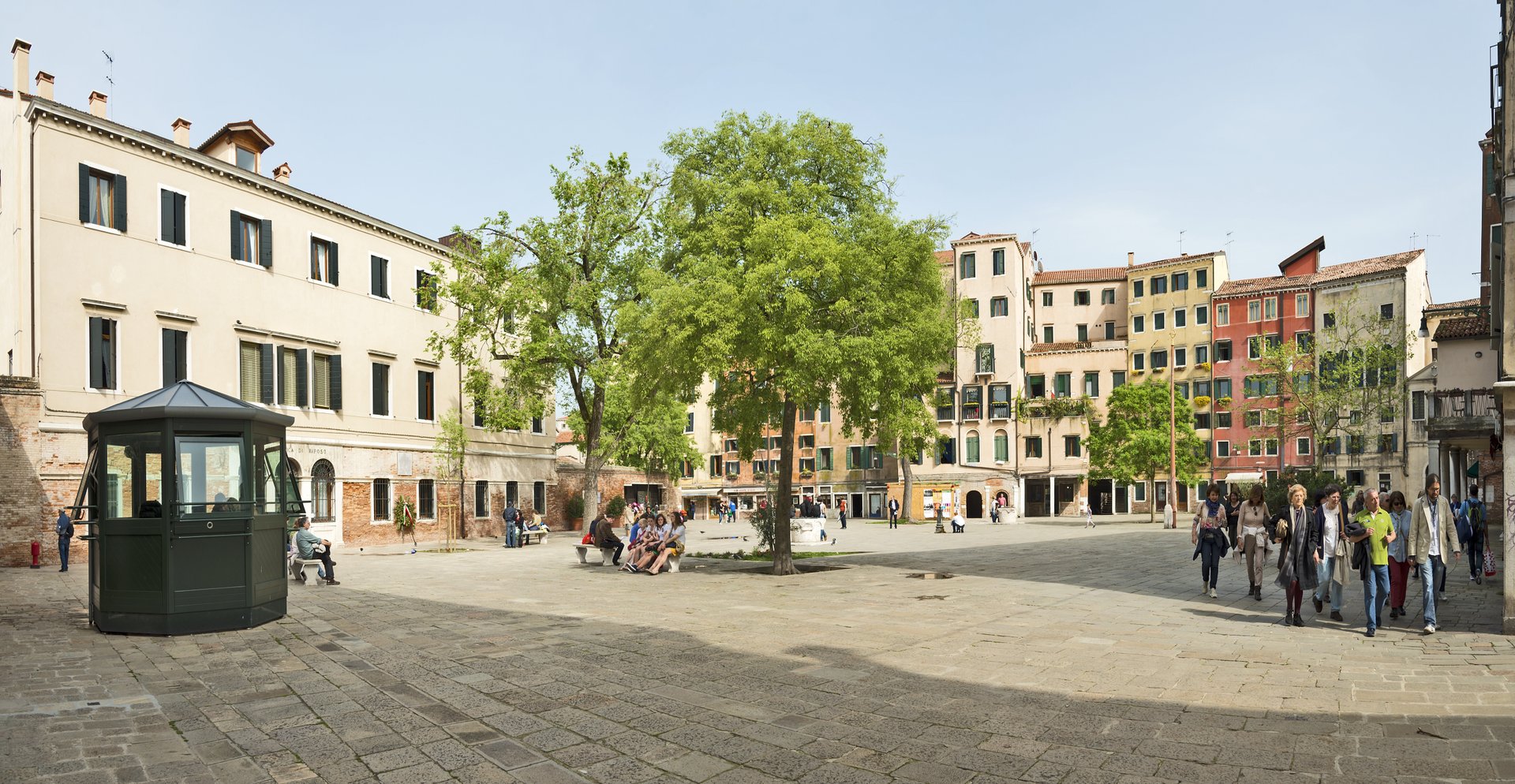
The decree of 1516 followed a period of relative freedom. After Venice's defeat by the League of Cambrai in 1509, Jews had settled throughout the city, in the parishes of San Cassiano, San Polo, and Santa Maria Mater Domini. The Senate's order reversed that dispersal. Jewish residents were confined to the Ghetto Nuovo, a roughly rectangular island accessible by two bridges whose gates Christian guards locked each night at curfew. Jews paid for their own guards. Strict penalties awaited anyone caught outside after dark. As the community grew, the adjacent Ghetto Vecchio was opened in 1541, and the Ghetto Nuovissimo followed in 1633. The naming is characteristically Venetian in its confusion: the Ghetto Nuovo, the first area of confinement, means New Ghetto, because it was the newer of the two foundry sites -- the name predated the Jewish residents. Space was so scarce that buildings in the Ghetto rose to seven or eight stories, among the tallest in Venice, their low ceilings squeezing in as many floors as the foundations could bear.
Five Synagogues, Five Communities
The Jews of the Venetian Ghetto never merged into a single community. They carried their origins with them, and the five synagogues that still stand in the Ghetto reflect that diversity. The Scuola Grande Tedesca served the German-speaking Ashkenazi community, the oldest arrivals. The Scuola Canton, possibly built as a private synagogue, also served Ashkenazi worshippers. The Scuola Italiana gathered the Italian-speaking community. As Sephardic Jews arrived from Spain, Portugal, and the Ottoman Levant, they established the Scuola Spagnola and the Scuola Levantina, both designed with the ornate interiors their communities favored. Languages spoken in the Ghetto's narrow streets included Venetian, Yiddish, Judeo-Spanish, Judeo-Italian, French, and Hebrew. Each community maintained its own traditions, its own liturgy, its own connection to the places its members had left behind.
Commerce, Constraint, and Survival
Venice's relationship with its Jewish residents was transactional. The Republic needed the financial services -- particularly moneylending and trade connections -- that Jewish merchants provided, but confined those merchants behind walls and restricted their occupations. In 1555, Venice counted 923 Jews among 160,208 residents: less than one percent of the population, yet economically significant enough that the Senate repeatedly renewed their charter of residence. The Jewish community did not exceed 5,000 until the seventeenth century. Notable residents included Leon of Modena, a rabbi whose writings bridged Jewish and Christian intellectual worlds, and his disciple Sara Copia Sullam, an accomplished writer who hosted one of Venice's literary salons from within the Ghetto. Meir Magino, a glassmaker from the Ghetto, brought Jewish craftsmanship to one of Venice's defining industries. The community endured because it adapted, negotiating each renewal of its charter, each expansion of its permitted activities, without ever fully belonging to the city that both needed and excluded it.
Liberation and Legacy
On July 11, 1797, Napoleon's forces tore down the Ghetto's gates. The 28-year-old general had conquered the Venetian Republic two months earlier, dissolving a government that had endured for over a thousand years, and the segregation of Venice's Jews ended with it. In the nineteenth century, the neighborhood was renamed the Contrada dell'unione -- the District of Union -- a hopeful gesture toward integration. Today, around 450 Jews live in Venice, though few reside in the Ghetto itself; rising rents have priced out much of the community. Two of the five synagogues remain active for worship, while the other three serve as museums. The Jewish Museum of Venice preserves the community's artistic and cultural heritage. Kosher restaurants serve visitors along the Cannaregio Canal, and the Chabad community operates a yeshiva and shops. A Holocaust memorial in Campo del Ghetto Nuovo commemorates the 289 Venetian Jews deported during World War II. Shakespeare set his Shylock here; the real history needs no dramatization.
From the Air
The Venetian Ghetto (45.445N, 12.326E) is located in the Cannaregio district in the northwestern part of Venice's main island. From the air, the Ghetto Nuovo is identifiable as a roughly rectangular campo (square) surrounded by unusually tall buildings for Venice -- seven to eight stories. It sits along the Cannaregio Canal, which connects to the Grand Canal nearby. Venice Marco Polo Airport (LIPZ/VCE) lies 8 km north. The Ghetto area is best observed from 1,500-3,000 feet, where the dense building height stands out from the surrounding lower rooftops of Cannaregio.