Venice/Lido
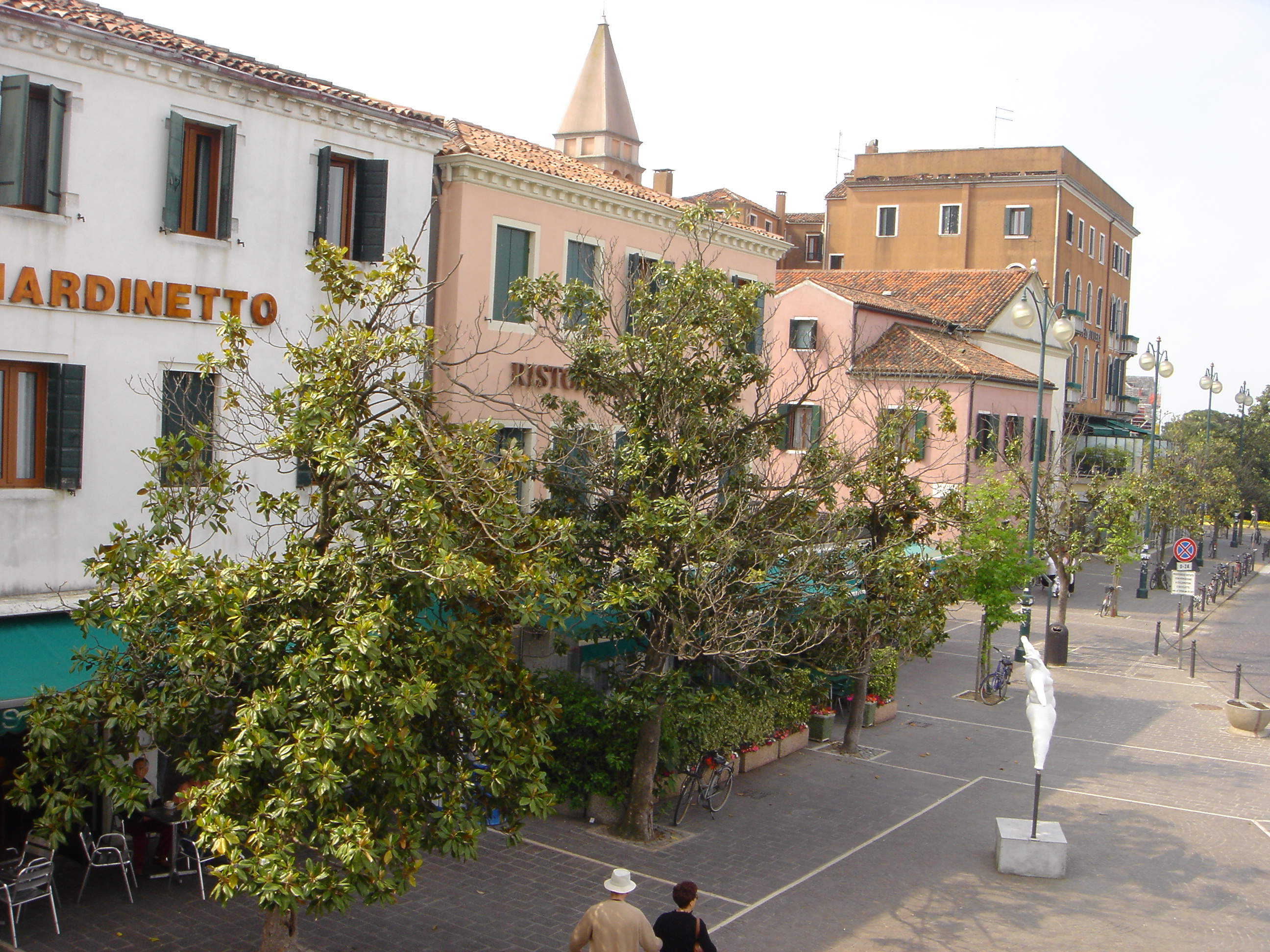
Around five in the afternoon, professionally dressed residents step off the vaporetto at the Lido landing and walk home past gelato shops and beachfront hotels. They greet neighbors, collect children, stop at bars where the bartender knows their name. This is not the Venice of tourist fantasy. Lido is an eleven-kilometer barrier island between the Venetian lagoon and the Adriatic Sea, and its atmosphere has more in common with a Mediterranean beach town than with the Renaissance theater across the water. There are cars here, and bicycles, and trees lining residential streets -- all things that feel radical after the pedestrian claustrophobia of central Venice. Thomas Mann came here and wrote Death in Venice, inspired by the Hotel des Bains and its Belle Epoque atmosphere. The Venice Film Festival has occupied the island every late August and early September since 1932, the world's oldest film festival drawing celebrities to a place that, eleven months of the year, belongs to its residents.
The Shield of the Lagoon
Lido exists because of geology and serves because of geography. The island is one of several barrier strips -- Lido, Pellestrina, and others -- that separate the Venetian lagoon from the open Adriatic Sea. Without these islands, there would be no lagoon, and without the lagoon, Venice could never have existed. The sheltered waters behind Lido provided the calm harbor that allowed a maritime republic to flourish. Today the island performs a more domestic function: it gives Venice a beach. Most of the shoreline is divided among hotels that offer private beach access to their guests, with cabanas and umbrellas arranged in orderly rows. Public beaches exist at both ends of the main strip, accessible and perfectly pleasant if sometimes crowded. In the early 20th century, Lido was considered the most important beach in Italy, its aristocratic character drawing European royalty and the wealthy classes. That exclusivity has softened into something more democratic, though the grand hotels along the seafront retain their Belle Epoque facades and the prices to match.
Death, Film, and Desire
Thomas Mann stayed at the Hotel des Bains in 1911 and produced Death in Venice, the novella about an aging writer's obsessive infatuation on this very island. Luchino Visconti shot his 1972 film adaptation at the same hotel, the building's Liberty-style architecture providing the atmosphere of faded grandeur the story required. The English Patient used the hotel as a filming location too. More recently, scenes from Casino Royale brought Daniel Craig to Lido in 2006. But the island's deepest cinematic connection is the Venice Film Festival, held at the Palazzo del Cinema on the Lungomare Marconi. Established in 1932, it is the oldest film festival in the world, predating Cannes by seven years. Every September, the red carpet unfurls on an island that otherwise feels like a quiet suburb. The contrast is intentional and very Venetian: spectacle requires a backdrop of normalcy to achieve its full effect.
An Island That Functions
What makes Lido remarkable in the context of Venice is not glamour but ordinariness. The island has bus lines -- three daytime routes and a night service -- connecting its neighborhoods. Residents ride bicycles along shaded streets. There are supermarkets, schools, and the kind of practical infrastructure that central Venice has steadily lost as its population declined. A ten-minute vaporetto ride connects Lido to Piazza San Marco, making it a plausible commuter address for people who work in the historic center but want a home with a garden, a parking spot, and neighbors who are not tourists. The cost of this normalcy is distance from the visual drama across the lagoon, but the trade seems popular: Lido maintains a stable residential population that central Venice cannot match. From the island's western shore, Venice appears as a silhouette at dusk -- campanili and domes and the long line of the Zattere -- beautiful and remote, a postcard viewed from the place where people actually live.
Bellinis at the Edge
Lido's character reveals itself in small pleasures. Gelato vendors line the Gran Viale, the main street that runs from the lagoon side to the sea. Local bars serve Bellinis -- the cocktail of Prosecco and peach juice invented at Harry's Bar across the water but popular throughout Venice. Shops sell Murano glassware and Venetian masks alongside beach supplies, a combination that exists nowhere else. The island is flat enough to explore entirely by bicycle, rented from shops along the Gran Viale, and a ride south reveals progressively quieter stretches of shoreline, wildlife reserves, and the kind of unkempt coastal beauty that the manicured hotel beaches suppress. The lagoon side offers views of Venice that most tourists never see: the city approached not from the train station or the airport but from the water, gradually, the way the Venetians themselves experienced it for centuries. At dusk, the light across the lagoon turns golden and then violet, and the silhouette of Venice floats on the water like something remembered rather than seen.
From the Air
Venice Lido (45.38N, 12.35E) is a long, narrow barrier island stretching roughly north-south between the Venetian lagoon and the Adriatic Sea. From altitude, it is clearly visible as a thin strip of developed land separating the calm lagoon waters to the west from the open sea to the east. The island is approximately 11km long and quite narrow. Key landmarks include the Hotel Excelsior and the Palazzo del Cinema (Venice Film Festival venue) along the eastern seafront. Venice Marco Polo Airport (LIPZ/VCE) lies approximately 14km to the north-northwest. The three inlet passages (bocche) that allow water exchange between the lagoon and the Adriatic are visible at the northern and southern tips of Lido. Best appreciated from 3,000-5,000 feet to see the island's role as the lagoon's barrier.