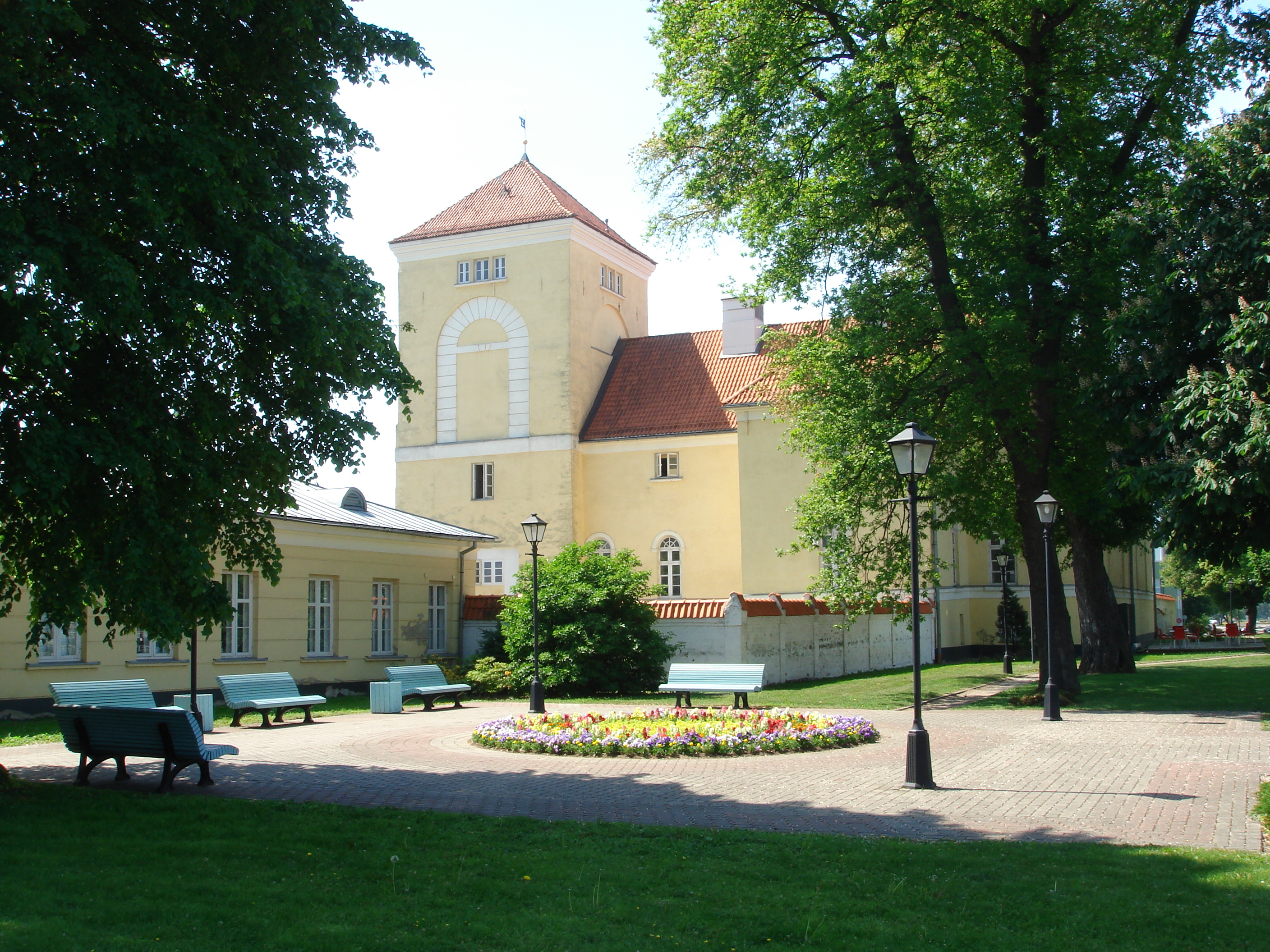
Ventspils Castle
The freestanding tower survived when everything else burned. During the Polish-Swedish War, Ventspils Castle was reduced to rubble and flame, but that medieval tower - originally two stories with a weapons storeroom in the attic - stood defiant against the destruction. When rebuilders came in the 1650s, they constructed the present convent-style complex around this solitary survivor, creating the castle that visitors see today. Through seven centuries, this fortress on the Venta River has worn many faces: Livonian Order stronghold, ducal residence, Lutheran church, Orthodox church, tsarist prison, Soviet military installation, and now museum. Few structures anywhere have adapted to so many masters.
The Order's Fortress
The Livonian Order built Ventspils Castle in the second half of the 13th century, establishing a defensive complex with tower, walls, and a large interior courtyard ringed by garrisons and storehouses. The Order controlled this Baltic outpost until the mid-16th century, when the religious and political upheavals of the Reformation dissolved their power. The castle's position at the mouth of the Venta River, where it meets the Baltic Sea, made it essential for controlling trade routes and projecting military force. As the Duchy of Courland absorbed the Order's territories, the castle became the residence of the city master - a transition from crusader fortress to administrative center.
Destruction and Rebirth
The Polish-Swedish War brought catastrophe. Only the tower remained standing after Swedish forces swept through, leaving the rest of the castle complex in ruins. The 1650s reconstruction created something different from the original Order fortress: a convent-type building with four adjoining apartments surrounding a rectangular courtyard. Floors were added to the surviving tower - third, fourth, and fifth stories rising above the medieval base. In 1798, a baroque-style spire crowned the roof, and later a lookout post was added. The castle had transformed from pure military function to something more domestic, though its walls still spoke of defense.
Sacred Spaces, Shifting Faiths
The castle chapel witnessed the religious currents that swept through the Baltic over centuries. After reconstruction in 1650, it served as a Lutheran church from 1706 to 1835, reflecting the Protestant faith that had taken hold in Courland. Then came conversion to Russian Orthodoxy from 1845 to 1901, as the Russian Empire's influence deepened over its Baltic provinces. Meanwhile, the rest of the castle stood largely unused, its military purpose obsolete, its residential function abandoned. The building waited for a new identity.
Walls That Held Prisoners
In 1832, the castle's third floor found that new purpose as a prison. The larger interior spaces were subdivided into smaller chambers, cells carved from rooms that once housed knights. For over a century, the fortress that had protected Livonian Order crusaders confined imperial Russia's criminals and, later, those the Soviet state deemed dangerous. The prison closed in 1959, but the warren of small chambers created for incarceration remains visible today - a reminder of the building's darker chapter. After World War II, the Soviet Army's border patrol occupied the castle through the 1980s, military boots echoing where monk-warriors once walked.
The Museum Tower
Restoration began in 1997, returning the castle to something approaching its 19th-century appearance. In 2001, the Ventspils Museum opened its permanent exhibition in the tower - the same tower that survived the Swedish destruction four centuries earlier. Visitors now climb to the fifth floor for panoramic views of the city that grew up around these walls. The first floor and tower retain their historical character, while the third floor shows the most alteration from centuries of adaptation. Today the castle hosts concerts and art exhibitions, its stones resonating with music rather than commands. Seven hundred years of history live in these walls: crusader, duke, pastor, prisoner, soldier, and now the curious traveler climbing toward the Baltic light.
From the Air
Located at 57.40N, 21.56E in the city of Ventspils on Latvia's western coast. The castle sits along the Venta River near where it empties into the Baltic Sea. The distinctive tower is visible from altitude, standing prominently in the old town area. Ventspils Airport (EVVV) provides local access, or approach from Liepaja International (EVLA) to the south. The ice-free port and river mouth serve as excellent navigation landmarks. Clear days offer views across the Baltic toward Sweden.