Versailles: The Palace That Bankrupted France
The Palace of Versailles contains 2,300 rooms, 67 staircases, and 2,000 windows. Its gardens stretch for 800 hectares. The Hall of Mirrors alone has 357 mirrors and 20,000 candles. Louis XIV built Versailles not just as a residence but as a political instrument - a gilded cage where French nobles competed for the honor of watching the king eat breakfast while their power slowly drained away. The palace consumed up to 25% of France's state revenues. Its magnificence was meant to inspire awe. It inspired revolution instead.
The Vision
Louis XIV began transforming his father's hunting lodge into a palace in 1661. He was 23 years old, had just survived a noble rebellion (the Fronde), and was determined that the aristocracy would never threaten the throne again. His solution was brilliantly cynical: he would neutralize the nobles by making them dependent on royal favor.
Versailles would be the center of that favor. The king moved the government and court there in 1682. Nobles who wanted influence had to be present - and presence required enormous expense. Courtiers bankrupted themselves maintaining appearances while Louis controlled every aspect of their lives.
The Ritual
Life at Versailles was governed by elaborate ceremony. The king's awakening (lever) was a ritual involving dozens of nobles, each with assigned roles. His meals were public spectacles. Even his bedtime (coucher) was attended by courtiers competing for the honor of holding the royal candlestick.
Every moment was choreographed. Courtiers spent fortunes on clothes, gambling, and entertaining to maintain their positions. They had no time for politics and no independent power bases. Louis had transformed potential rebels into decorative accessories, competing for proximity to the sun around which they orbited.
The Gardens
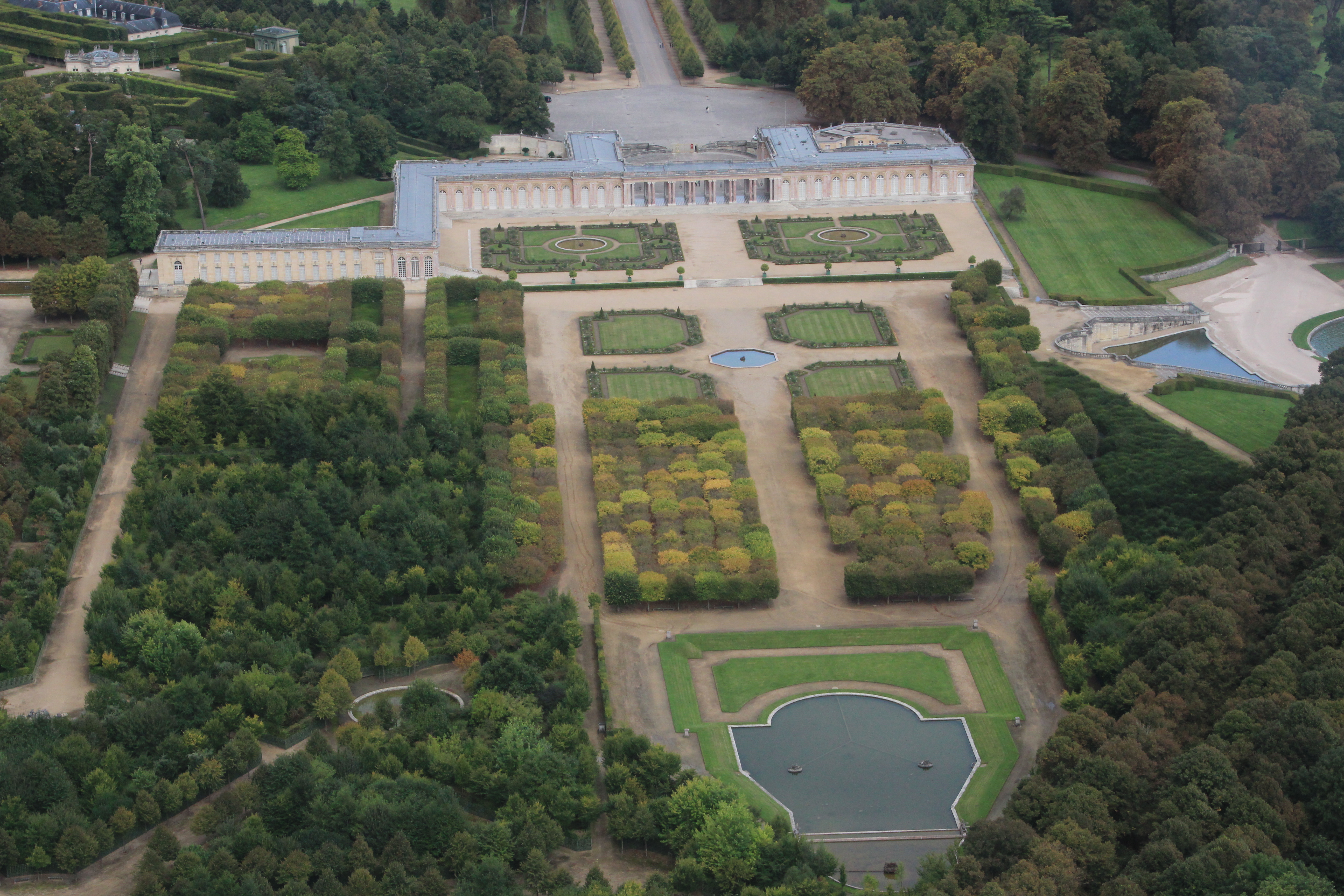
The gardens of Versailles were as political as the palace. Louis hired André Le Nôtre to create formal gardens stretching to the horizon - nature itself bent to royal will. Symmetrical paths, geometric flower beds, and clipped hedges declared human dominion over the natural world.
The fountains were engineering marvels - and notorious failures. The water supply could never meet demand. The fountains only operated when the king walked past, turned on by servants running ahead and off by servants running behind. Even Versailles's magnificence was partly illusion.
The Cost
The palace cost approximately 300 million livres to build - equivalent to billions of dollars today. At times, construction consumed 25% of France's entire state revenue. The maintenance costs never ended: servants, guards, food, candles, and repairs for a facility designed to impress rather than last.
The financial strain contributed to France's fiscal crisis. Louis XIV's wars and palace left the state deeply indebted. His successors inherited both the palace and the debts. By 1789, when revolutionaries marched on Versailles, the monarchy's finances were beyond repair.
The Fall
On October 5, 1789, a mob of Parisian women marched to Versailles demanding bread. They forced the royal family to return to Paris. Louis XVI would never return to his ancestors' palace. He and Marie Antoinette would lose their heads four years later.
Versailles survived the revolution, though its furnishings were auctioned off. It became a museum in 1837. Today, it draws 10 million visitors annually - more people in a year than lived in all of France when Louis XIV built it. The palace that bankrupted a kingdom now funds itself through tourism.
From the Air
The Palace of Versailles (48.80N, 2.12E) lies 20km southwest of central Paris. Paris Charles de Gaulle (LFPG) is 40km northeast. Paris Orly (LFPO) is 25km east. The palace and gardens are clearly visible from the air - look for the geometric formal gardens stretching west from the palace. The Grand Canal forms a distinctive cross shape. Weather is temperate oceanic with mild seasons.