Vicksburg National Military Park
On December 12, 1862, two hidden explosions tore through the hull of the ironclad USS Cairo as it patrolled the Yazoo River north of Vicksburg. Within twelve minutes, the gunboat settled thirty-six feet beneath the murky surface -- the first vessel in American history sunk by an electrically detonated mine. No one died, but the Cairo would not see daylight again for over a century. Today, its raised remains sit inside Vicksburg National Military Park, one artifact among thousands preserving the story of what Abraham Lincoln called the key to winning the Civil War. The park stretches along the high bluffs above the Mississippi River at Vicksburg, Mississippi, where from May 18 to July 4, 1863, Union forces under Ulysses S. Grant besieged the last major Confederate stronghold on the river. When the city surrendered on Independence Day, the Confederacy was cut in half.
The Gibraltar of the Confederacy
Vicksburg earned its fearsome nickname for good reason. Perched on bluffs two hundred feet above the Mississippi, its batteries commanded a sweeping bend in the river, and any vessel attempting to pass risked devastating fire from above. For the Confederacy, holding Vicksburg meant keeping a lifeline open to Texas, Arkansas, and Louisiana -- the western states that supplied cattle, horses, and men. For the Union, taking it meant controlling the entire Mississippi and severing the rebellion at its spine. Grant understood the stakes. After months of failed approaches through swamps and bayous, including an audacious attempt to dig a canal that would reroute the Mississippi itself, he devised a plan of breathtaking boldness: march his army down the Louisiana side of the river, run gunboats past the batteries under cover of darkness, cross below the city, and attack from the rear. It worked. A string of victories at Port Gibson, Raymond, Jackson, Champion Hill, and Big Black River Bridge drove the Confederates back behind their fortifications, and the siege began.
Forty-Seven Days Underground
The siege of Vicksburg was a war fought beneath the earth as much as upon it. Both armies dug elaborate networks of trenches and earthworks that still scar the landscape today. Union troops tunneled under Confederate positions and packed the shafts with explosives. Civilians carved shelters into the yellow clay hillsides, living in caves while artillery shells arced overhead. Food grew desperately scarce inside the city; soldiers and citizens alike resorted to eating mules and rats. By early July, the garrison was starving and exhausted. Confederate General John C. Pemberton surrendered the city on July 4, 1863 -- the same day news arrived of the Union victory at Gettysburg. Together, these twin blows marked the turning point of the war. The Illinois State Memorial within the park commemorates the siege with exactly forty-seven granite steps, one for each day the city held out. Inside, sixty bronze tablets list the names of all 36,325 Illinois soldiers who served in the campaign.
A Landscape of Memory
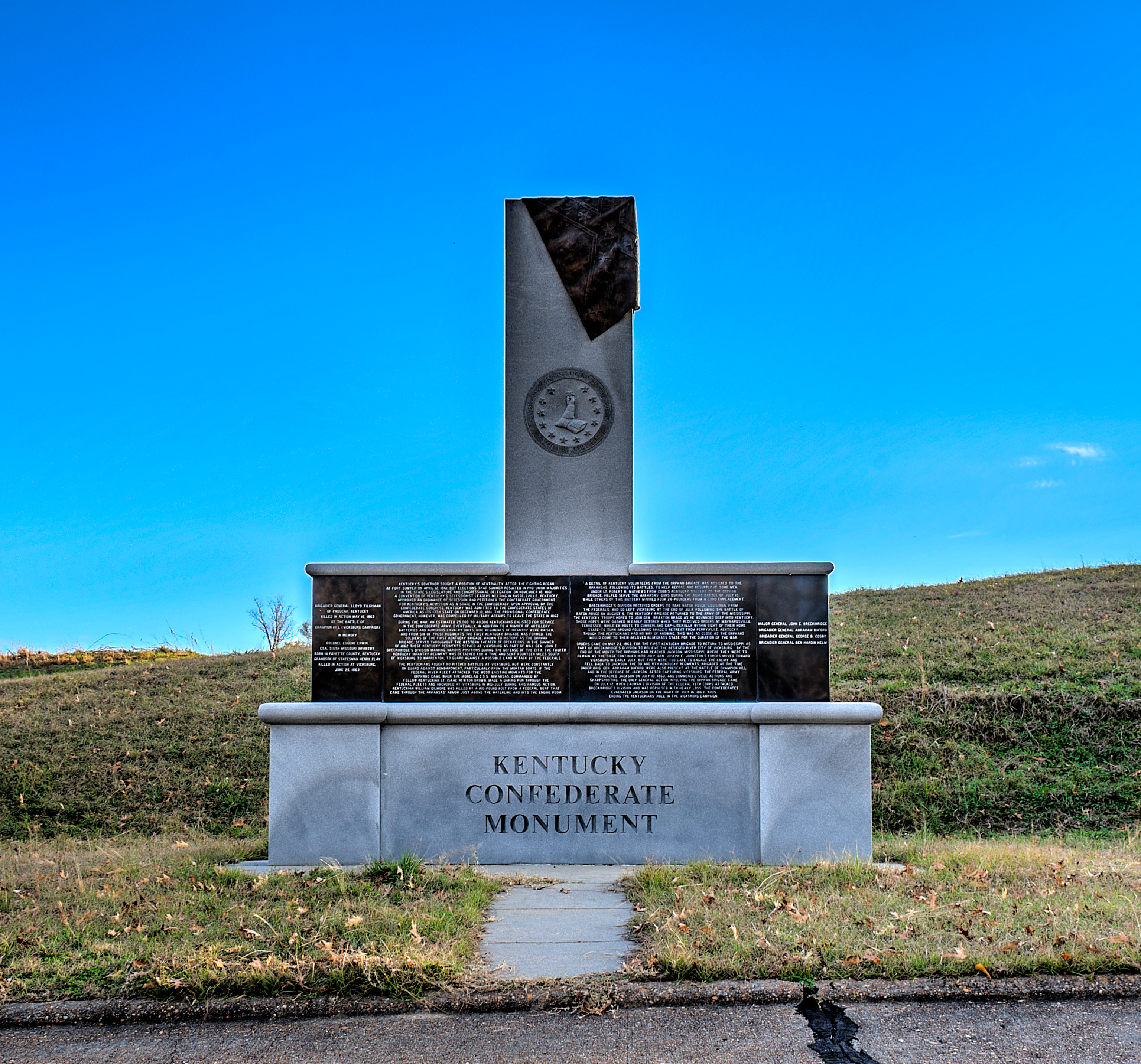
Walking the park today is like moving through an open-air museum of grief and remembrance. There are 1,325 monuments and markers scattered across the rolling terrain -- more than at any other Civil War battlefield in the country. Each one tells a story: state memorials in marble and granite, regimental markers noting where specific units fought and fell, tablets recording the movements of armies across these ridges. The park preserves reconstructed forts and miles of original earthworks, their contours softened by a century and a half of grass and rain but still unmistakable. A tour road winds past 144 emplaced cannons positioned where batteries once thundered, and two antebellum homes survive as silent witnesses to the world that existed before the war reshaped everything. The Vicksburg National Cemetery holds 18,244 interments, of which 12,954 remain unidentified -- soldiers who gave their lives and then their names to the cause.
Lincoln's Impossible Ditch
Across the river near Delta, Louisiana, a detached section of the park preserves one of the war's strangest episodes: Grant's Canal. The idea was staggering in ambition -- dig a channel that would redirect the Mississippi River itself around Vicksburg, letting Union ships bypass the Confederate guns entirely. President Lincoln championed the scheme. Major General Benjamin Butler started the work in June 1862, but disease ravaged the laborers, many of them formerly enslaved people forced into brutal conditions, and falling water levels stalled progress. When Grant restarted the project in January 1863, neither he nor Sherman believed it would succeed. Grant kept his soldiers digging anyway, using the canal as a way to keep troops busy and morale intact during the grinding months of maneuver before the siege. The river refused to cooperate, and the canal was abandoned -- but the labor bought Grant the time he needed to devise his winning strategy.
Reckoning and Reconciliation
Established on February 21, 1899, Vicksburg National Military Park was created to commemorate both the siege and the defense of the city. The park was transferred from the War Department to the National Park Service in 1933 and listed on the National Register of Historic Places in 1966. Over half a million visitors walk its grounds each year. In 2000, the Mississippi House of Representatives funded a monument recognizing African American soldiers who fought in the Civil War, adding a long-overdue chapter to the park's narrative. Vicksburg residents refused to celebrate the Fourth of July for eighty-one years after the surrender; the holiday was not officially observed again until 1945. That bitterness has faded, but the landscape remembers.
From the Air
Located at 32.365N, 90.842W along the Mississippi River bluffs at Vicksburg, Mississippi. The park's tour road and monuments are visible from low altitude, and the dramatic bend in the Mississippi River that made Vicksburg so strategically important is unmistakable from the air. Nearby airports include Vicksburg Municipal Airport (KVKS), approximately 3 nm south, and Jackson-Medgar Wiley Evers International Airport (KJAN), about 45 nm east. Recommended viewing altitude: 2,000-3,000 ft AGL to appreciate the relationship between the bluffs, earthworks, and the river below.