Victoria and Albert Museum
In 1973, the Victoria and Albert Museum became the first museum in Britain to host a rock concert when the progressive folk-rock band Gryphon performed a combined concert and lecture on medieval instrumentation. It was a perfect fit. The V&A has always been a museum that refuses to stay in its lane, a place where a tenth-century rock crystal ewer from the Islamic world sits a few galleries away from a Balenciaga gown, where Leonardo da Vinci's notebooks share a building with the Great Bed of Ware, a carved four-poster so enormous it became a tourist attraction in Shakespeare's day.
Born from the Crystal Palace
The museum owes its existence to the Great Exhibition of 1851. Prince Albert and Henry Cole, the exhibition's chief organizer, used the profits to purchase land in South Kensington and establish a museum of manufactures intended to improve public taste and boost British industry. The collection first opened to the public at Marlborough House in May 1852 before moving to South Kensington in 1857. In its early years, the institution was unapologetically practical: Cole introduced evening openings lit by gas lamps so that working people could visit after their shifts, and the museum's cafe, the first museum restaurant in the world, was established to encourage longer stays. Queen Victoria laid the foundation stone for the Aston Webb building in 1899, and during the ceremony the name changed from the South Kensington Museum to the Victoria and Albert Museum.
Albertopolis and the Architecture of Ambition
The museum building is itself a museum of architectural styles. Captain Francis Fowke designed the earliest surviving galleries in an Italianate manner, using terracotta and mosaic. Henry Young Darracott Scott built the five-storey Science Schools (now the Henry Cole Wing) and the soaring Cast Courts, whose ceilings rise 70 feet to accommodate a full-scale plaster cast of Trajan's Column, split in two to fit. The Green Dining Room, decorated by William Morris and Philip Webb in 1866, is an Arts and Crafts gem hidden behind institutional walls. Aston Webb's grand facade, 720 feet of red brick and Portland stone along Cromwell Gardens, was completed in 1909 and added a touch of imperial grandeur. In 2017, Amanda Levete's Exhibition Road Quarter opened, adding a porcelain-tiled courtyard covered with 11,000 handmade tiles and a 1,100-square-metre underground gallery.
Five Thousand Years Under One Roof
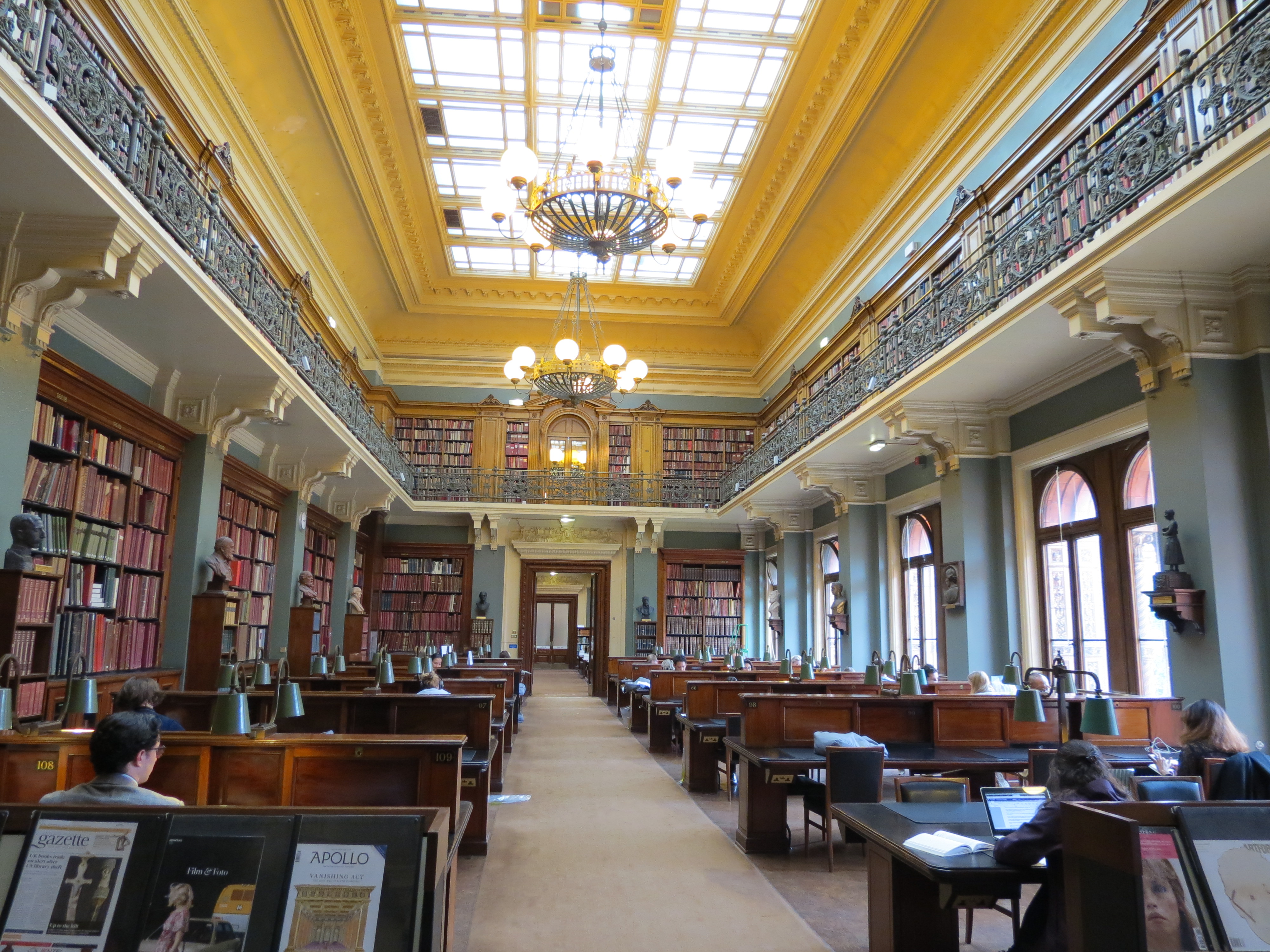
The collections span five millennia. The South Asian galleries house the most important collection of Indian art outside India, including Tipu's Tiger, an eighteenth-century automaton of a tiger mauling a European soldier, built for the ruler of the Kingdom of Mysore. The Islamic gallery is centred on the Ardabil Carpet, one of the oldest and finest Persian carpets in existence. In the Cast Courts, a full-size replica of Michelangelo's David stands alongside plaster casts of Romanesque doorways and Gothic tomb monuments, a Victorian idea that an education in art should be available to anyone, not just those who could afford to travel to Florence or Rome. The National Art Library, housed within the museum, contains over 750,000 volumes, including the Codex Forster, three of Leonardo da Vinci's notebooks dating from the 1490s to 1505, and the manuscripts of most of Charles Dickens's novels.
A Museum That Builds Museums
The V&A's influence now extends well beyond South Kensington. V&A Dundee, designed by Kengo Kuma, opened on the waterfront of the Scottish city in September 2018 as the first V&A museum outside London. The Young V&A in Bethnal Green, formerly the Museum of Childhood, reopened in 2023 as a redesigned space for children and families. V&A East, a new branch in the Queen Elizabeth Olympic Park, opened in May 2025. Inside the original building, the FuturePlan renovation programme, begun in 2001, has systematically redesigned galleries to contemporary standards while respecting the Victorian fabric. Admission remains free. The museum that Henry Cole founded to teach good design to factory workers now welcomes over three million visitors a year, many of whom discover, in its 145 galleries, that the line between fine art and everyday craft was always thinner than anyone supposed.
From the Air
Located at 51.4966N, 0.1722W in South Kensington, London. The museum's red-brick Aston Webb facade stretches along Cromwell Gardens. Nearest airports: London Heathrow (EGLL) 12 nm west, London City (EGLC) 7 nm east. Best viewed at 1,500-2,500 ft AGL. The building sits alongside the Natural History Museum and Science Museum in the 'Albertopolis' cultural district.