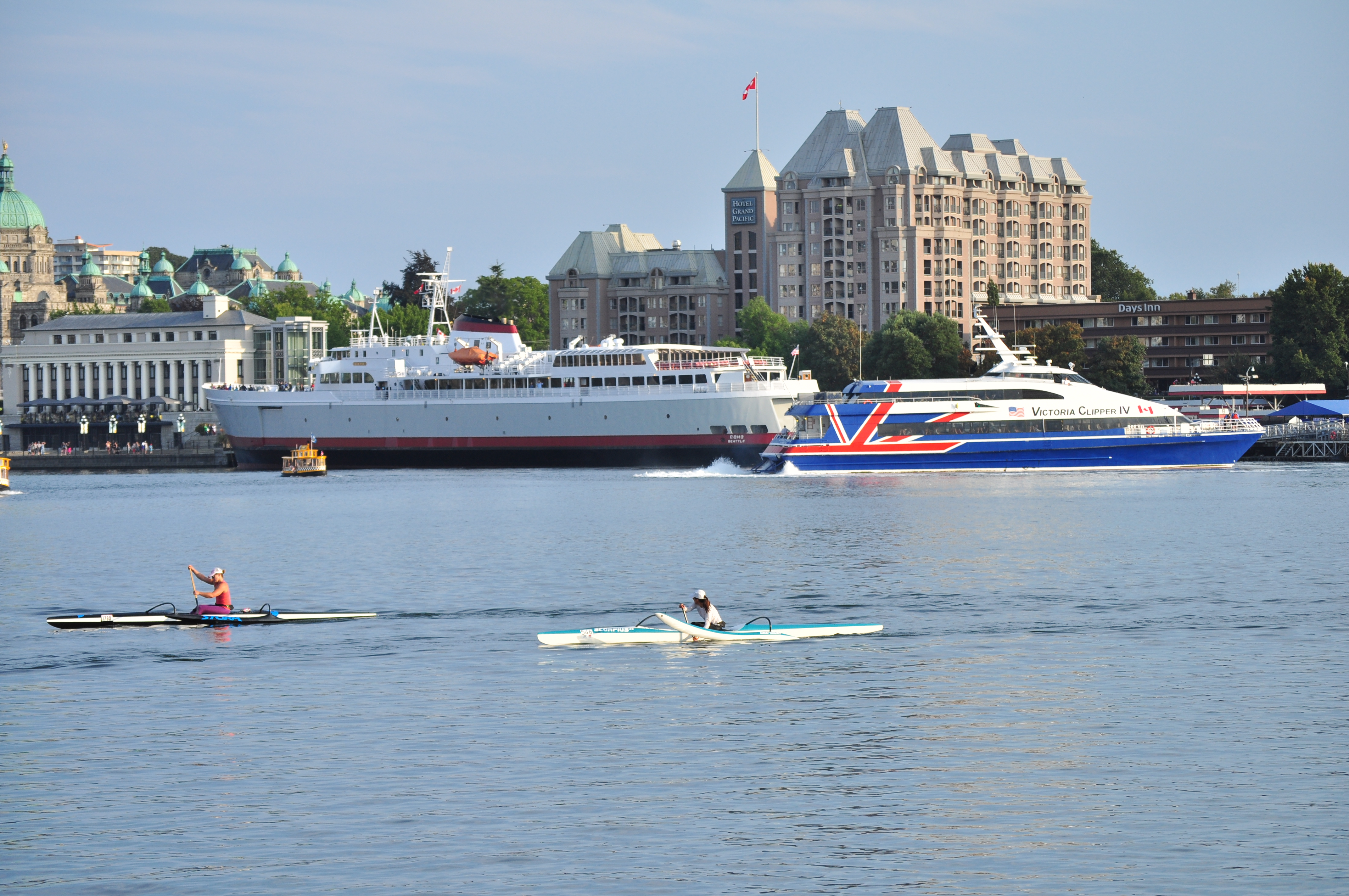
Victoria: The British Outpost That Time Forgot
Victoria exists because the Americans were coming. In the 1840s, the Oregon Treaty drew the border at the 49th parallel, and the Hudson's Bay Company needed a new Pacific headquarters north of the line. James Douglas established Fort Victoria on the southern tip of Vancouver Island in 1843, and around it grew a city that would become more British than Britain itself. The gold rush of 1858 brought chaos to the mainland, but Victoria remained the seat of colonial government, cultivating an English garden identity while the frontier raged north. That identity persisted, grew self-conscious, became marketing. Today Victoria offers afternoon tea at the Empress, the Butchart Gardens, and a climate mild enough for palm trees - a genteel anachronism that knows exactly what it's selling.
The Empire's Edge
Fort Victoria was empire-building through commerce. The Hudson's Bay Company traded furs with Indigenous peoples who had lived here for thousands of years, the Songhees and Esquimalt nations whose territories the British appropriated. The fort's location - southern tip of a large island, protected harbor, distance from American territory - made it strategic. When gold was discovered on the Fraser River in 1858, Victoria became the supply center for 30,000 miners flooding north. The colony of British Columbia was created to assert sovereignty; Victoria became its capital. The architecture went up in deliberate English style - Parliament Buildings, the Empress Hotel, stone and brick echoing London and Edinburgh in the Pacific fog.
The Gardens
The Butchart Gardens began as a limestone quarry. Jenny Butchart, wife of cement manufacturer Robert Butchart, started planting the exhausted pit in 1904, importing topsoil by horse-drawn cart. A century later, the 55-acre gardens draw nearly a million visitors annually - Sunken Garden in the former quarry, Japanese Garden, Italian Garden, Rose Garden, all immaculately maintained. The gardens represent Victoria's ethos: nature tamed into English prettiness, wild Pacific Northwest disciplined into flower beds. The climate cooperates; Victoria's latitude matches Paris, but the Japanese Current keeps temperatures mild. Flowers bloom year-round. The gardening culture extends throughout the city, front yards competing in genteel display.
The Empress
The Fairmont Empress Hotel opened in 1908, a Chateau-style landmark facing the Inner Harbour. The Canadian Pacific Railway built it, part of the chain of grand hotels that linked Atlantic to Pacific. Afternoon tea in the Empress lobby became the quintessential Victoria experience - tiered trays of sandwiches and scones, pots of properly steeped tea, served in surroundings of ivy and chintz. The ritual is self-consciously performative now; tourists dress up, servers maintain British accents, everyone participates in the theater of empire nostalgia. Whether this represents cultural preservation or colonial cosplay depends on the observer. The tea remains properly brewed.
The Modern City
Beneath the British veneer, Victoria has become a distinctly West Coast city. The Indigenous presence, long suppressed, is increasingly acknowledged; the Royal BC Museum interprets First Nations history with sensitivity developed through consultation. The technology sector has grown; the maritime industry remains. Young people priced out of Vancouver find Victoria more accessible. The retirees who once defined the population share the city with students and entrepreneurs. The British aesthetic persists, maintained because tourists expect it and residents often prefer it, but the substance is Canadian Pacific - environmentally conscious, culturally diverse, connected more to Seattle than London.
Visiting Victoria
Victoria is located on the southern tip of Vancouver Island, accessible by ferry from Tsawwassen (mainland) or Anacortes (Washington), or by floatplane from Vancouver. The Inner Harbour centers activity; the Parliament Buildings glow with nighttime illumination. Afternoon tea at the Empress requires reservations and appropriate attire. Butchart Gardens are 20 minutes north; allow half a day. The Royal BC Museum interprets regional natural and human history. Whale-watching tours depart from the harbor (orcas, humpbacks, gray whales seasonal). Fisherman's Wharf offers houseboats and fish and chips. The climate is mild but rain is common; layers recommended. The experience blends colonial history, natural beauty, and Canadian courtesy - a city comfortable in its contradictions.
From the Air
Located at 48.43°N, 123.37°W on the southern tip of Vancouver Island, British Columbia. From altitude, Victoria appears at the end of a peninsula, the Inner Harbour cutting into the city center where the Empress Hotel and Parliament Buildings face each other across the water. The Strait of Juan de Fuca separates Vancouver Island from Washington State to the south; the Olympic Mountains rise beyond. Ferry wakes trace routes to the mainland and San Juan Islands. The city spreads in manicured neighborhoods, notably greener than typical Northwest gray. Oak Bay extends east; Esquimalt's naval base west. What appears from altitude as a small coastal city is Canada's most British outpost - maintaining empire aesthetics a century after the empire ended.