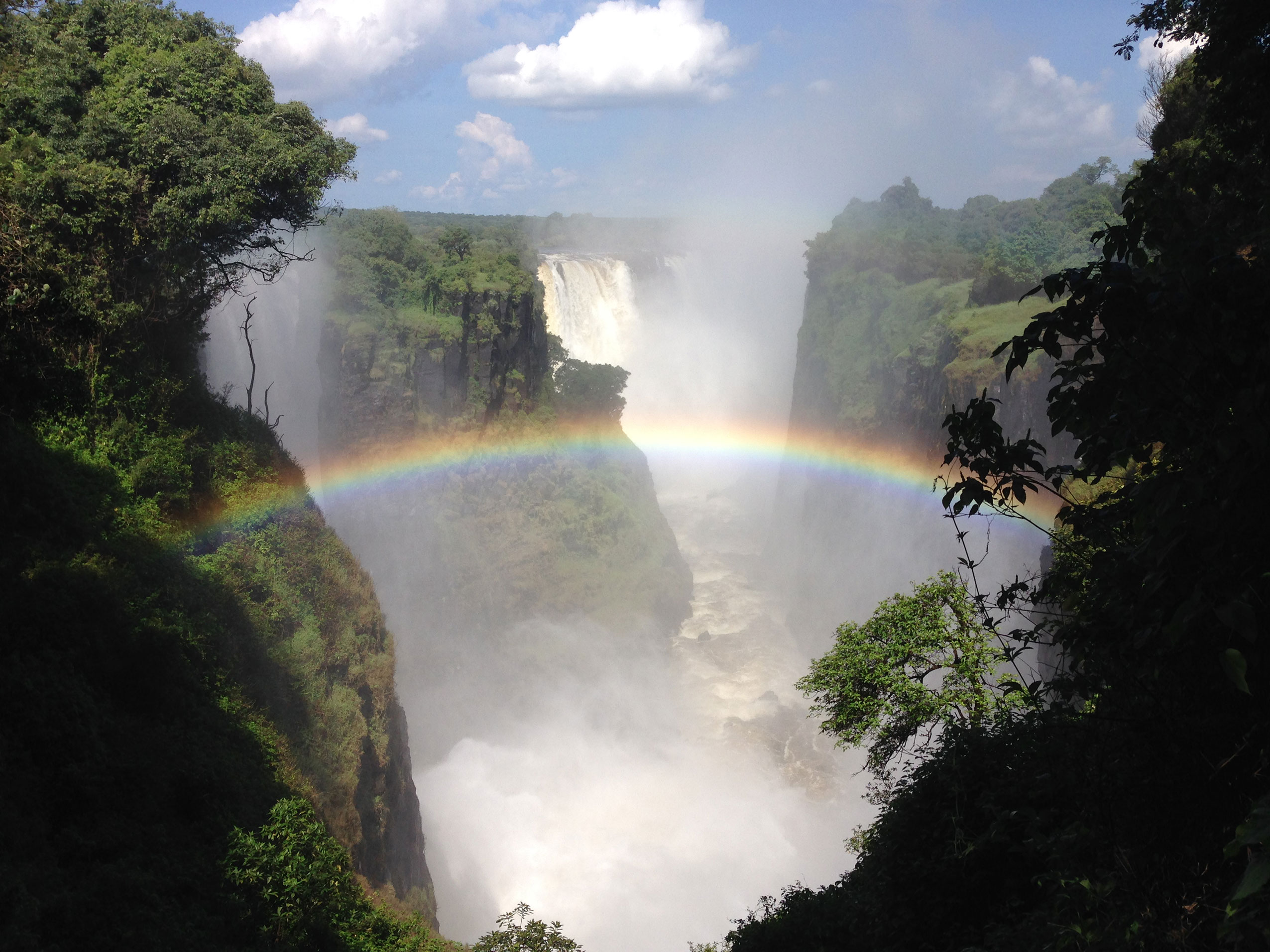
Victoria Falls, Zimbabwe
The mist rises high enough to see from 50 kilometres away. The Kololo people called it Mosi-oa-Tunya -- "The Smoke That Thunders" -- and when you stand in the town that shares its modern name with the waterfall, you understand why the spray feels less like weather and more like a presence. Victoria Falls, Zimbabwe, is a city of 35,199 people perched on the southern bank of the Zambezi River, at the western edge of the cascade that David Livingstone described as the most wonderful sight he had witnessed in Africa. But the town is more than a viewing platform. It is a border crossing, a railway junction, an adventure capital, and a place where the colonial infrastructure of Cecil Rhodes's Cape-to-Cairo dream collides with the urgencies of a modern African economy.
Where the Railway Met the Spray
Settlement began in 1901, when engineers arrived to assess the waterfall's potential for hydroelectric power. The town expanded rapidly once the railway from Bulawayo reached it in 1905, shortly before the Victoria Falls Bridge opened in April of that year. That bridge -- a combined road and rail span -- connected Southern Rhodesia to Northern Rhodesia, now Zimbabwe and Zambia respectively, and it remains the only rail link between the two countries. Cecil Rhodes reportedly insisted the bridge be built close enough to the falls that passengers would feel the spray. Whether or not that is apocryphal, the bridge does get wet. The town became the principal tourism centre for the falls, enjoying economic booms from the 1930s through the 1960s, and again in the 1980s and early 1990s. On 9 December 2020, Victoria Falls gained city status -- a formal recognition of what the population growth had already made obvious.
The Adrenaline Economy
By 2019, Victoria Falls offered over 200 adventure activities, making it a regional capital of adrenaline tourism. Whitewater rafting through the Batoka Gorge, bungee jumping from the bridge 111 metres above the Zambezi, helicopter tours over the falls, jet boating, skydiving, paragliding, mountain biking, and fly fishing all compete for visitor attention. The falls themselves remain the anchor, but the town has learned not to rely on a single attraction. Most jobs are travel or accommodation-related, and the employment growth rate hit 10.3 percent in 2018 -- the highest of any area in Zimbabwe. Young people move here for work, pushing the population growth to 7.1 percent between 2018 and 2019. That growth has consequences: Victoria Falls is the second least affordable place in Zimbabwe to buy property, trailing only Harare.
Crossroads of a Continent
Victoria Falls sits on the A8 road, part of the Cairo-Cape Town Highway -- Trans-African Highway 4 -- connecting Zimbabwe to Zambia via the Victoria Falls Bridge. The bridge is one of only three road crossings between the two countries. Rovos Rail operates a luxury train service connecting the city to Bulawayo, Pretoria, and Johannesburg two to four times a month, running along a route that forms a fragment of the never-completed Cape-to-Cairo railway. Victoria Falls Airport, 18 kilometres south of town, was rebuilt and expanded in 2013 and now handles international services to Johannesburg, Cape Town, Addis Ababa, Nairobi, Windhoek, and Gaborone. The town of Livingstone, Zambia, lies just a few kilometres to the north across the river, making this one of Southern Africa's most active binational zones -- two countries sharing a waterfall and a complicated history.
Living With the Thunder
Central Vic Falls, as locals call it, hosts the historic district where the oldest hotels, restaurants, and bars cluster along streets that have changed names more often than buildings. A coal-fired rail steamer, over a century old, still offers meals on excursion runs to the bridge and the Zambian border. The town is surrounded by three national parks -- Zambezi, Mosi-oa-Tunya, and Victoria Falls -- which buffer it from unchecked development and keep the wildlife corridors open. Hwange National Park lies 109 kilometres to the southeast along the railway. For all its adventure-tourism energy, the town's rhythm is still set by the Zambezi. The river swells in the rainy season, and the falls reach their fullest between February and May, when the spray column rises hundreds of metres and the roar is audible from the town centre. In the dry months the flow diminishes and parts of the rock face emerge, offering a different kind of beauty -- the geology behind the spectacle.
From the Air
Located at 17.93S, 25.83E on the southern bank of the Zambezi River in northwestern Zimbabwe. The Victoria Falls spray column is visible from great distances and serves as an unmistakable navigation landmark. Victoria Falls Airport (FVFA) lies 18 km south of town. The Victoria Falls Bridge crossing to Zambia is visible from altitude, spanning the gorge just downstream of the falls. Livingstone, Zambia is immediately north across the river. The A8 road runs southeast to Hwange (109 km) and Bulawayo (440 km). The surrounding national parks appear as continuous green corridors along both banks of the Zambezi.