Viking Ship Museum (Oslo)
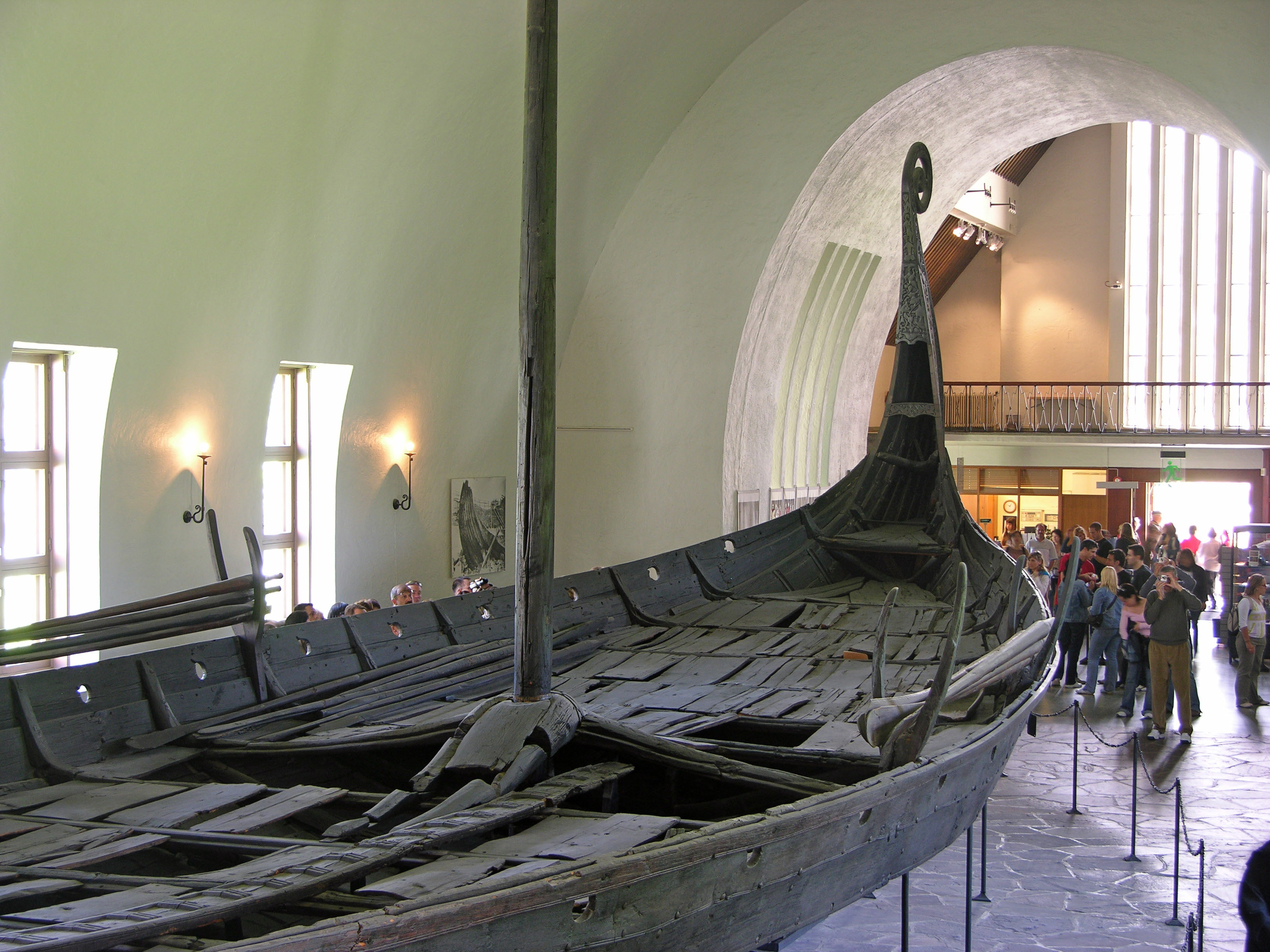
The word starboard comes from the Old Norse styrbord, meaning steering board, the side of a Viking ship where the rudder was mounted. You can see one of those original steering boards in Oslo, attached to the Oseberg ship inside a museum on the Bygdoy peninsula that was designed around it. The Viking Ship Museum does not merely display artifacts behind glass. Its architect, Arnstein Arneberg, shaped each hall to frame a specific vessel, creating spaces where the ships seem to be sailing through the building itself. Three ships, three burial mounds, three windows into how the Norse world honored its dead and built for the sea.
Three Ships, Three Stories
The museum houses the Oseberg ship, the Gokstad ship, and the Tune ship, each recovered from burial mounds in the Vestfold and Ostfold regions of southeastern Norway. The Oseberg, excavated in 1904 and 1905, is the star of the collection: a 21-meter karve with intricately carved bow and stern, buried in 834 CE with two women and an extraordinary array of grave goods. The Gokstad ship, found in 1880, is larger and sturdier, a true ocean-going vessel that demonstrated Viking engineering at its peak. The Tune ship, discovered in 1867, is the most fragmentary of the three but still reveals crucial details about early Norse shipbuilding. Together, they span the range of Viking maritime technology, from ceremonial elegance to functional power.
A Building Shaped by Its Contents
Swedish professor Gabriel Gustafson proposed a dedicated building for the Viking ship finds in 1913, recognizing that the temporary university shelters where the Gokstad and Oseberg ships had been stored since their excavation were inadequate. An architectural competition was held, and Arnstein Arneberg won with a design that treated each ship as the centerpiece of its own cruciform hall. The Oseberg hall was completed first, funded by the Parliament of Norway, and the ship was transported from the university shelters on rails through Oslo streets to Bygdoy in 1926. The Gokstad and Tune halls followed in 1932. A fourth hall, delayed by the Second World War, was not completed until 1957. It houses the remaining grave goods, including the sleighs, cart, and textiles recovered primarily from the Oseberg burial.
The Fragility Debate
In December 2000, the University of Oslo endorsed a proposal to relocate the ships to a new museum in Bjorvika, Oslo's redeveloped waterfront district. The suggestion ignited a fierce debate that continued for over a decade. Opponents argued that the ships, conserved with alum treatments in the early 20th century that left the wood chemically unstable, were too fragile to survive a move. Proponents countered that modern engineering could manage the transfer safely and that a new facility would better serve conservation needs. In 2011, Norwegian Minister of Education Kristin Halvorsen declared the Oseberg ship would not leave Bygdoy. Instead, in 2015, the state building authority Statsbygg announced a competition to expand the existing facilities. Danish firm AART Architects won in April 2016 with their proposal titled NAUST, a word meaning boathouse in Norwegian.
Closed for Transformation
The Viking Ship Museum closed to the public in September 2021 and is not expected to reopen until 2027. The closure marks the most significant change to the museum since its final hall was completed in 1957. The expansion project will add new exhibition spaces, improved conservation facilities, and modern visitor amenities while preserving Arneberg's original architectural vision. Beyond the ships themselves, the museum's collection includes Viking-era sleighs, beds, a horse cart, wood carvings, tent components, and buckets, everyday objects that reveal how ordinary life was lived by people whose age is too often reduced to raiding and conquest. When the doors reopen, the ships that have defined Norway's relationship with its Viking past will greet a new generation in a setting that honors both the artifacts and the century of scholarship that has made them speak.
From the Air
Located at 59.90N, 10.68E on the Bygdoy peninsula, a leafy district on the western side of Oslo jutting into the Oslofjord. The museum building's distinctive cruciform shape is visible from the air. Bygdoy also hosts the Fram Museum, the Kon-Tiki Museum, and the Norwegian Maritime Museum. Nearest major airport is Oslo Gardermoen (ENGM), approximately 40 km northeast. The peninsula is clearly identifiable from approaches over the Oslofjord. Best viewed at 2,000-4,000 ft AGL.