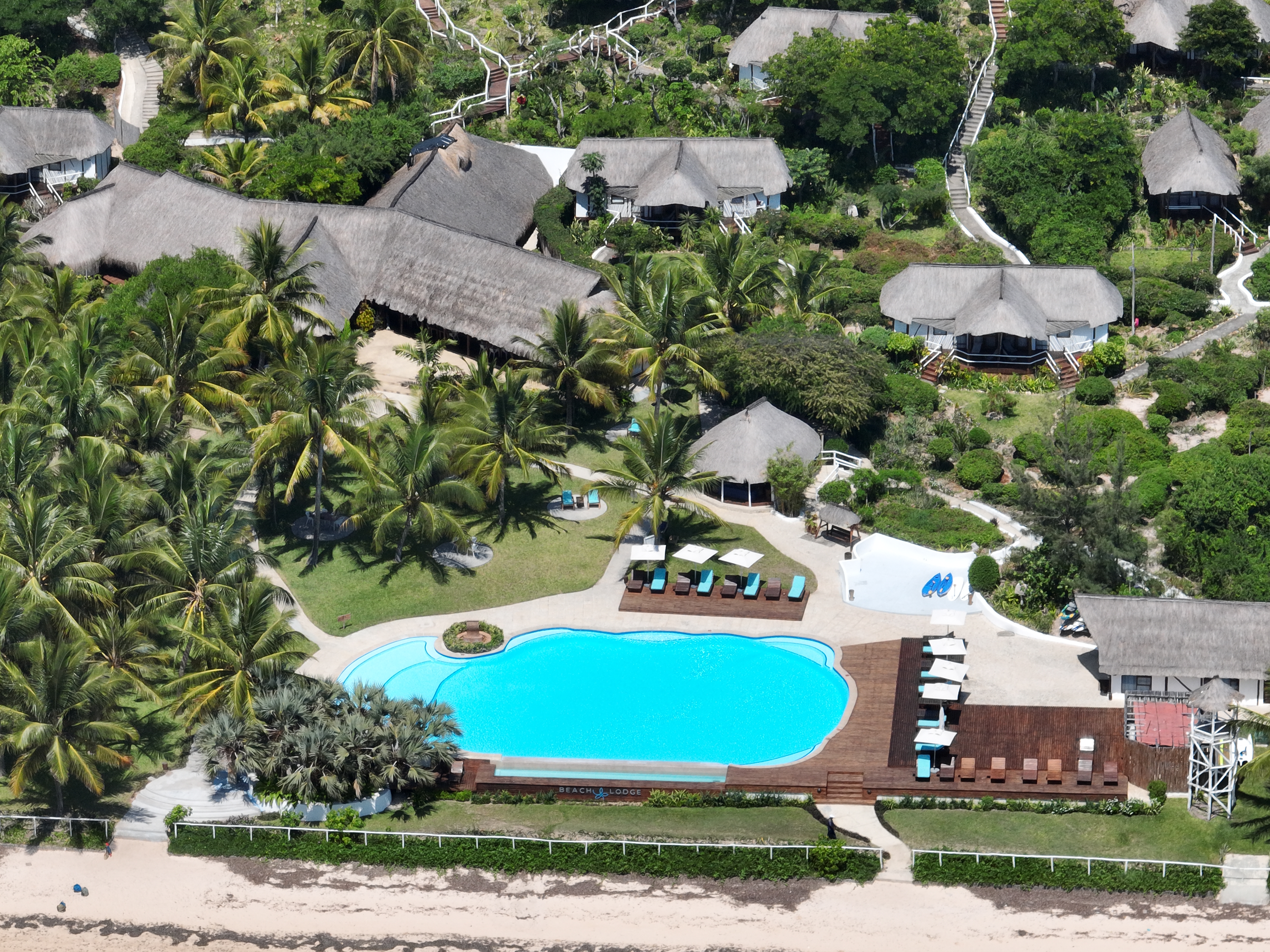
Vilanculos
The dhows leave at dawn, their triangular sails silhouetted against a sky that shifts from violet to gold over the Indian Ocean. They are headed for the Bazaruto Archipelago, and they depart from Vilanculos — a coastal town in southern Mozambique that has reinvented itself from a quiet fishing settlement into the country's undisputed capital of water sports. The town itself is compact and walkable, a stretch of sandy streets where beach resorts range from budget guesthouses to five-star barefoot luxury. But Vilanculos exists, in a sense, as a launchpad: everything here points outward, toward the water and the five islands shimmering on the horizon.
The Road In
Getting to Vilanculos requires commitment. From Johannesburg, it is approximately 1,378 kilometers by road, following the EN4 to the outskirts of Maputo and then the EN1 north through Xai Xai. From Maputo alone, expect a twelve-hour coach ride departing at four in the morning. The alternative from Zimbabwe runs 584 kilometers from the Forbes Border Post through Mutare along the EN6, turning south on the EN1 for a final 384-kilometer stretch. These are pot-holed asphalt roads, the kind that test suspension systems and patience in equal measure. Flying is the faster option: Vilanculos International Airport receives flights from Airlink, LAM, and Federal Air, with connections through Johannesburg or Maputo. Charter flights from South Africa and Zimbabwe offer a more direct route. However you arrive, the town rewards the effort — the turquoise water visible from the air is not a trick of the light.
Five Islands on the Horizon
The Bazaruto Archipelago comprises five islands stretching from north to south: Bazaruto, Santa Carolina (known as Paradise Island), Benguerra, Margaruque (also called Ilha Santa Isabel), and Bangue. Together they form Mozambique's only underwater national park, a marine reserve protecting coral reefs, seagrass beds, and some of the most biodiverse waters in the western Indian Ocean. From Vilanculos, day trips by traditional dhow or motorboat reach the islands easily. On the seaward side of the archipelago, dive sites offer depths of 12 to 30 meters with visibility reaching 40 meters. The waters teem with dolphins, humpback whales, whale sharks, manta rays, spotted eagle rays, and four species of sea turtle. San Sebastian, a mainland peninsula jutting south in line with the islands, creates a large protected bay where the sea calms and the snorkeling begins.
Marlin Season
Between early October and the end of January, the waters around the Bazaruto Archipelago become one of the premier black marlin destinations in the eastern Indian Ocean. The marlin follow the tuna, and the tuna follow the warm currents that push close to the island shallows during the southern hemisphere summer. Game fishers arrive from South Africa, Europe, and beyond, drawn by the prospect of hooking fish in waters that remain relatively uncrowded compared to other world-class marlin grounds. But fishing here is not only a tourist pursuit. For the communities along the Vilanculos waterfront, fishing is livelihood. Men, women, and children participate, organized into community fishing committees that manage the catch along this stretch of the Mozambican coast. The overlap between sport fishing and subsistence fishing gives Vilanculos its particular character — a place where barefoot luxury and working boats share the same shoreline.
Seasons and Light
Vilanculos operates on two seasonal rhythms. The dry season runs from March to November, with temperatures between 15 and 23 degrees Celsius — evenings cool enough to need a sweater, mornings crisp enough that the ocean feels warm by comparison. The wet season brings heat, with temperatures climbing between 23 and 34 degrees, and afternoon thunderstorms that pass as quickly as they arrive. The diving is best in the dry season, when visibility peaks and the ocean flattens. The marlin arrive with the heat. For those who come by dhow safari, gliding through the archipelago on a traditional sailing vessel, either season offers its rewards: the cool-season clarity or the summer drama of towering cumulus clouds reflected in water so calm it looks polished. Vodacom 4G coverage reaches the town, but the point of Vilanculos is the disconnection — the hours spent on the water, the light shifting across the islands, the unhurried pace of a place that measures time by tides.
From the Air
Vilanculos is located at 22.00°S, 35.32°E on the southern Mozambican coast. Vilanculos International Airport (FQVL) is the primary facility, served by Airlink, LAM, and Federal Air with connections through Johannesburg and Maputo. From 3,000–5,000 feet AGL, the town is visible as a compact coastal settlement with the Bazaruto Archipelago's five islands clearly visible to the east. The coastline runs roughly north-south with turquoise shallow water extending toward the islands. The dry season (March–November) offers the best flying visibility.