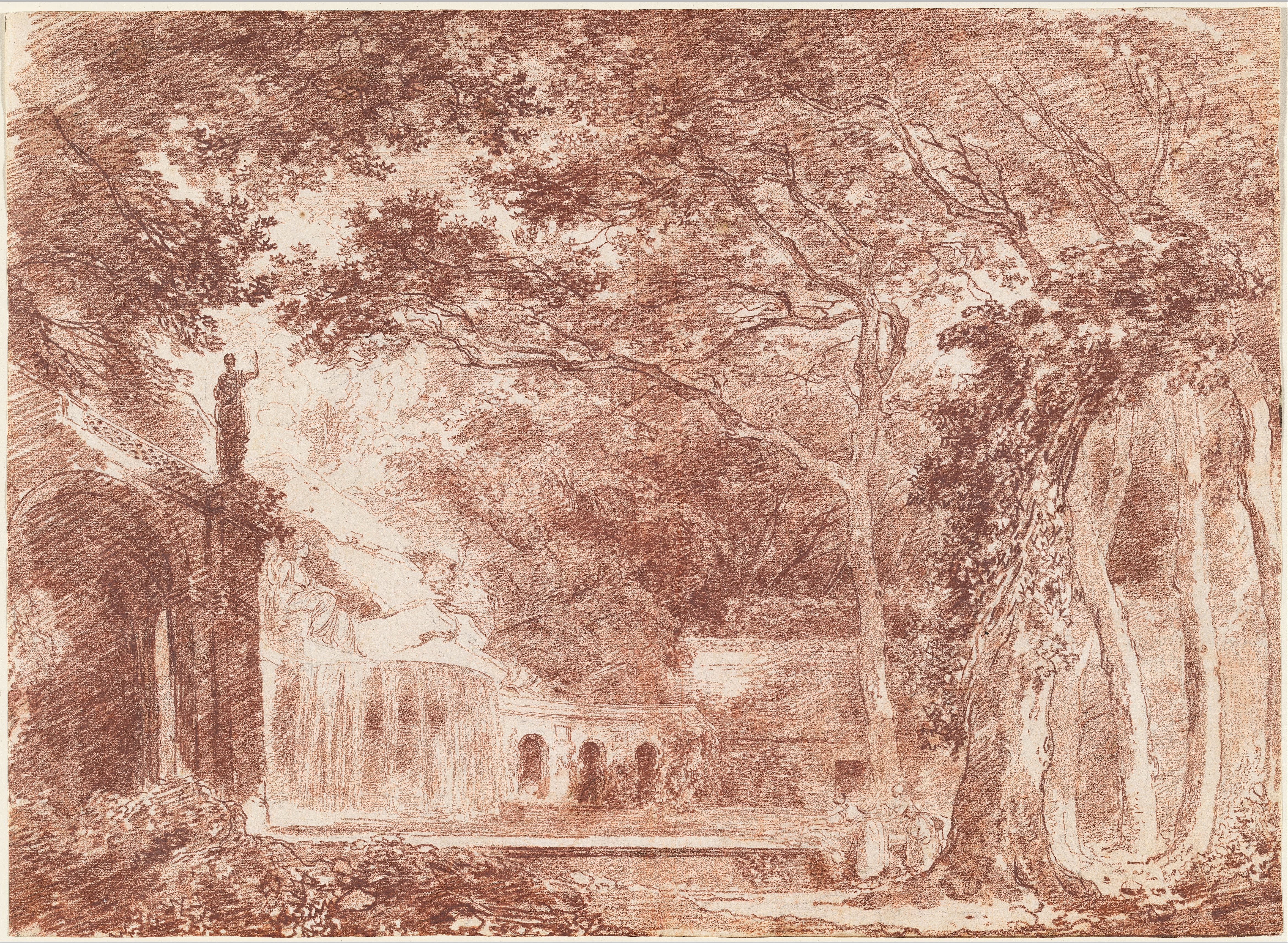
Villa d'Este
Five times, Cardinal Ippolito II d'Este put himself forward for the papacy. Five times, he was denied. The grandson of Pope Alexander VI and Lucrezia Borgia, with an annual income of 120,000 scudi and connections across every court in Europe, simply could not close the deal. After his final defeat in 1566, the cardinal turned away from Vatican politics and toward a hillside in Tivoli. There, on the site of a cramped Benedictine convent, he would build something no pope had ever achieved: a villa and garden so extraordinary that four and a half centuries later, visitors still climb its terraces to watch water perform.
The Cardinal Who Wouldn't Quit
Ippolito was destined for the church from birth. Named Archbishop of Milan at ten years old, he became an advisor to the French King Francis I by twenty-seven and a cardinal at thirty. His lavish patronage supported Benvenuto Cellini, the composer Pierluigi da Palestrina, and the poet Torquato Tasso. When the College of Cardinals awarded him the lifetime governorship of Tivoli in 1549 as a consolation prize, d'Este saw opportunity rather than exile. The position gave him jurisdiction over Hadrian's Villa and other sites being excavated nearby -- a paradise for a man who collected antiquities obsessively. He commissioned the classical scholar Pirro Ligorio, who had studied Hadrian's Villa extensively, to plan a new estate that would surpass what the Romans had built. Marble and statuary were hauled directly from Hadrian's ruins. When local residents filed twelve lawsuits against the Cardinal for demolishing their houses and roads to clear his construction site, he pressed on undeterred.
Gravity's Orchestra
The numbers are staggering: 51 fountains, 398 spouts, 364 water jets, 64 waterfalls, and 220 basins, all fed by 875 meters of canals, channels, and cascades. Not a single pump. The entire system runs on gravity, exploiting the steep 45-meter drop from the villa at the top to the fishponds at the bottom. The nearby river Aniene was diverted through a kilometer of underground channels to supply the network. Tommaso Chiruchi of Bologna, one of the 16th century's most skilled hydraulic engineers, designed the technical infrastructure, assisted by the Frenchman Claude Venard, a manufacturer of hydraulic organs. Their creations went beyond spectacle. The Fountain of the Owl featured twenty bronze birds, each piped to sing an individual song through water and air, until a mechanical owl appeared to silence them. The Fountain of the Dragons once produced cannon-like sound effects as pressurized water was suddenly released. The Water Organ -- restored and now playing daily for visitors -- used hydraulic pressure to force air through organ pipes, producing actual music from flowing water.
Rooms Painted Like Dreams
Inside the villa, teams of painters led by Girolamo Muziano and Federico Zuccari labored between 1565 and 1572 to cover every surface with frescoes, stucco, and gilding. The decorative program is obsessively thematic. The Hall of Noah features the patriarch's ark landing on Ararat, with a white eagle -- the d'Este emblem -- prominently disembarking. The Hall of Moses shows the prophet striking water from rock, a pointed metaphor for Ippolito's own engineering feat of channeling water through stone to feed his fountains. The First and Second Tiburtine Halls illustrate local mythology: the story of the Tiburtine Sibyl, King Annius drowning in the river Aniene, and three legendary Greek brothers who founded the city of Tibur. The Hall of Glory, completed by Zuccari and eight assistants, is a masterpiece of Roman Mannerist painting, with illusionistic doors, windows, and everyday objects rendered so convincingly they blur the boundary between architecture and art. Ippolito died three months after hosting Pope Gregory XIII in 1572, having pawned his silver to pay for the reception.
Decay, Romantics, and Restoration
After Ippolito's death, the villa passed through family hands and entered a long decline. By the 18th century, furnishings had been shipped to Modena and antique sculptures sold to collectors across Europe. The Sleeping Venus ended up in one museum, the Pandora statue in the Capitoline, the Aesculapius in the Louvre. French soldiers occupied the estate twice, stripping what decoration remained. Paradoxically, the ruin attracted a new kind of admirer. Between 1850 and 1896, Cardinal Gustav von Hohenlohe restored portions of the overgrown grounds, and the romantic decay drew artists and musicians. Franz Liszt visited repeatedly between 1865 and 1885, composing three piano pieces inspired by the gardens, including "Les jeux d'eau a la Villa d'Este" -- one of the most influential evocations of water in the history of keyboard music. The Italian state acquired the villa after World War I and began systematic restoration in 1922. Bomb damage in 1944 and postwar pollution degraded some surfaces, but sustained campaigns of conservation have preserved the villa's essential character. UNESCO inscribed it as a World Heritage Site in 2001, recognizing its influence on landscape design across Europe.
From the Air
Villa d'Este is located at 41.963N, 12.796E, in the hilltop town of Tivoli about 30 km east of central Rome. From 3,000-5,000 feet AGL, Tivoli is visible as a compact settlement perched on elevated terrain above the Roman Campagna, with the terraced gardens of the villa descending the western slope toward the plain. Hadrian's Villa lies roughly 1 km to the southwest at lower elevation. Rome Ciampino Airport (LIRA/CIA) is about 22 km west. Leonardo da Vinci-Fiumicino Airport (LIRF/FCO) is approximately 45 km west-southwest. The Aniene River valley provides a natural corridor from Rome to Tivoli.