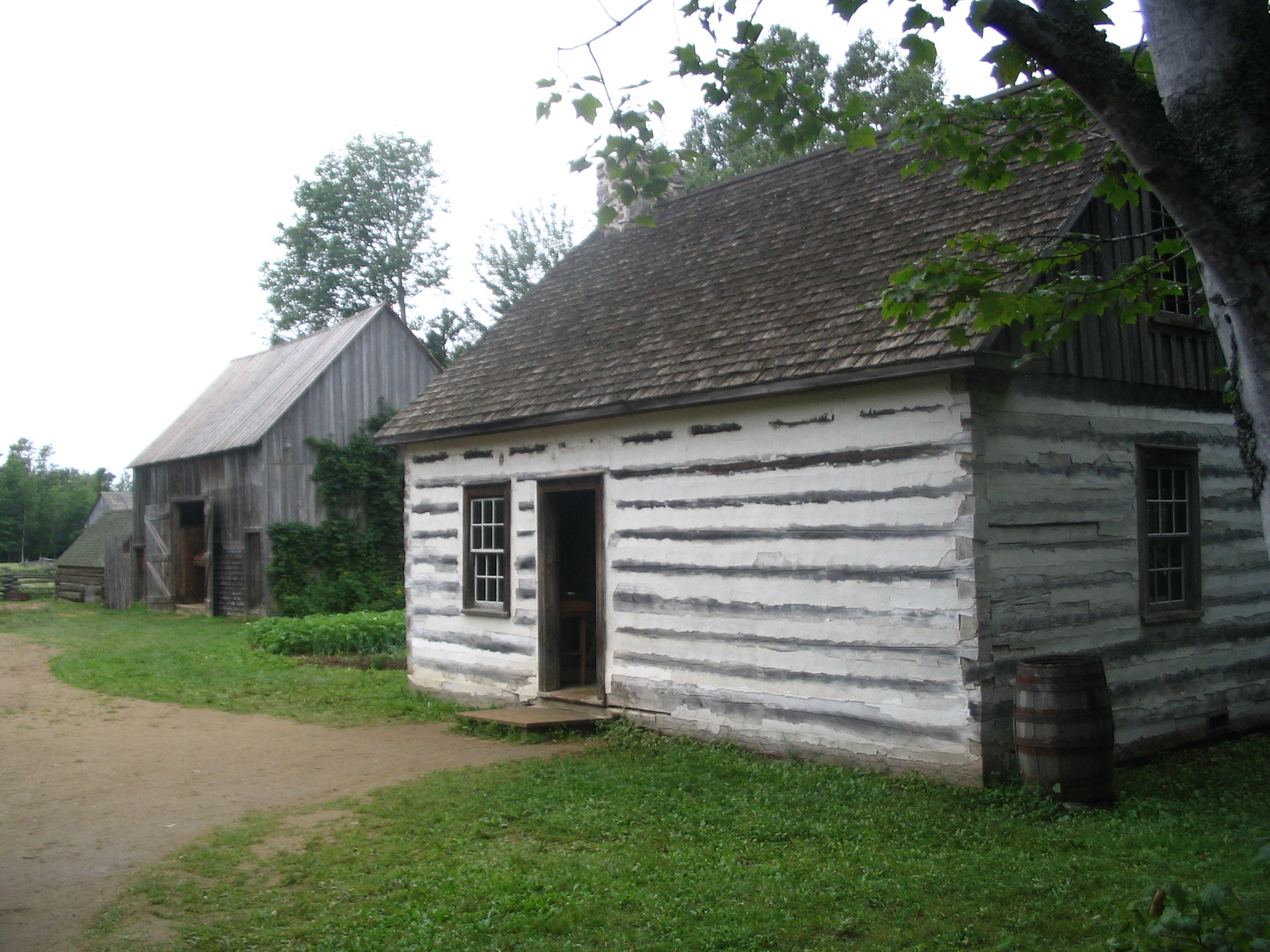
Village Historique Acadien Provincial Park
Step through the gate and the twenty-first century falls away. A blacksmith hammers iron in a forge that smells of coal and sweat. A woman in an eighteenth-century dress cards wool on the porch of a farmhouse that was dismantled in another part of New Brunswick and rebuilt here, beam by beam. Down the path, a shingle maker splits cedar with the same tools and techniques his ancestors used two hundred years ago. The Village Historique Acadien, set on the marshes of the Riviere du Nord near Caraquet in northeastern New Brunswick, is not a theme park. It is a meticulous reconstruction of the world the Acadians built after the British tried to destroy them, covering nearly two centuries of daily life from 1770 to 1949.
From Ashes to Archive
The idea for the village emerged in 1965, a decade after Canada began to reckon more seriously with the Acadian story. A feasibility study followed in 1969, and between 1973 and 1976, historic buildings from across New Brunswick were identified, dismantled, transported, and reassembled on the site. The village opened to visitors in 1977 with a mission that went beyond nostalgia: to document and preserve the material culture of a people who had been forcibly expelled from their homeland beginning in 1755. Today, thirty-eight original historic buildings dating from 1770 to 1939 stand alongside nine faithful reproductions. Together, they house a collection of more than eight thousand Acadian heritage artifacts, from cooking implements and furniture to farming equipment and religious objects.
Walking Through Time
A 2.2-kilometre trail winds through the village, and every building along it is staffed by bilingual interpreters in period costume who do not merely explain the past but inhabit it. In the Mazerolle farm, crops grow according to the old calendar. At the Robin warehouse, the commercial realities of the cod trade come into focus. The Riordon mill grinds grain. The Godin house shows how a family lived in the years following the deportation, when survival depended on resourcefulness and community solidarity. The progression through the village follows a rough chronology, moving from the spare, determined world of the late eighteenth century through the modest prosperity of the nineteenth and into the early twentieth century, when an Irving gas station marks the arrival of the modern economy.
Sleeping in the Past
Among the village's most distinctive features is the Hotel Chateau Albert, a faithful replica of a turn-of-the-century hotel that once stood in Caraquet before fire destroyed it in 1955. Guests can spend the night in period-decorated rooms, dine in the hotel's restaurant, and wake up inside the village before it opens to the public. It is the rare museum experience that does not end when the gift shop closes. The village also offers a restaurant serving traditional Acadian cuisine and two shops with regional crafts. In 1996, the Society of American Travel Writers honored it with the Phoenix Award, and Attractions Canada recognized it in 2001 and 2002.
What Endures
The Village Historique Acadien is open from June through September for its full living-history program, but visitors can walk the grounds during the fall, winter, and spring months free of charge. In those quieter seasons, the buildings stand empty and the interpreters are gone, but the landscape itself tells the story. The marshes, the river, the low-angled Maritime light on weathered clapboard, all of it speaks to the environment that shaped Acadian life after the deportation. What the village preserves is not just a collection of old buildings. It is evidence of adaptation, of a people who arrived on this shore with almost nothing and, within a generation, had built a world complete enough to be worth remembering. The artifacts behind the glass and the demonstrations at the forge are important. But the deeper lesson is in the simple fact that these buildings exist at all, that the Acadians who built them had already survived the worst thing that could happen to a community and chose to start again.
From the Air
Located at 47.79N, 65.10W near Caraquet in northeastern New Brunswick. The village sits on marshland along the Riviere du Nord, visible from the air as a cluster of historic buildings set apart from the surrounding modern landscape. Nearest airport is Bathurst Airport (CZBN), approximately 50 km to the southwest. From 2,000-3,000 feet, the village's layout along its trail system and its waterfront setting are clearly distinguishable.