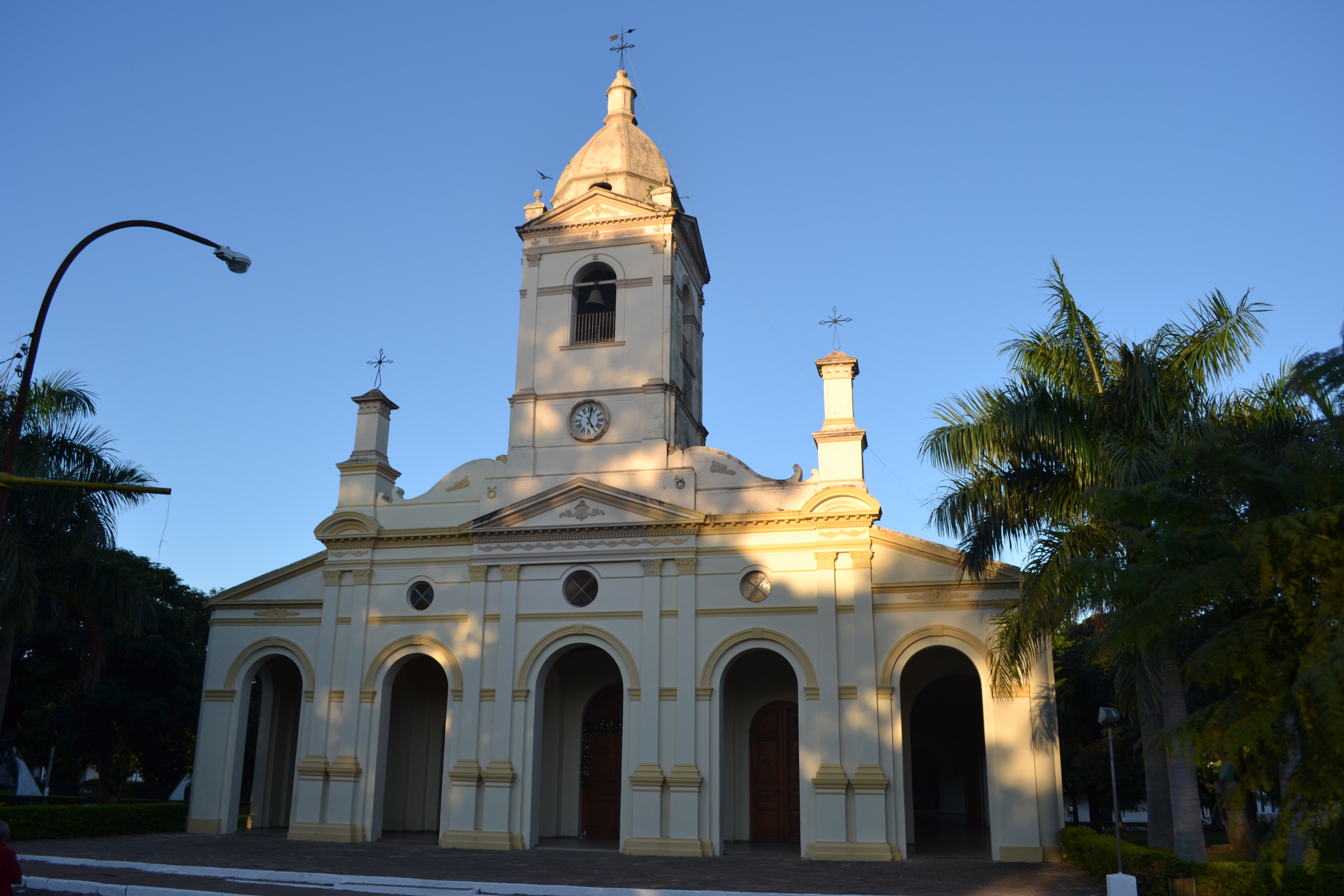
Villarrica, Paraguay
Seven times they packed up and moved. Over the course of more than a century, the residents of Villarrica del Espiritu Santo dismantled their settlement, loaded what they could carry, and walked to a new location -- driven by Portuguese bandeirante raids, political quarrels, poor soil, or simply the realization that where they were was no longer safe. The city earned its nickname honestly: La Ciudad Peregrina, the Wandering City. When they finally stopped moving in 1683, settling near the Ybytyruzú hills in central Paraguay, it was not because the dangers had passed. It was because they had found land worth defending.
Gold That Never Was
In 1570, the Sevillian conquistador Ruy Diaz de Melgarejo departed from Ciudad Real with forty men and fifty-three horses, heading east into lands ruled by an indigenous chief named Cuaracybera -- a name meaning "Shining Sun." Melgarejo founded his settlement on May 14, near the Catholic feast of the Holy Ghost, and named it Villa Rica del Espiritu Santo: Wealthy Village of the Holy Ghost. The wealth was aspirational. He believed precious metals lay in the surrounding terrain, but gold and silver never materialized. What Melgarejo did find was trouble with his superiors -- the interim Governor Felipe de Caceres had driven him from office over a personal dispute, and when his replacement arrived, Melgarejo had the man arrested, imprisoned, and banished to a cabin forty leagues away. It was the kind of start that foreshadowed the chaos to come.
A Century of Wandering
The first relocation came in 1592, when explorer Ruy Diaz de Guzman moved the city 100 kilometers east. In 1599, another move brought it near the Mboteitei River. After years of relative peace, the Portuguese bandeirantes invaded in 1632, scattering the population into four years of wandering before they regrouped near the Mbaracayu hills. Governor Valderrama then relocated them to the fields of Yaru. In 1642, they moved again to Curuguaty. By 1678, the settlers had reached the banks of the Tobatyry River, at a place called Espinillo, where the soil proved too poor for farming. A reconnaissance expedition beyond the Tebicuarymi River finally found fertile ground and freshwater streams near the Ybytyruzú hills. On May 25, 1682, the Spanish Governor authorized the move. Nearly two decades later, on May 14, 1701, King Philip V issued the Royal Order confirming the settlement as permanent. After 131 years of displacement, Villarrica had a home.
From Brilliance to Exile
The Franciscan missionaries who helped stabilize the settlement ran schools from the 1600s until 1818, when dictator Gaspar de Francia shut them down. Schools reopened in 1844 after Francia's death, only to close again in 1865 with the outbreak of the Paraguayan War. When the war ended in 1870, Villarrica's population had been decimated. Recovery came by rail: the railway reached the city in 1888, sparking rapid growth. Between 1892 and the early 1900s, waves of immigrants arrived -- Italians, French, Germans, Spaniards, Ashkenazi Jews, Argentines, Uruguayans, Lebanese, Croats, and Greeks. They built industries, founded cultural institutions, and made Villarrica the second most important city in Paraguay after Asuncion. The city produced the country's first physician, its first poet, and its first neurosurgeon. But the 1947 civil war scattered Villarrica's intellectual class across the country and into Argentina. The Stroessner dictatorship from 1954 to 1989 drove out still more. By the century's end, newer cities like Ciudad del Este and Encarnacion had overtaken the Wandering City in economic importance.
The Culture That Remains
What Villarrica lost in political clout, it retained in cultural identity. Poet Manuel Ortiz Guerrero, classical composer Diego Sanchez Haase, and guitarist Cayo Sila Godoy all grew up in these streets. The Club Porvenir Guaireno, founded in 1888, is the oldest social club in Paraguay, and the Franciscan church in the Ybaroty neighborhood anchors a neighborhood that still feels colonial. The city sits 172 kilometers east of Asuncion and 200 meters above sea level, surrounded by undulating plains where palm groves and grasslands stretch toward the Ybytyruzú hills. Pink and yellow lapacho trees bloom along the roads in spring. Villarrica remains a university town -- home to three major institutions including the second-oldest medical school in Paraguay -- and its sugar processing, furniture making, and shoemaking industries keep the local economy grounded in small-scale craft rather than industrial ambition.
From the Air
Located at 25.75S, 56.44W in central eastern Paraguay, approximately 172 km east of Asuncion. The city sits on gently rolling terrain at about 200 meters elevation, with the Ybytyruzú hills visible to the east. Best viewed from 2,000-3,000 feet AGL. The surrounding landscape is a mix of grasslands, cultivated fields, and scattered palm groves. Nearest major airport: Silvio Pettirossi International Airport (SGAS) in Asuncion, approximately 172 km west. Guarani International Airport (SGES) near Ciudad del Este is approximately 217 km east.