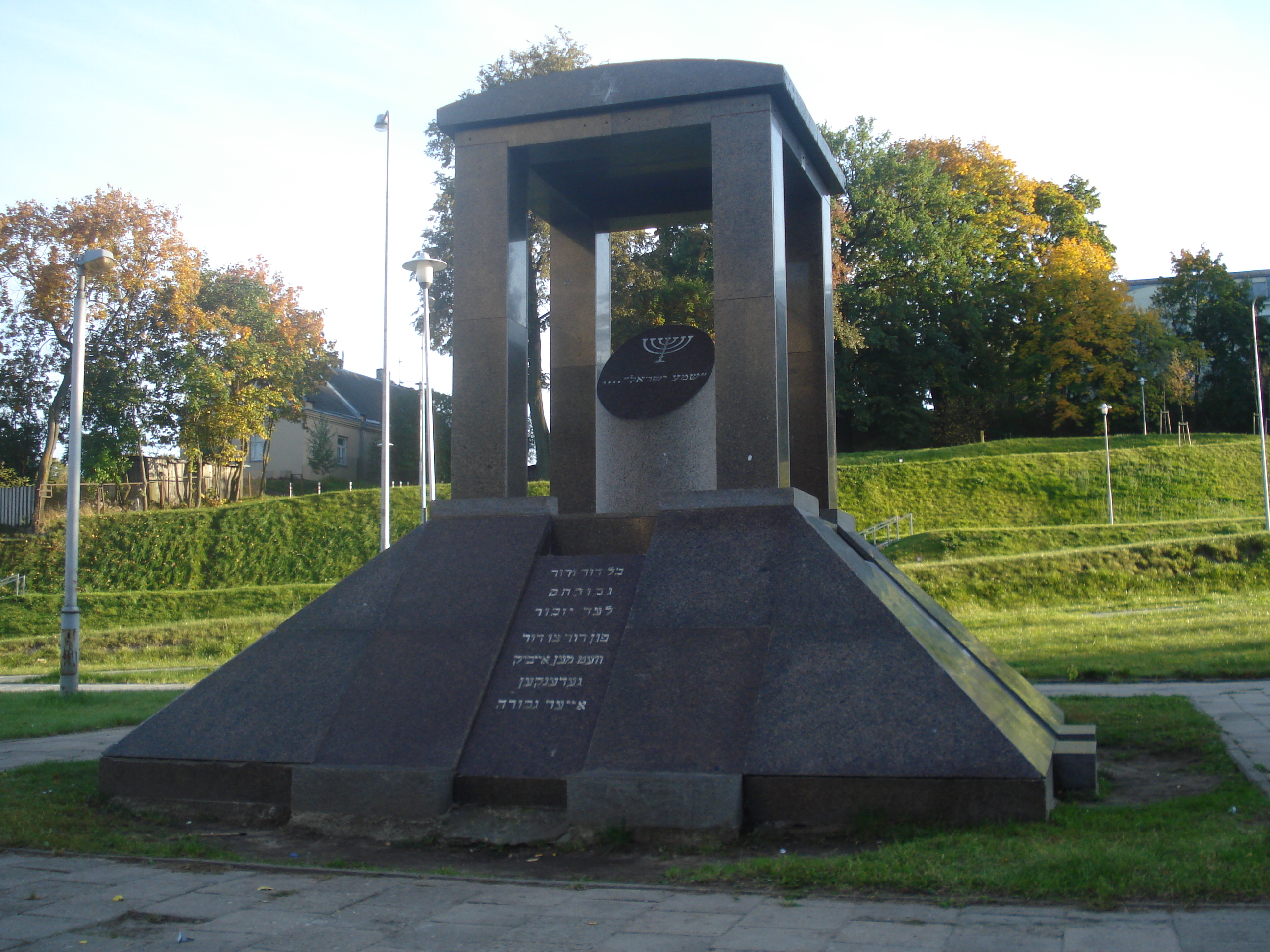
Vilna Ghetto
Before the war, Vilna was called Yerushalayim de Lita - the Jerusalem of Lithuania. The phrase was not sentimental. It described a city of more than a hundred synagogues and study houses, the home of the Vilna Gaon and the YIVO Institute for Jewish Research, where Yiddish was a working language of theatre and scholarship. Around 60,000 Jews lived there in June 1941, perhaps 80,000 counting refugees who had fled west from German-occupied Poland. By autumn 1943, almost none remained alive in the city. Most had been murdered in the pine forest at Ponary, eight kilometers south, where Lithuanian auxiliary police of the Ypatingasis būrys did most of the actual shooting under German command. The Vilna Ghetto - two cramped quarters carved out of the old Jewish neighborhood near Vokiečių Street - was the holding pen. This is what happened inside it.
Before the Walls Closed
The Germans entered Vilnius on 26 June 1941, four days after invading the Soviet Union. Einsatzgruppe B followed close behind. Through the summer, German troops and Lithuanian collaborators - the auxiliaries the Germans had quickly recruited and the snatchers Yiddish speakers called hapunes - killed more than 21,000 of the city's Jews before any ghetto existed. On 31 August, the SS staged a fake provocation as a pretext, and on 6-7 September 1941 the remaining 20,000 Jews were herded into two adjacent ghettos. They were not allowed transportation; whatever they could not carry on their backs they left behind. Three thousand seven hundred died in the move itself. Within weeks, the smaller ghetto had been emptied entirely - those without yellow work passes were marched to Ponary and shot. The ghetto entered what the Nazis called "stabilization" with roughly 20,000 surviving Jews crammed into a few city blocks.
The Paper Brigade
What the inhabitants did with the time they had remains one of the most extraordinary acts of cultural resistance in the Holocaust. Jewish Vilna's medical tradition kept the ghetto, against odds, free of the typhus epidemics that ravaged other ghettos - the work of the Health Department under Dr. Lazar Epstein. The Mefitze Haskole Library housed 45,000 volumes and became the "House of Culture," with reading rooms, lectures, theatre productions, and the continuation of the Yiddish magazine Folksgezunt. A teenager named Yitskhok Rudashevski kept a diary of ghetto life from 1941 to 1943. Another group, ordered by the Germans to sort through the YIVO archives and other Jewish libraries to ship to Frankfurt, instead became the Paper Brigade: poets and scholars including Avrom Sutzkever, Shmerke Kaczerginski, and Rachela Krinsky who smuggled tens of thousands of books, manuscripts, letters, and ritual objects back into the ghetto and hid them in cellars and walls. They saved what they could. Some of what they hid survived the war. Most of the people who hid it did not.
Wittenberg's Choice
Resistance in the Vilna Ghetto was not run by the Judenrat - this was almost unique. The Fareynikte Partizaner Organizatsye (FPO), the United Partisan Organization, was led by three men of different politics: Yitzhak Wittenberg, Josef Glazman, and Abba Kovner, the young poet whose January 1942 manifesto contained the line "Let us not go like sheep to the slaughter." The poet Hirsh Glick wrote the partisan hymn Zog nit keyn mol while inside the ghetto - he died after deportation to Estonia. In July 1943 the Germans demanded that Wittenberg, the FPO commander, be turned over. Jacob Gens, the head of the Jewish ghetto police whom the Nazis had made effective ruler of the ghetto, rallied the population against the resistance: was it worth sacrificing tens of thousands for the sake of one man? The ghetto's people, facing extermination either way, demanded Wittenberg surrender. He did. He was found dead in his cell the next morning - probably by cyanide Gens had slipped him. The decision broke the FPO. From that point, the resistance focused on smuggling young people out to fight as partisans in the forests.
Liquidation, and What Remained
The deportations began again on 6 August 1943, when Heinrich Himmler ordered 7,130 Jews shipped to camps in Estonia. On 23-24 September 1943, under SS-Oberscharführer Bruno Kittel, the ghetto was liquidated. Most of the remaining residents went to the Vaivara concentration camp, were murdered at Ponary, or were sent to death camps in occupied Poland. The FPO escaped through the sewers and joined Soviet partisans in the Rudninkai Forest. A small number of Jews survived in the Kailis and HKP 562 forced-labor camps - the latter run by Wehrmacht Major Karl Plagge, who deliberately delayed deportations to save his workers; 250 of his Jews lived to see liberation, the largest group of Vilnius Holocaust survivors. Across all of Lithuania, 254,000 of 265,000 Jews - roughly 95 percent - were murdered. Avrom Sutzkever, who escaped to the partisans, later testified at the Nuremberg trials about what happened at Ponary. His Yiddish poems, and the books the Paper Brigade buried, are most of what survived of Yerushalayim de Lita.
Walking the Streets Today
The two ghettos sat in what is now central Vilnius Old Town - bounded roughly by Stiklių, Žydų, Mėsinių, Antokolskio, and the streets just south of Pilies. Many of the buildings still stand. Žemaitijos Street, once Straszuna Street, was a main artery of the large ghetto. The Green House Museum, a branch of the Vilna Gaon Jewish State Museum, documents both the destruction and the collaboration honestly. The Ponary memorial sits in the forest a short drive from the city, surrounding the pits where roughly 70,000 Vilnius Jews were shot. Walk through the Old Town today and you can read the geography of catastrophe inside one of Europe's most beautiful capitals - the same streets where Sutzkever wrote, where Rudashevski kept his diary, where the Paper Brigade smuggled bundles of poems past German guards because they believed someone, eventually, would want to read them.
From the Air
The former Vilna Ghetto sits within Vilnius Old Town at approximately 54.683 degrees north, 25.317 degrees east, just south of Vilnius Cathedral and Gediminas Hill. The Ponary (Paneriai) memorial, where most of Vilna's Jews were murdered, is located about 8 km southwest of the city center. Vilnius International Airport (EYVI) lies approximately 6 km south of the Old Town. From the air, the Old Town's tight medieval street pattern is unmistakable - the ghetto occupied a few blocks within it.