Vilnius University
Founded in 1579 by King Stephen Báthory as the Jesuit Academy of Vilnius, this university was the third oldest in the Polish-Lithuanian Commonwealth - after Cracow and the Albertina in Königsberg - and the only one in the Grand Duchy of Lithuania. For two and a half centuries it taught princes, poets, and astronomers in a courtyard that still smells of old stone. Then in 1832, after the failed November Uprising, Tsar Nicholas I closed it. The doors stayed shut for 87 years. When the university opened again in 1919, the world it had served was already half gone. What returned, after another century of repression and reinvention, is now Lithuania's flagship research institution - 24,000 students, 15 faculties, and a courtyard that smells exactly the same.
The Jesuit Century
Bishop Walerian Protasewicz invited the Jesuits to Vilnius in 1569 at the request of the Lithuanian nobility, and the next year they opened a college on land he had purchased in the city center. King Sigismund II Augustus donated 2,500 books from his personal library. Stephen Báthory's 1579 charter elevated the college to university status: Almae Academia et Universitas Vilnensis Societatis Jesu, taught entirely in Latin. The first rector was Piotr Skarga, the great Polish Jesuit preacher. By 1586 the academy had roughly 700 students - about a third Lithuanian, the rest German, Polish, Swedish, even Hungarian. Faculty grew through the 17th century until the wars of the Deluge era nearly emptied the lecture halls. The 18th century saw revival: the Commission of National Education, the world's first ministry of education, took control after the 1773 suppression of the Jesuits and converted the academy into a modern university. Latin gave way to Polish. The 1753 observatory founded by Tomasz Żebrowski became the fourth professional astronomical facility in Europe.
Mickiewicz, Słowacki, Daukantas
After the Partitions of the Polish-Lithuanian Commonwealth in 1795, Vilnius fell to the Russian Empire. Tsar Alexander I, in a generous early phase, accepted a new statute in 1803 and renamed the institution the Imperial University of Vilna - granting it administrative authority over education throughout the former Grand Duchy. This was the university's golden age. Polish remained the instructional language; Russian was added to the curriculum. The university produced poets who would shape Polish literature for a century: Adam Mickiewicz, whose epic Pan Tadeusz still defines the Polish national imagination, and Juliusz Słowacki, the Romantic prophet. It also produced Simonas Daukantas, who studied here in the 1820s and became the first historian to write Lithuania's history in the Lithuanian language - a quiet act of revolution at a time when Lithuanian was a peasant tongue without prestige. After the November Uprising, all of it ended. Tsar Nicholas I closed the university on 1 May 1832.
Eighty-Seven Years Without a University
For nearly nine decades, Vilnius had no university. The medical and theological faculties were briefly preserved as separate schools, then dispersed: the medical academy moved to Kyiv, the Roman Catholic academy to St. Petersburg and eventually to Lublin. The Polish and Lithuanian languages were banned from education. After the 1905 revolution, a Society of Friends of Science attempted to reopen scientific work in 1906; in 1916 they tried Higher Scientific Courses under German occupation. Both were closed quickly. Lithuanian scholars retreated to Kaunas and built what would become Vytautas Magnus University, established 16 February 1922. Meanwhile, after Polish forces took Vilnius in 1919, the university itself reopened as Stefan Báthory University. It grew quickly. The library held 600,000 volumes. Among the students was a young poet named Czesław Miłosz, who would win the Nobel Prize for Literature in 1980. Less proudly: in the late 1930s the university adopted the system of ghetto benches, requiring Jewish students to sit in segregated areas. Violence erupted; the university closed for two weeks in January 1937.
Three Occupations
When World War II arrived, the university went through three administrative transformations in five years. After the Soviet invasion of Poland in September 1939, Vilnius was briefly handed to Lithuania - which considered the previous eighteen years a Polish occupation of its rightful capital. The Republic of Lithuania closed the Polish-language Stefan Báthory University in December 1939, dismissed the faculty, and ordered the students out of the dormitories; 600 ended up in a refugee camp. After the Soviet annexation of Lithuania in June 1940 came German occupation in 1941-1944. Under the Nazis, all Jewish faculty and then all Jewish and Polish students were expelled; nearly all the Jewish university members were murdered in the Holocaust. In 1944, many of the remaining Polish students fought in Operation Ostra Brama, the Home Army's attempt to liberate Vilnius before the Soviets arrived; most were arrested by the NKVD afterward. In 1945, surviving Polish faculty and students were transferred to the new Nicolaus Copernicus University in Toruń. Stalinist arrests began in 1945 and continued until Stalin's death.
After 1990
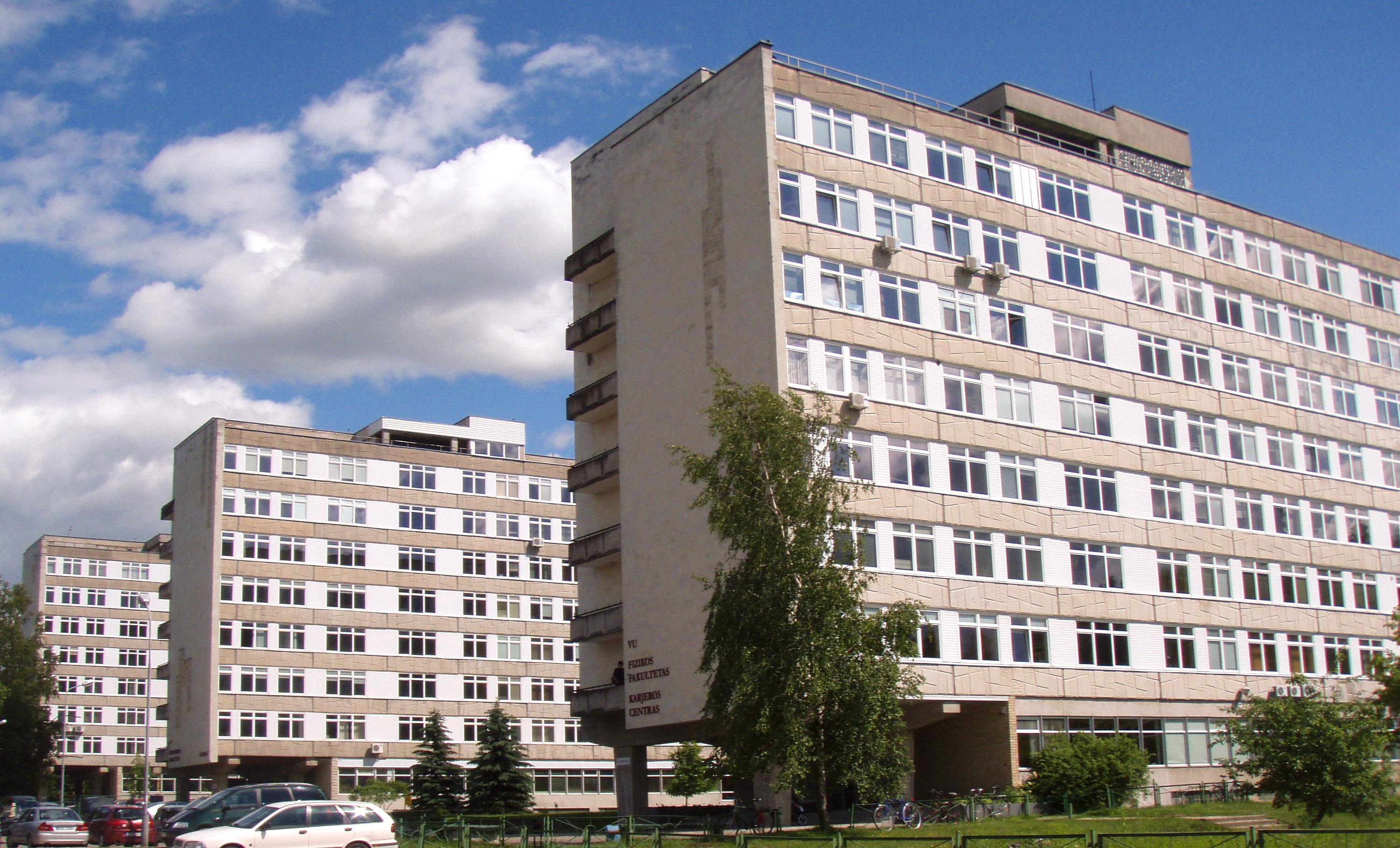
Lithuania regained independence in March 1990, and Vilnius University resumed its older role as the country's leading research institution. Today it spans 15 faculties and over 200 study programs for more than 24,000 students. The historic Old Town campus still hosts History, Philology, and Philosophy along with the library founded in 1570; the modern Saulėtekis Avenue campus houses Economics, Physics, Communications, Law, the Business School, and the Life Sciences Centre. About 2,500 international students fill the 70 English-language programs. Researchers here include Virginijus Šikšnys, recognized internationally for his contributions to CRISPR/Cas9 gene editing - the gene scissors. The university belongs to the Arqus European University Alliance with Granada, Graz, Leipzig, Lyon 1, Maynooth, Minho, Padua, and Wrocław. In 2016 it launched the Recovering Memory project, formally commemorating the staff and students expelled by totalitarian regimes - a small institutional acknowledgment that 87 years of closure and three wartime occupations are part of the university's biography too, not just an interruption.
From the Air
Vilnius University's historic campus sits at 54.6822 degrees north, 25.2870 degrees east in the heart of Vilnius Old Town, immediately west of the Cathedral and the Presidential Palace. The modern Saulėtekis campus is approximately 4 km northeast. Vilnius International Airport (EYVI) is approximately 6 km south of the Old Town.