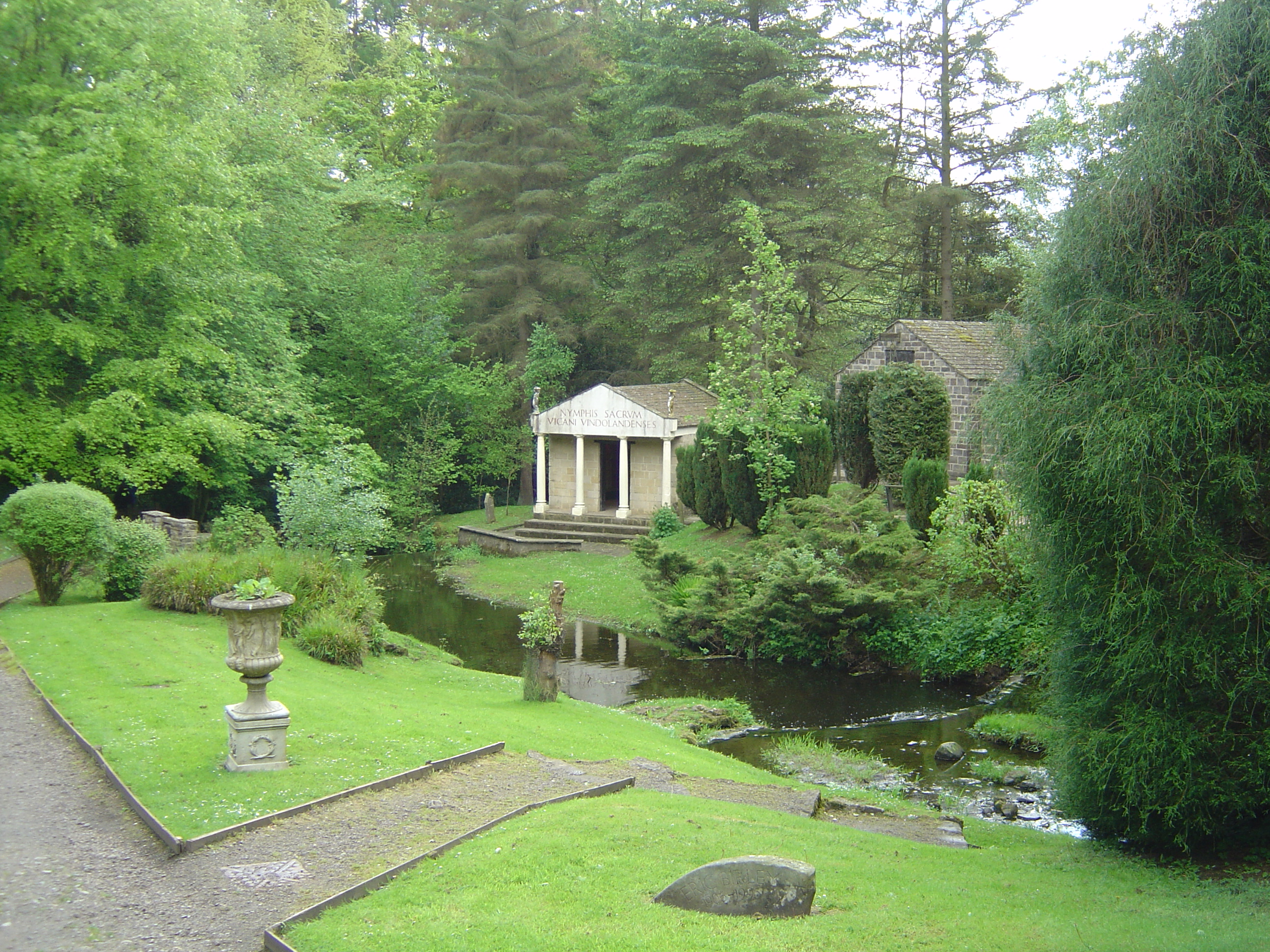
Vindolanda
"I have sent you pairs of socks, two pairs of sandals, and two pairs of underpants." The letter, written on a thin wooden tablet around AD 100, was never meant to survive. But the waterlogged soil at Vindolanda preserved what nearly two thousand years of history should have destroyed: the personal correspondence of Roman soldiers and their families, written in ink on wafers of birch and alder. These Vindolanda tablets are among the oldest surviving handwritten documents in Britain, and they transform the Roman frontier from an abstraction of emperors and legions into a place where real people worried about socks.
Older Than the Wall
Vindolanda predates Hadrian's Wall by almost four decades. The fort was established around AD 85 to guard the Stanegate, the Roman road running from the River Tyne to the Solway Firth. It sits on a hill near the modern village of Bardon Mill in Northumberland, with steep slopes falling away on three sides. The name is probably Celtic, meaning something like "white lawn" or "white field." Before the Romans arrived, the area was home to a people called the Textoverdi, known from an inscribed altar found at the site. Two pre-Roman farmsteads have been identified nearby, and a pair of standing stones called the Mare and Foal, remnants of a stone circle about five kilometres to the west, suggest the area had been significant long before any legionary set foot here.
Layers Upon Layers
What makes Vindolanda unique among Roman sites is its stratigraphy. The fort was built and rebuilt at least nine times over three centuries, each new version constructed directly on the compressed remains of the last. A deep natural dip running through the centre of the hill was gradually filled by successive layers of occupation. This constant rebuilding created oxygen-free conditions in the lower layers that preserved organic materials -- leather, textiles, wooden objects, and the famous tablets -- that would have rotted away anywhere else. Archaeologists have peeled back these layers like pages in a book, finding that each fort was occupied by a different unit with different customs, different building styles, and different stories to tell.
Birthday at the Frontier
The tablets reveal a world of startling intimacy. Claudia Severa writes to her friend Sulpicia Lepidina, the wife of the fort commander, inviting her to a birthday party -- one of the earliest known examples of Latin written by a woman. Military reports detail troop numbers with bureaucratic precision: of 752 men nominally assigned to the First Cohort of Tungrians, only 296 were actually present, with the rest deployed elsewhere, sick, or on leave. Supply lists track shipments of grain, vintage wine, and Celtic beer. A strength report notes soldiers who are unfit for duty because they are suffering from inflammation of the eyes -- a common complaint on this damp, cold frontier. These are not the grand narratives of conquest but the granular details of institutional life.
Still Digging
Unlike many Roman sites, Vindolanda is still under active excavation. Each summer, teams of archaeologists and volunteers continue to uncover new finds from the waterlogged deposits. The ongoing work has produced remarkable discoveries beyond the tablets: a Roman cavalry sword still in its scabbard, leather shoes in dozens of styles and sizes, and military equipment in extraordinary condition. The Vindolanda Trust, which operates the site and its museum, has made the excavation itself part of the visitor experience. You can watch archaeologists at work, trowelling through layers of compressed turf and timber that were already ancient when Hadrian ordered his Wall built just a mile to the north.
What the Mud Remembers
The tablets have been called the most important find from Roman Britain. They reveal that the garrison at Vindolanda was not isolated but deeply connected to the wider Roman world -- ordering supplies from across the province, maintaining correspondence with friends and family hundreds of miles away, and observing the same military rituals as units stationed in sunnier corners of the empire. One tablet contains a report referring to the native Britons dismissively as Brittunculi, "little Britons," a rare glimpse of Roman attitudes toward the people they had conquered. The waterlogged ground preserved these fragments of everyday life with a fidelity that monumental stone inscriptions never could. At Vindolanda, the Roman frontier speaks not in the language of emperors but in the voices of the men and women who actually lived there.
From the Air
Vindolanda sits at 54.991N, 2.361W, approximately two miles south of Hadrian's Wall near Bardon Mill, Northumberland. The fort's outline and ongoing excavation trenches are visible from low altitude. The site sits in a small valley with the Wall visible running along the Whin Sill ridge to the north. Best viewed at 1,500-3,000 ft AGL. Nearest ICAO: EGNT (Newcastle) approximately 25nm east.