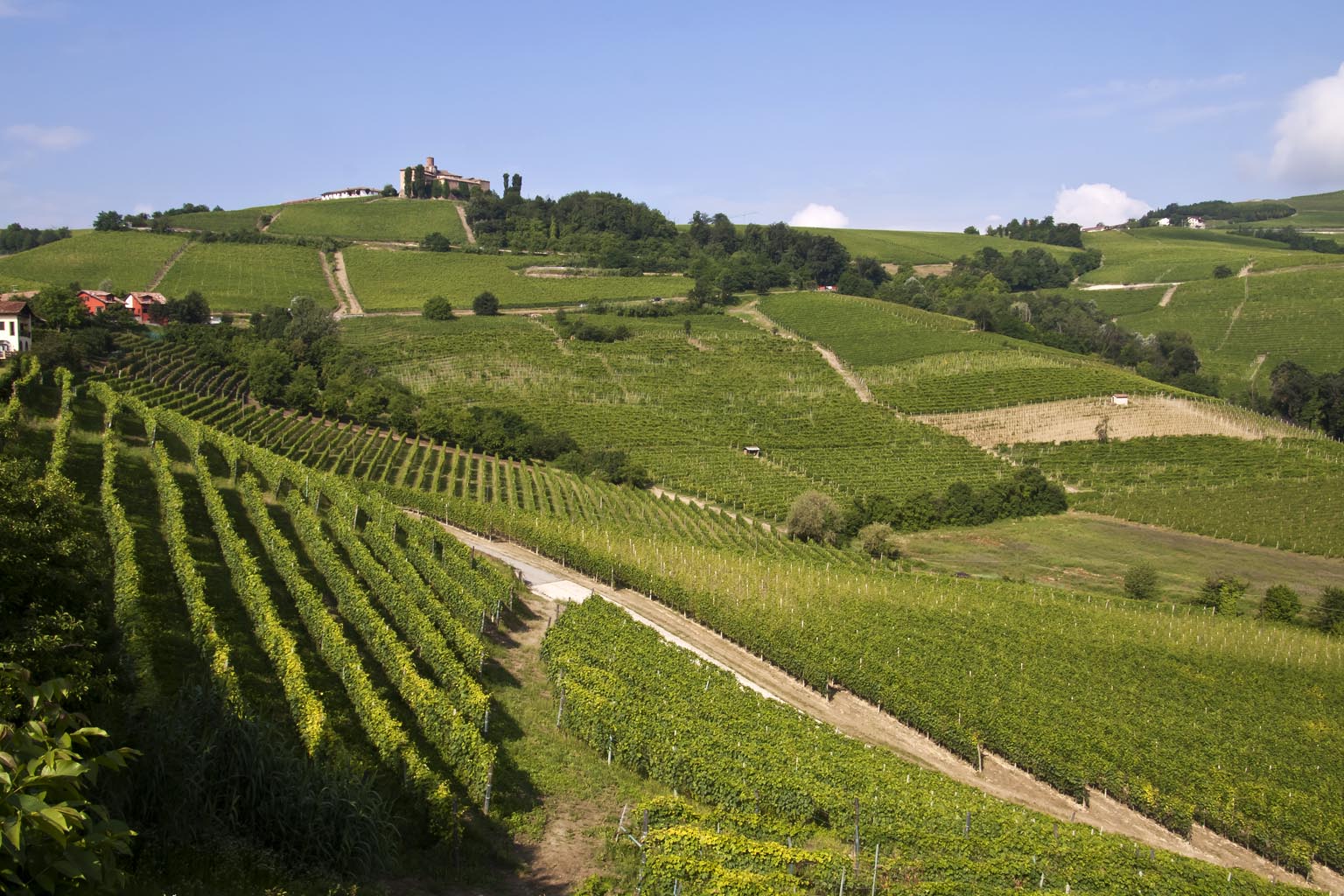
Vineyard Landscape of Piedmont: Langhe-Roero and Monferrato
Pollen buried in the soil of these hills dates to the 5th century BC, when Etruscans and Celts traded wine across a frontier that ran through what is now southern Piedmont. The words they used for wine survive in the local dialect. Two thousand years later, the landscape they shaped -- terraced vineyards climbing gentle slopes between the River Po and the Ligurian Apennines -- earned UNESCO World Heritage status, recognized not as wilderness preserved but as a cultural landscape built by human hands over millennia.
Where Civilization Took Root
The Romans knew this place. Pliny the Elder named the region one of the most favorable for viticulture in all of ancient Italy, and the geographer Strabo wrote admiringly of its barrels. But the landscape visitors see today is not Roman -- it is the accumulated work of centuries of farmers who terraced hillsides, selected grape varieties, and built the dry stone walls that hold the slopes in place. The site encompasses five distinct wine-growing areas spread across the Langhe and Monferrato hills, each with its own character. Barbaresco's slopes produce one of Italy's most revered reds from the Nebbiolo grape. Nizza Monferrato is the heartland of Barbera, a wine that for centuries was considered the everyday drink of Piedmontese farmers before the world discovered its depth. And in Canelli, the underground cathedrals -- vast cellars carved into the tufa rock -- store Asti Spumante, the sparkling wine that brought international fame to these quiet hills.
The Castle on the Ridge
Rising above the vineyards, the Castle of Grinzane Cavour anchors the site both physically and historically. The castle takes its name from Camillo Benso, Count of Cavour, the statesman who engineered Italian unification in the 19th century. Before he reshaped a nation, Cavour served as mayor of Grinzane and threw himself into modernizing the local wine industry, introducing French winemaking techniques to Piedmontese cellars. The castle now houses a regional wine museum and hosts an annual international truffle auction -- the white truffles of Alba, harvested from the same forests that edge the vineyards, command prices that rival fine jewelry. Together, wine and truffle define the economy of these hills, two luxuries rooted in the same ancient soil.
Underground Cathedrals and Infernot
Beneath the surface, the Monferrato region hides one of its most distinctive features: the infernot. These small underground chambers, carved from the local sandstone by hand, served as natural wine cellars for farming families. Without light, without ventilation beyond the narrow entrance, the infernot maintain a constant temperature and humidity ideal for aging wine. Each one is different -- some barely large enough for a person to stand, others connected by tunnels into small labyrinths. They represent a vernacular architecture found nowhere else in the world, and their inclusion in the UNESCO designation recognized that the wine culture of Piedmont extends below ground as well as across the rolling horizon. The total World Heritage area covers nearly 11,000 hectares of core zone and over 76,000 hectares of buffer zone, making it one of Italy's largest cultural landscape designations.
A Living Landscape
What makes this site unusual among World Heritage designations is that it is not a ruin, a monument, or a wilderness. It is a working landscape. The vineyards are tended, the wines produced, the villages inhabited. The technical and economic processes related to viticulture and winemaking that shaped this terrain over centuries continue today. In autumn, the hills blaze with color as the Nebbiolo vines turn crimson and gold, the Barbera holds its green longer, and the morning fog that rolls up from the valleys -- called the nebbia, from which Nebbiolo takes its name -- softens every contour. From the air, the geometry of the vineyards is striking: rows following contour lines, stone walls marking property boundaries unchanged for generations, hilltop villages crowned by church towers. It is a landscape that looks composed, because in a real sense it was -- not by any single architect, but by the accumulated decisions of farmers who understood that the relationship between slope, soil, exposure, and grape variety determines everything.
From the Air
Located at 44.65N, 7.99E in the Piedmont region of northwestern Italy, between the River Po to the north and the Ligurian Apennines to the south. The rolling hillsides with geometric vineyard patterns are visible from medium altitude. Nearest major airport is Cuneo Levaldigi (LIMZ). Turin-Caselle (LIMF) is about 80 km north. Best viewed in autumn when vine colors create a patchwork across the hills.