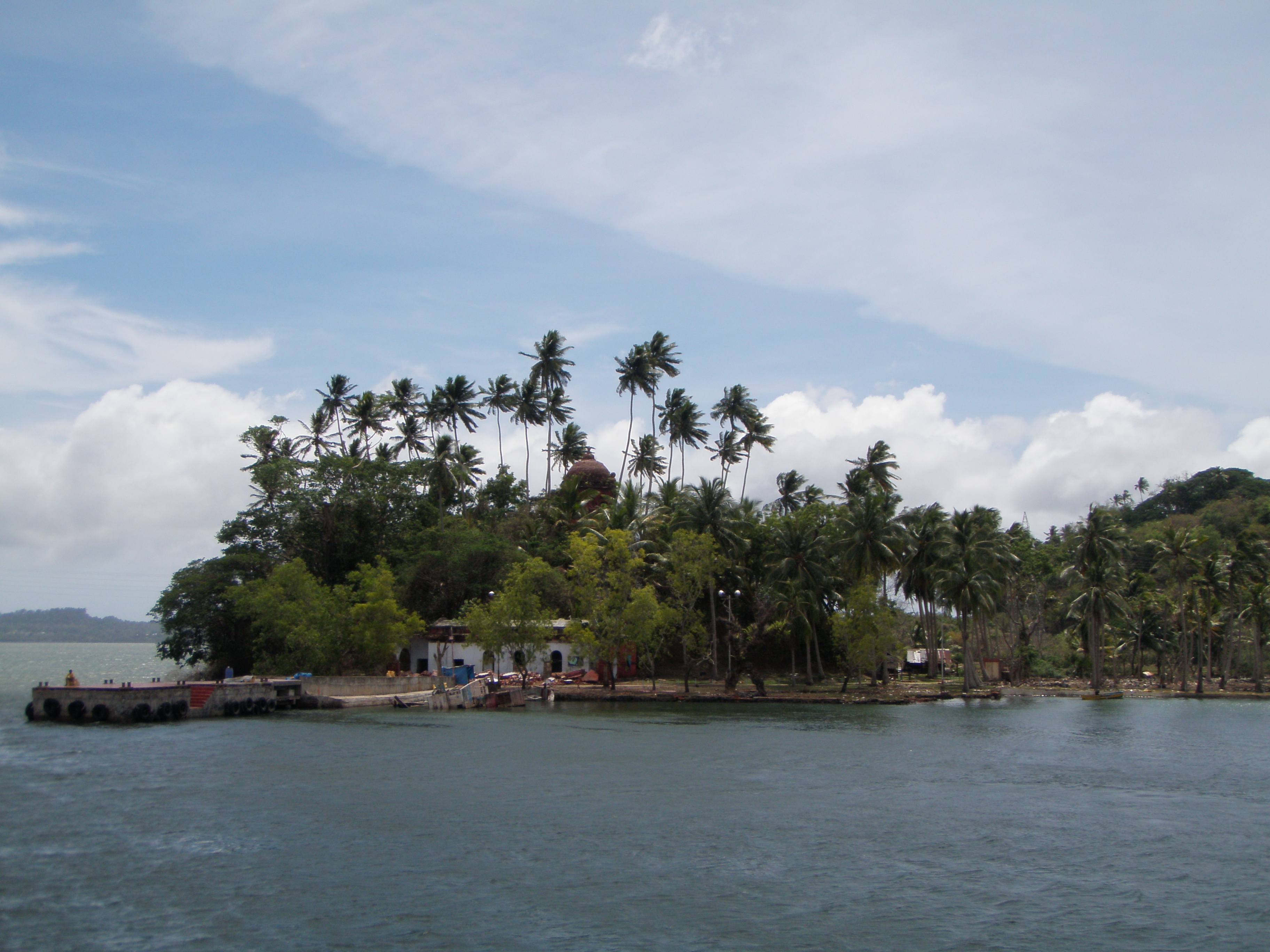
Viper Island
Before the Cellular Jail became the symbol of British colonial punishment in the Andamans, there was Viper Island. This small patch of land sitting in Navy Bay, four kilometers west of Port Blair, held the prison where the British Empire first perfected the art of breaking India's rebels. The island takes its name not from the serpent but from HMS Viper, the vessel that carried Lieutenant Archibald Blair to the Andaman and Nicobar Islands in 1789. Blair's ship reportedly wrecked near the island, and its name stuck to the shore. What the British later built on that shore would give the name a darker resonance.
Chains in Paradise
The need for a prison on Viper Island arose directly from the Indian Rebellion of 1857. After the revolt was crushed, the British established a penal settlement at Port Blair in 1858 to exile political prisoners far beyond any hope of rescue or further rebellion. Construction of the Viper Jail began in 1864 and took three years. Lieutenant Colonel Barnet Ford, superintendent of the penal settlement, oversaw the work. From the start, the facility was designed for maximum suffering. Solitary cells, lock-ups, stocks, and whipping stands filled the compound. Women were imprisoned alongside men. The conditions grew so notorious that the institution earned a name that captured its essence: the Viper Chain Gang Jail. Inmates who had defied the British Empire were chained together at the ankles by iron couplings connected to a running chain, then confined each night in this arrangement. By day, they performed hard labor.
The Black Mamba's Domain
The wardens of Viper Island rotated frequently, but the prisoners maintained a constant name for whoever held the post: the Black Mamba. It was a title that spoke to the experience of being in the warden's power -- swift, venomous, inescapable. Among the prisoners who suffered here was Brij Kishore Singh Deo, popularly known as the Maharaja Jagannath of Puri. A man of royal standing reduced to a chain gang convict, he died within the jail's walls in 1879, his lineage offering no protection against colonial punishment. The jail also holds a permanent place in the history of the Indian freedom struggle through the case of Sher Ali Afridi. A Pashtun from Peshawar and former officer in the Punjab Mounted Police, Afridi had been sentenced to life imprisonment and deported to the Andamans. On February 8, 1872, he assassinated Lord Mayo, the Viceroy of India, at Hope Town jetty opposite Chatham Island. Afridi was brought back to Viper Island and hanged on its hilltop gallows.
Eclipsed by Concrete
When the Cellular Jail was completed in 1906, Viper Island's role as the primary site of colonial imprisonment ended. The new facility, with its 696 solitary cells and panopticon watchtower, represented a refinement of the same cruelty that Viper Island had pioneered -- isolation as weapon, distance as punishment. The older jail fell into disuse, and time did what time does to abandoned structures in the tropics. Today, the two-story jail building has crumbled to its foundation, with only fragments of the roof and outer wall still standing. But the gallows on the hilltop remain, their stone framework intact, a few birds nesting inside the structure where men once stood waiting for the floor to drop beneath their feet.
A Haunted Shore
Viper Island today is accessible by a twenty-minute boat ride from Phoenix Bay jetty in Port Blair. Harbor cruises include it as a regular stop, and tourists come for a combination of reasons: the historical ruins, the natural scenery, and the atmosphere of a place where so much human suffering occurred. Spotted deer have been sighted moving through the undergrowth. The island sits in the middle of Navy Bay, ringed by water that catches the light in ways that make it difficult to reconcile the beauty of the setting with the brutality of its past. There is no reconciling it, of course. Viper Island exists as both things simultaneously -- a place of tropical stillness and a place where people were chained, whipped, and hanged for wanting their country to be free.
From the Air
Located at approximately 11.667N, 92.700E in Navy Bay, west of Port Blair, South Andaman Island. The small island is visible from low altitude as a forested patch in the bay. Nearest airport is Veer Savarkar International Airport (VOPB), roughly 5 km east. Best viewed at 1,500-3,000 ft AGL. Port Blair harbor, Ross Island, and Chatham Island serve as nearby navigation references.