Virginia Beach: The Navy Town Where the Boardwalk Never Ends
Virginia Beach is two cities - the resort strip along the oceanfront, where the boardwalk stretches three miles and the hotels rise in rows, and the sprawling suburban expanse inland, where Navy families and retirees fill subdivisions. The city of 460,000 is Virginia's largest, though 'city' seems generous for what's mostly suburban sprawl without an urban core. The military presence is enormous: Naval Air Station Oceana, the jet fighters screaming overhead; Joint Expeditionary Base Little Creek, where Navy SEALs train; the Navy personnel and dependents who form a significant portion of the population. Virginia Beach is beach town and military town, resort and suburb, never quite resolving into coherent identity.
The Boardwalk
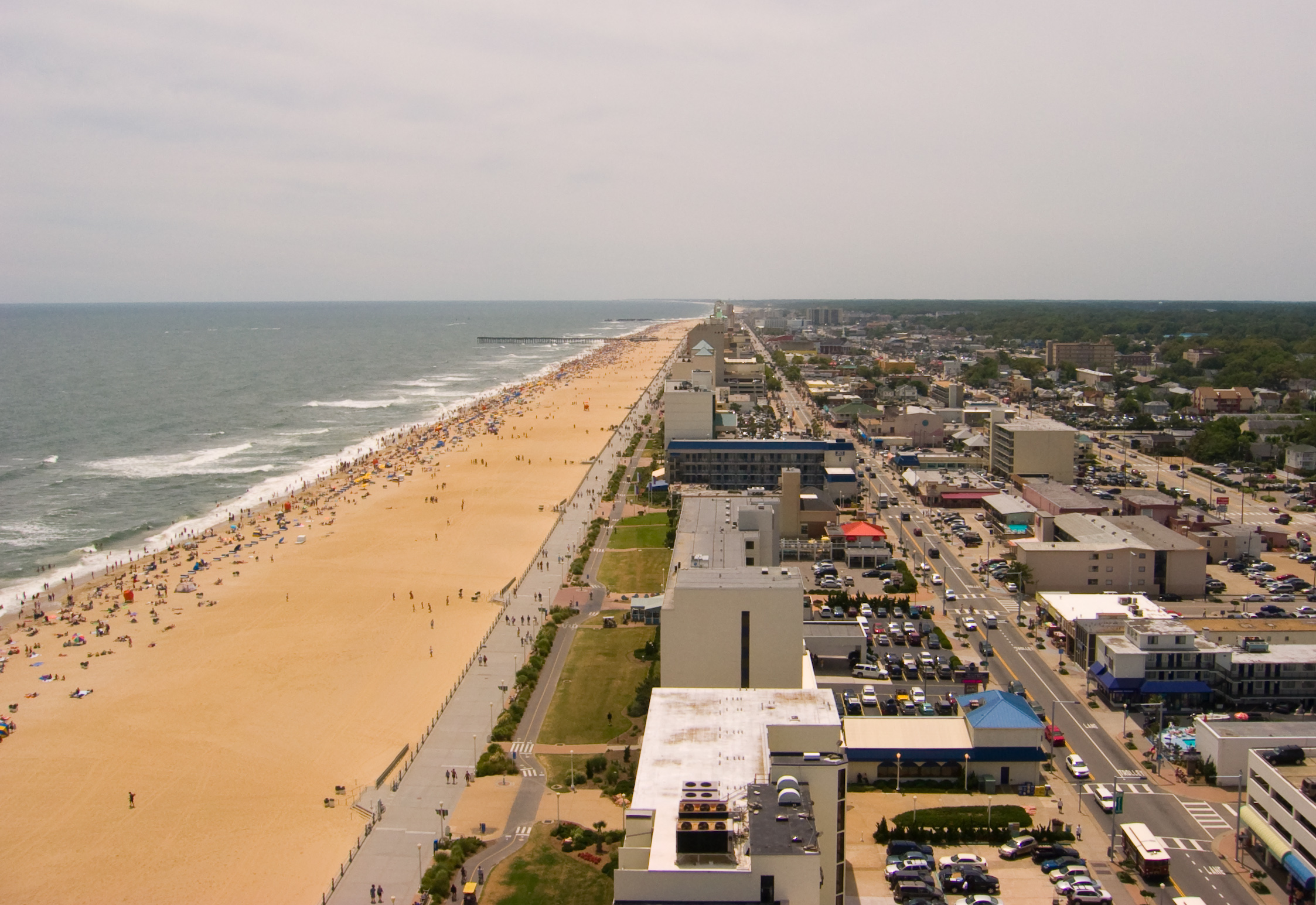
The Virginia Beach boardwalk runs three miles along the oceanfront, the hotels and condos rising behind it, the Atlantic stretching ahead. The beach is wide and sandy, the waves gentle enough for families, the lifeguards numerous. The boardwalk itself is concrete, lined with restaurants and shops, crowded in summer with tourists from D.C. and Richmond seeking the nearest beach. The Neptune statue marks the center; the fishing pier extends into the water. The resort development is dense and repetitive, the experience similar to beach towns elsewhere but larger - Virginia Beach does resort at scale.
The Navy
Naval Air Station Oceana is the Navy's East Coast master jet base - the F/A-18 fighters that launch and land there pass over the city continuously, the roar part of daily life. The noise complaints are constant; the Navy's response is that the base was here first. Joint Expeditionary Base Little Creek trains Navy SEALs and other special operations forces; the teams that eliminated Osama bin Laden trained here. The military presence provides economic stability and shapes the culture - conservative, patriotic, accustomed to deployments and relocations. Virginia Beach is a Navy town that happens to have beaches.
The Sprawl
Virginia Beach sprawls across 497 square miles - larger than most cities, less dense than most suburbs. The development consumed farmland for decades, the subdivisions spreading inland while the oceanfront densified. The result is a city without a downtown, without walkable neighborhoods, without the urban fabric that defines cities elsewhere. The sprawl happened because land was available and demand was high; the result is car-dependent development that residents accept as normal. Virginia Beach is the logical endpoint of American suburban growth - the merger of city and suburb into something that's neither.
The Edgar
Edgar Cayce, the 'Sleeping Prophet' who gave readings while in trance states, moved to Virginia Beach in 1925 and headquartered his Association for Research and Enlightenment here. The A.R.E. remains, offering programs in spiritual development and housing Cayce's archives. The organization draws seekers who believe in Cayce's prophetic abilities; skeptics find it New Age curiosity. Virginia Beach's association with alternative spirituality is unexpected for a military town but persistent. Cayce gave Virginia Beach an identity beyond beaches and Navy; whether that identity matters depends on what you're seeking.
Visiting Virginia Beach
Virginia Beach is served by Norfolk International Airport (ORF), 20 minutes northwest. The boardwalk is the main attraction - three miles of beach, restaurants, and entertainment. First Landing State Park, where English colonists first landed in 1607, offers trails and beach. The Virginia Aquarium is excellent. The Military Aviation Museum displays World War II aircraft. For food, the seafood is fresh and everywhere. The Oceanfront is expensive in summer; the inland areas are cheaper but farther from the beach. Summer is crowded; spring and fall offer better weather and fewer tourists. Virginia Beach rewards visitors seeking uncomplicated beach vacation.
From the Air
Located at 36.85°N, 75.98°W on the Atlantic coast where the Chesapeake Bay meets the ocean. From altitude, Virginia Beach appears as development spreading from the oceanfront strip - the boardwalk and hotels visible along the beach, the sprawl extending inland, Naval Air Station Oceana visible to the south. What appears from altitude as Virginia's largest city is the beach town and Navy town - where the boardwalk stretches three miles, where jets roar overhead, and where the sprawl consumes what was once farmland.