Virunga National Park
More than 200 rangers have died protecting Virunga National Park. Not in some distant colonial past but in living memory -- ambushed by militias, caught in crossfire between rebel factions, murdered for standing between armed men and the animals they intended to kill. In January 2021, gunmen killed six more. The park keeps operating. The rangers keep patrolling. That stubbornness, more than any UNESCO designation or tourism statistic, is what defines Africa's oldest national park. Founded in 1925 in what was then the Belgian Congo, Virunga has survived colonial rule, independence, dictatorship, genocide, and ongoing armed conflict -- not because circumstances protected it, but because people chose to protect it when circumstances gave them every reason not to.
Born Under a King, Reborn Under Fire
King Albert I of Belgium created the Albert National Park in 1925, making it the first national park in Africa and the second in the world after Yellowstone. Its original purpose was straightforward: save the mountain gorillas of the Virunga Mountains from extinction. Over the next three decades, the park expanded northward to encompass the Rwindi Plains, Lake Edward, and the Rwenzori Mountains, eventually covering 7,800 square kilometers -- an area larger than some European countries. Hand-picked Congolese rangers kept poaching low, and tourists came in steady numbers. When Belgium granted Congo independence in 1960, the park was renamed Virunga and a Congolese Wildlife Authority was established. For a while, under President Mobutu's personal interest in conservation during the 1970s, the park thrived, drawing an average of 6,500 visitors a year. UNESCO named it a World Heritage Site in 1979.
Decades of Chaos
The 1980s unraveled everything. As Mobutu's grip weakened, the country spiraled toward collapse, and the park spiraled with it. Poachers decimated the large mammal populations. Rangers were killed. Infrastructure was destroyed. The Rwandan genocide of 1994 sent waves of refugees into the park's forests, accelerating deforestation. Armed militia groups -- some remnants of the Interahamwe, others local Mai-Mai fighters -- occupied large sections of the park through the late 1990s and 2000s. The Kivu War, which began in 2004, centered directly on Virunga, and by 2008, rebel forces had seized park headquarters at Rumangabo and evicted the staff entirely. UNESCO had long since changed the park's status to "endangered." Tourism dropped to zero. It looked, to most observers, like the end.
The Lava Lake and the Snowcaps
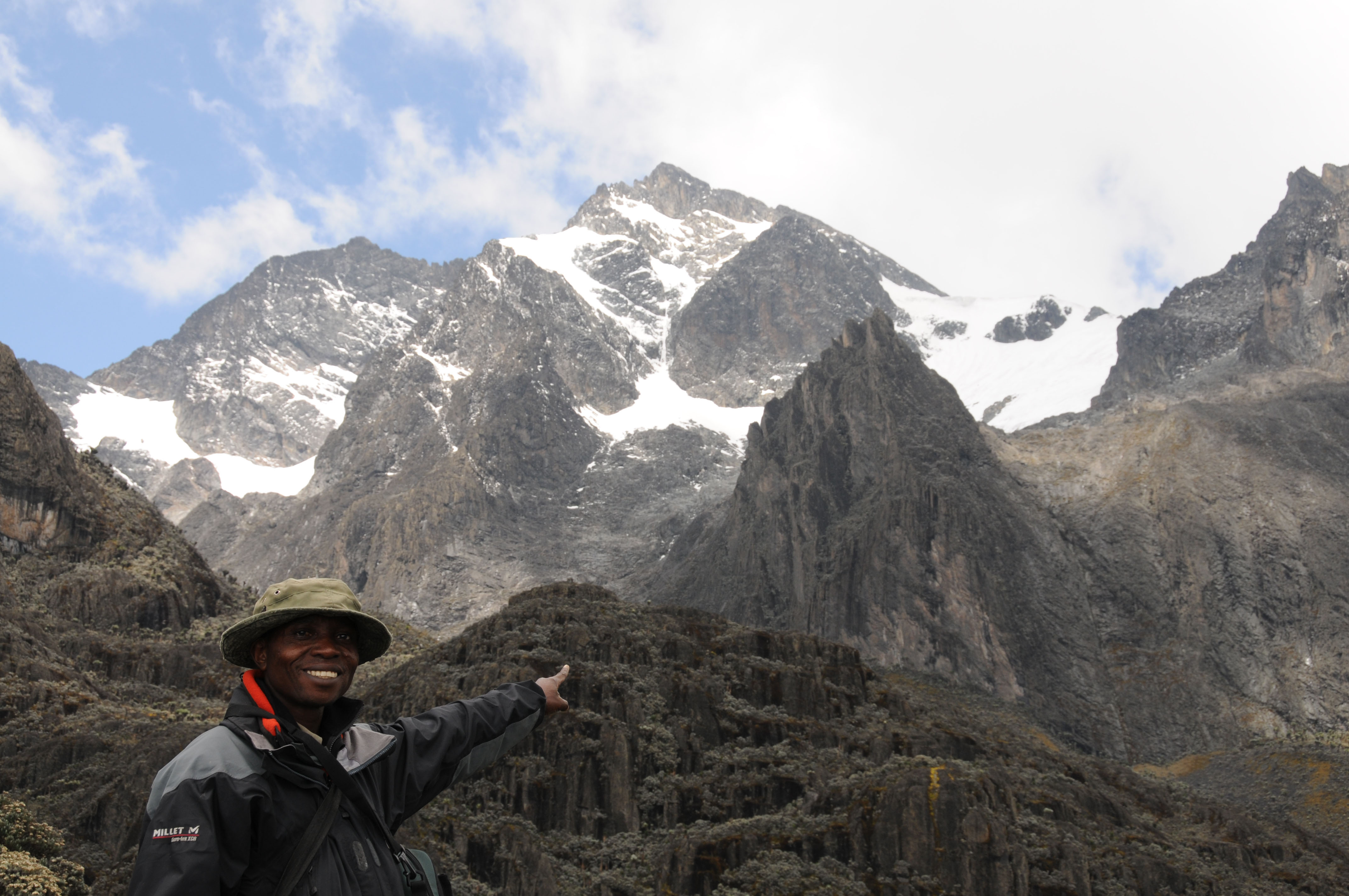
Virunga's landscapes are so varied they seem to belong to different continents. In the south, the Virunga volcanoes anchor the park -- including Nyiragongo, whose summit contains one of the world's largest and most active lava lakes. At night, the glow is visible for miles, a deep orange pulse against the equatorial darkness. Climbers can reach the crater rim in under six hours and sleep in small cabanas at the edge, watching molten rock churn below. In the far north, the Rwenzori Mountains -- Ptolemy's legendary "Mountains of the Moon" -- rise to snow-capped peaks on the Ugandan border, reachable via multi-day treks through alpine moorland. Between the volcanoes and the snowcaps lie lowland tropical forest, savannah plains, river systems, papyrus swamps, and the shores of Lake Edward, where hippos once numbered over 20,000 and are slowly recovering.
Gorillas, Okapi, and Everything Between
The biodiversity packed into Virunga's boundaries is staggering. Mountain gorillas inhabit the southern montane forests alongside chimpanzees, golden monkeys, blue monkeys, and black-and-white colobus. Forest elephants and buffalo move through the mist. The central savannah supports lions, leopards, hyenas, topi, kob, and warthog. And in the deep Congolese forest to the north lives the okapi -- the forest giraffe, so elusive it was not known to Western science until 1901. The park's habitats range from equatorial lowland forest to alpine glacier, creating ecological niches that exist nowhere else in such close proximity. This is not a single ecosystem with a visitor center. It is an entire continent's worth of biodiversity compressed into one contested, dangerous, fiercely defended park.
The Rangers' Park
Tourism has returned to Virunga, growing from zero visitors in 2008 to approximately 2,000 by 2010, with numbers increasing since. Gorilla permits cost less here than in Rwanda or Uganda, and the visits tend to be more intimate -- smaller groups, fewer tourists. But Virunga remains a park defined by its security reality. Visitors are escorted by armed rangers. Transport is arranged through the park to avoid ambush-prone roads. The park goes through periods of closure when conflict flares, and travelers must check current conditions before booking. None of this is hypothetical: in May 2018, a ranger was killed and two tourists kidnapped, leading to an extended closure. What keeps Virunga alive is not tourism revenue or international donations, though both help. It is the conviction of its staff that the park is worth dying for -- a conviction that more than 200 of them have proved.
From the Air
Located at approximately 0.50S, 29.50E, Virunga stretches along the eastern DRC border from the Virunga volcanoes in the south to the Rwenzori Mountains in the north -- a span of roughly 300 km. Nyiragongo volcano (3,470 m) is identifiable from altitude by the orange glow of its lava lake at night. The Rwenzori range (up to 5,109 m at Margherita Peak) may carry snow year-round. Lake Edward is visible from cruising altitude as a large body of water on the park's northern boundary. Nearest major airports: Goma International Airport (FZNA) on the southern edge; Beni Mavivi Airport for the northern sector. Kigali (HRYR) in Rwanda and Entebbe (HUEN) in Uganda are the main international gateways.