Vitória
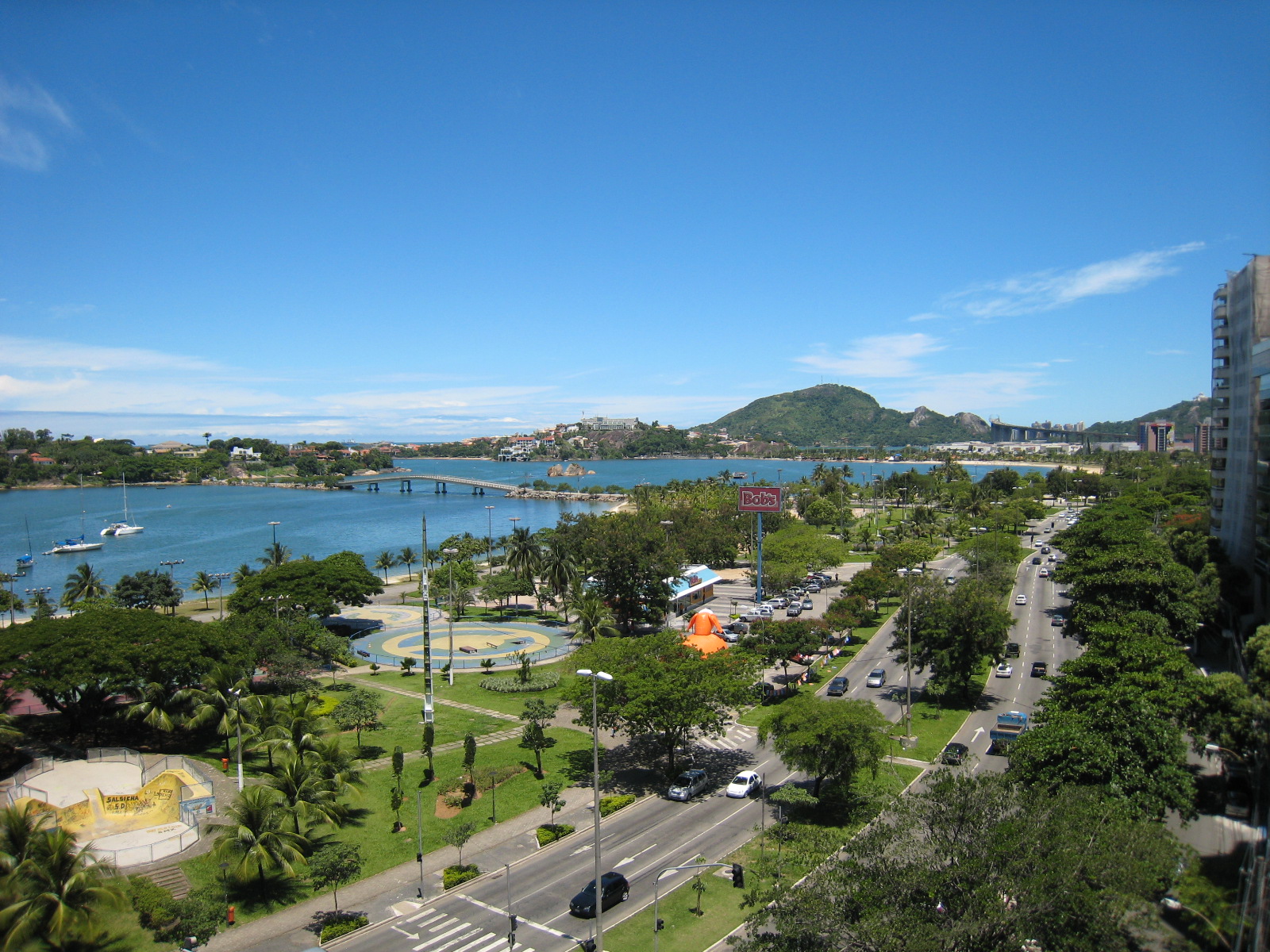
Vitória locals have names for their city. Ilha do Mel - Honey Island. Cidade Sol - Sun City. Both point to something real: the small, concentrated scale of a state capital that fits on an island archipelago, and the year-round warm tropical climate that keeps beachgoers on Camburi almost any month of the year. Around 323,000 people live here, which makes Vitória the smallest capital in Brazil's southeastern region. But the size is the feature, not the limitation. From downtown you can reach Vila Velha's Convento da Penha in 20 minutes, Guarapari's beaches in under an hour, and the Blue Rock of Domingos Martins in two. If Rio overwhelms, Vitória welcomes.
Third Oldest Capital
Founded in 1551, Vitória is the third oldest capital in Brazil, behind only Salvador and Recife. For most of its early history, it was a city-port - a small settlement defending itself against attacks by the French, Dutch, and British who periodically tried to seize Portuguese possessions in the 16th and 17th centuries. The name came from a battle: Portuguese settlers fled from Vila Velha across the bay to the island in 1551, and after defeating a Goytacaz force in combat they renamed their new village Vila Nova da Vitória - Victory New Town. The sugar and Brazil-wood trade filled the ports for a while, then faded. The old town today looks "a bit grubby," as Wikivoyage puts it, "like it's dissolving away in the salt air, but five centuries is a long time."
An Archipelago With a Capital On It
The municipality of Vitória is made of 34 islands plus a continental area, totaling 104 square kilometers. Fifty islands originally. Landfills merged many of them into the main island during the 20th century urbanization push. The main island itself is ringed by the Bay of Vitória, and its interior is dominated by the Maciço da Fonte Grande, a granite formation 309 meters tall, and Pedra dos Dois Olhos at 296 meters - two exposed granite knobs visible from most of the city. Further out, 1,100 kilometers offshore, the municipal government also administers Trindade and Martin Vaz islands, small volcanic specks in the South Atlantic important enough to appear in meteorological reports because of their position in the path of oceanic air masses.
Praia do Canto and Curva da Jurema
The restaurant scene concentrates in Praia do Canto, a neighborhood just south of Camburi Beach where a few streets of options range from casual pizzerias to splurge seafood places. Wunderbar Kaffee, at the corner of Rio Branco and Chapot Presvot streets, specializes in Brazilian and imported beers paired with jazz, chorinho, and bossa nova - the kind of bar where conversations last hours. Evenings at Curva da Jurema draw locals to live music on the beach, with drink kiosks lining the sand and bands that rotate between MPB, samba, and reggae. The climate is tropical humid, warm year-round - maximum average 30.4°C, minimum 24°C - with most rainfall between October and January. Winter temperatures rarely feel cold, even to visitors from colder places.
Hub and Spokes
The real strength of Vitória as a base is its proximity to other destinations. Vila Velha is just across the bay, home to the 16th-century Convento da Penha on its hilltop perch and the beaches of Praia da Costa, Itapuã, and Coqueiral de Itaparica. Guarapari, about an hour south, is a beach resort town famous for summer parties and clubs. Domingos Martins, up in the mountains, carries a strong German colonial accent and is the base for visiting the Pedra Azul - Blue Rock - a striking granite monolith in the state park of the same name. Santa Teresa has an Italian immigrant character and lies further north. Travelers using Vitória as a transit point heading north toward Bahia can reach Porto Seguro, Prado, Caravelas, and Abrolhos National Park without detour. South to Rio de Janeiro is about eight hours by bus.
Port, Bridge, and Beach
Getting around Vitória requires a CPF (Brazilian tax ID) to buy a Cartão GV bus pass - cash doesn't work on the city buses. Without a CPF, the Terminal Jardim América near the train station can issue one. Bus line 212 connects the airport to the city center via Camburi beach, the port, and the main bus station in about an hour. Long-distance buses reach Vitória from Rio, São Paulo, Salvador, Belo Horizonte, and Brasília. The Terceira Ponte - Third Bridge - crossing to Vila Velha gives the sharpest view of the bay and remains Brazil's second tallest bridge. For visitors thinking about longer stays, UFES (Federal University of Espírito Santo) offers Portuguese courses for foreigners through its Language Center. Semester-long, beginning and intermediate levels. The city is small enough to feel knowable, large enough to stay interesting.
From the Air
Vitória sits at 20.32°S, 40.34°W on an archipelago at the mouth of Vitória Bay. From cruising altitude the island geometry is unmistakable - dense urban grid on the main island with the granite dome of Morro da Fonte Grande exposed at its center, surrounded by the bay and smaller islands, with bridges connecting to the mainland. Look for the iron ore terminals at the Port of Tubarão just north, and the white silhouette of the Penha Convent across the bay in Vila Velha. Nearest airport is Eurico de Aguiar Salles International (SBVT), on the northeast shore of the main island. Best viewed morning, when the sun rises over the ocean and lights the island from the east.