Plant Vogtle: America's Nuclear Gamble in the Georgia Pines
The original budget was $660 million. The final price tag exceeded $34 billion. That staggering cost escalation tells just part of the story of Plant Vogtle, a nuclear power station tucked into the pine forests of Burke County, Georgia, about 26 miles southeast of Augusta. Named for Alvin Vogtle, a former Southern Company chairman, the plant now stands as the largest nuclear facility in the United States, generating 4,536 megawatts from four reactors. It is also the only nuclear plant in the country operating four units. But those statistics barely hint at the decades-long drama required to get here -- a saga involving contractor bankruptcies, post-Fukushima redesigns, congressional battles, and the sheer stubbornness of engineers who refused to let the American nuclear industry die.
The First Generation
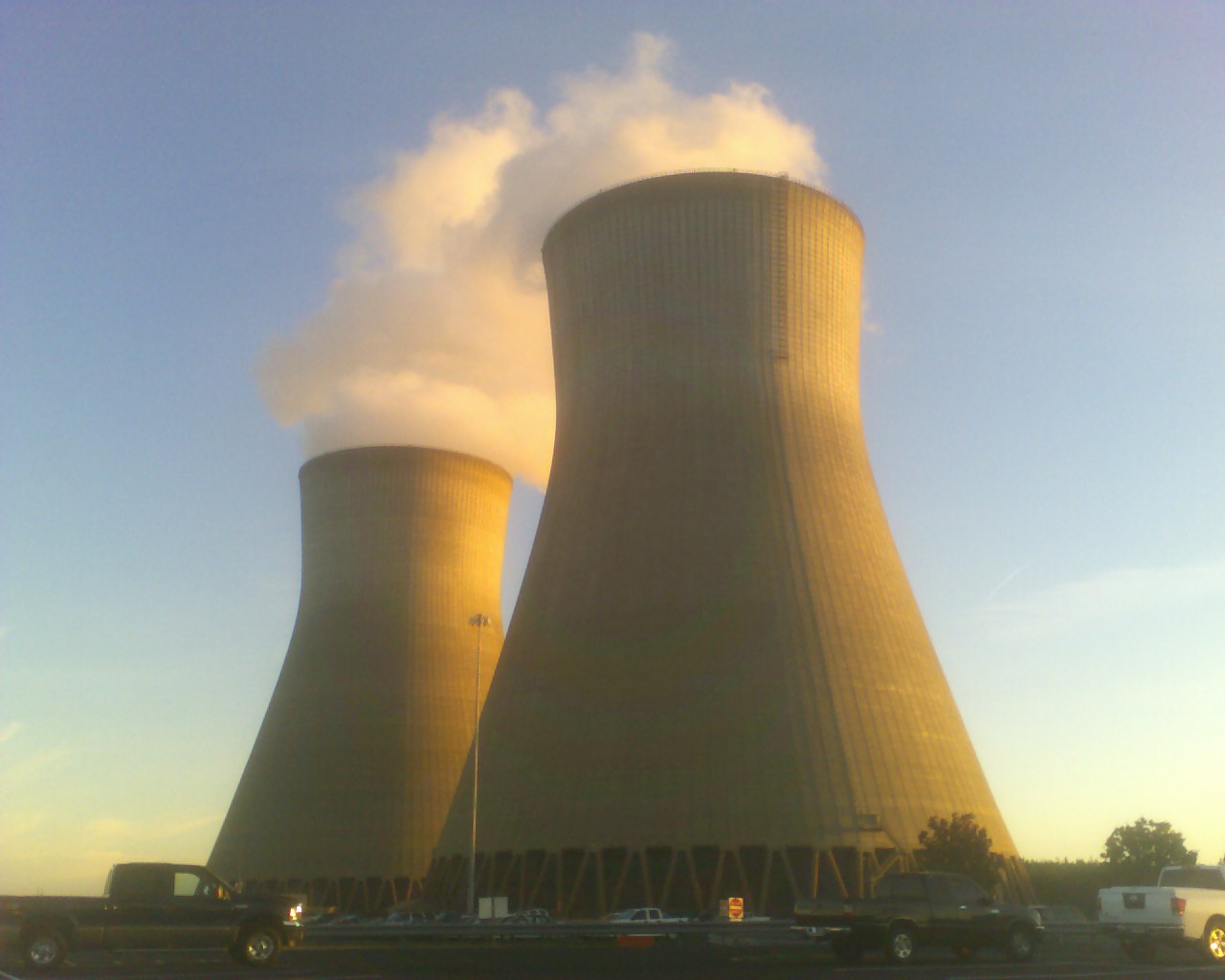
Construction on the original two Vogtle units began in August 1976, during an era when nuclear power still carried the optimism of clean, abundant energy. Units 1 and 2 are Westinghouse four-loop pressurized water reactors, their containment structures designed by Bechtel as steel-lined, prestressed concrete cylinders topped with hemispherical domes. Unit 1 connected to the grid in March 1987, Unit 2 followed in April 1989. Twin natural-draft cooling towers rise above the Georgia treeline, providing the plant's distinctive silhouette. Even these first two units came with hard lessons -- the capital investment ballooned from an estimated $660 million to $8.87 billion, foreshadowing the cost overruns that would define the plant's expansion decades later. The NRC renewed both units' licenses in 2009, extending operations to 2047 and 2049 respectively.
The Truck That Started an Emergency
On March 20, 1990, a truck carrying fuel and lubricants backed into a support column in the plant's 230-kilovolt switchyard, knocking out a feeder line to Unit 1's reserve auxiliary transformer. With the backup transformer already down for maintenance, the plant's vital circuits lost power. The emergency diesel generator failed to start on its first attempts. For 36 tense minutes, the core cooling system sat idle while operators scrambled. At 9:56 a.m., a plant operator broke the glass on the emergency start panel, bypassing safety interlocks to force the diesel generator alive. It worked. Core cooling was restored, temperatures stabilized, and the incident was downgraded from a site area emergency to an alert. The falling power line also triggered an automatic shutdown of Unit 2 through a chain of relay trips -- later traced to improperly calibrated current transformers. Had they been set correctly, Unit 2 would have kept running. The incident led to permanent modifications allowing non-vital power buses to feed vital circuits in emergencies.
The Expansion That Almost Wasn't
In 2008, Georgia Power signed the first contract for new nuclear construction in the United States since the Three Mile Island accident in 1979. Two Westinghouse AP1000 reactors would join the existing plant. The contract value: $14 billion. Then reality intervened. The Fukushima disaster in 2011 forced a complete redesign of the containment buildings after contracts were signed and manufacturing had begun. Contractor changes cascaded -- Shaw Group was purchased by Chicago Bridge & Iron, which later exited, handing control to Westinghouse, which then declared Chapter 11 bankruptcy in March 2017 due to losses from its nuclear construction projects. President Obama had pledged $8.33 billion in federal loan guarantees. Environmental groups sued. NRC Chairman Gregory Jaczko cast a lone dissenting vote on the construction license, declaring he could not support it 'as if Fukushima never happened.' Through it all, Southern Nuclear and eventually Bechtel pushed forward, the total federal loan guarantees eventually reaching $12 billion.
First Light, At Last
On October 14, 2022, technicians began loading 157 fuel assemblies into the Unit 3 reactor, one at a time. Startup testing revealed unexpected vibrations in the cooling system, pushing the timeline back yet again. But on March 6, 2023, Vogtle Unit 3 achieved first criticality -- a sustained nuclear chain reaction. The unit connected to the grid on April 1 and entered commercial operation on July 31, 2023, the first new nuclear reactor to come online in the United States in nearly seven years. Unit 4 followed a parallel path of fuel loading, motor faults, and cooling vibrations before reaching its own first criticality on February 14, 2024. It entered commercial operation on April 29, 2024. The final cost for the two new units: approximately $34 billion, more than double the original estimate. Whether Plant Vogtle represents a cautionary tale or a necessary investment in carbon-free power depends on whom you ask. The four cooling towers, visible from miles away in the flat Georgia landscape, simply keep working.
Over Burke County
From the air, Plant Vogtle's four natural-draft cooling towers are unmistakable -- massive concrete hyperboloids rising from the pinelands along the Savannah River, trailing plumes of water vapor. The plant sits in one of the least populated areas near a major nuclear facility; in 2010, only 5,845 people lived within the 10-mile emergency planning zone, a 16 percent decrease from the previous decade. Augusta, the nearest city, lies about 26 miles to the northwest. The surrounding landscape is flat Coastal Plain, a patchwork of forests, agricultural fields, and the winding Savannah River that forms the Georgia-South Carolina border. It is a quiet corner of the state for a facility that took half a century, tens of billions of dollars, and an entire industry's determination to complete.
From the Air
Located at 33.14°N, 81.76°W in Burke County, Georgia, along the Savannah River. Four massive natural-draft cooling towers are the dominant visual feature, rising prominently from flat Coastal Plain terrain covered in pine forests. Water vapor plumes often visible from high altitude. Augusta lies approximately 26 nm to the northwest. Nearest airports include Augusta Regional Airport (KAGS, ~25 nm NW) and Daniel Field (KDNL, ~20 nm NW). The Savannah River is a useful navigation reference, forming the GA-SC border. Best viewed at 3,000-5,000 feet AGL for full plant layout; cooling towers visible from much higher altitudes in clear conditions.