Volendam New Year's Fire
Most of the teenagers crammed into Cafe 't Hemeltje just after midnight on January 1, 2001 knew each other. They had grown up on the same streets, gone to the same schools, sung in the same church choirs. Volendam is that kind of place - small, tightly woven, the sort of village where everyone is somebody's cousin or classmate or neighbor. That is what made what happened next so devastating. When the fire came, it did not strike strangers. It struck a generation of one village all at the same time.
Midnight at 't Hemeltje
The cafe sat on the harbor front, on the dike that holds the IJsselmeer back from the town. Its name, 't Hemeltje, means "the little heaven." On New Year's Eve it was the place to be - a small upstairs room with low ceilings, Christmas pine boughs and decorations strung overhead, and far more people inside than the space was meant to hold. Around 12:30 a.m., someone lit a sparkler. A handful of sparks reached the dried pine needles. The decorations had not been treated with a fire-resistant coating, and they went up almost instantly. Witnesses later described a sheet of flame rolling across the ceiling above their heads. The temperature in the room reached 400 degrees Celsius - 752 degrees Fahrenheit. There was almost no time to react.
The Escape
The exits were inadequate, and many of them were blocked. Some people broke the upper-floor windows with their hands and jumped to the harbor below. Others were carried out by friends with their clothes still burning. Fourteen young people died, most of them between 15 and 22 years old, almost all from Volendam itself. Two hundred and forty-one were taken to hospitals. Two hundred of those had serious burns. The Dutch burn units could not absorb the wave on their own, and badly injured patients were flown to specialized centers in Belgium and Germany. The survivors - many of whom carried life-altering injuries - became, alongside the bereaved, the people the village would gather around for the next quarter century.
A Village Carries the Weight
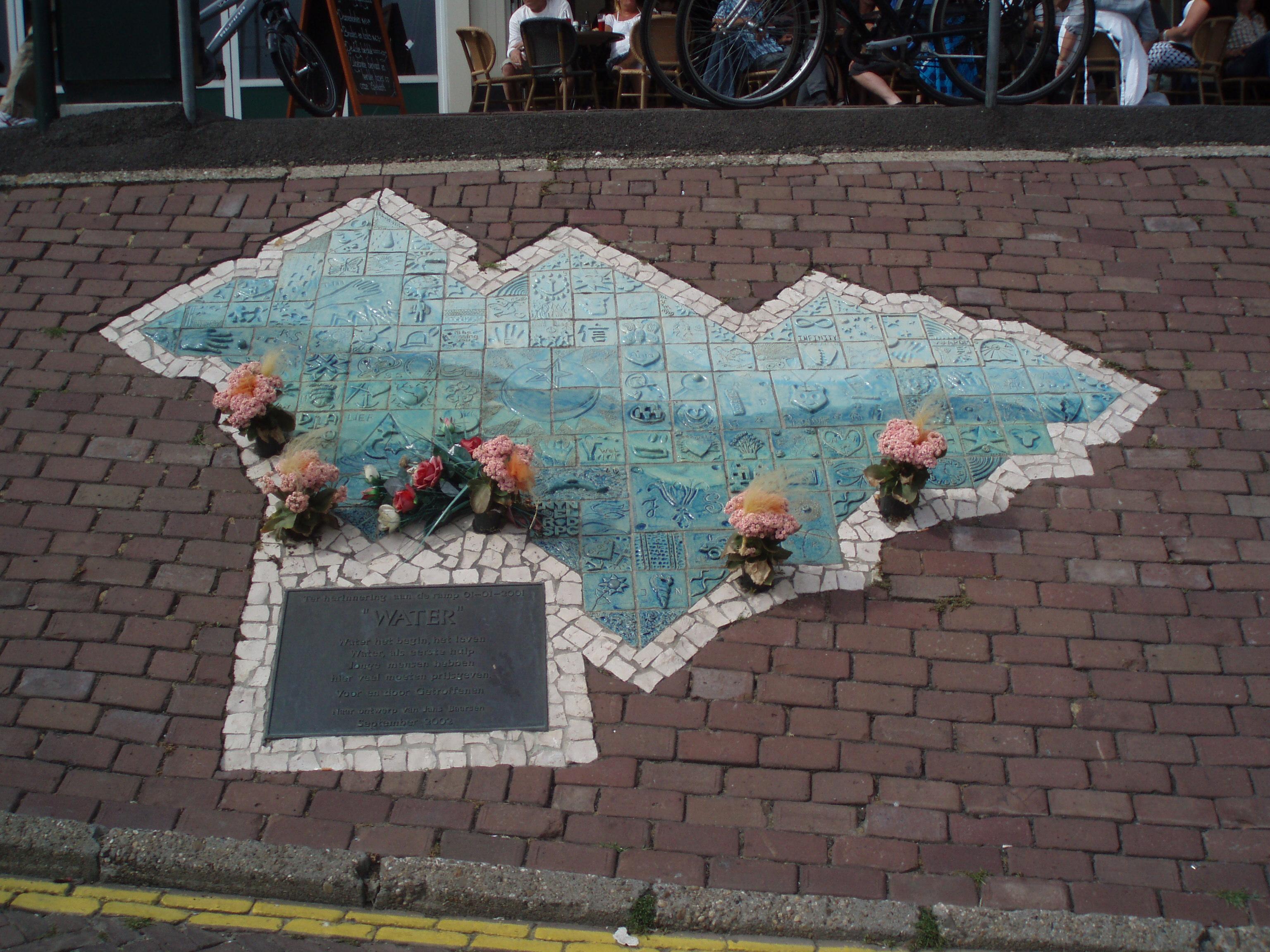
Volendam has fewer than 25,000 people. The dead and injured were not anonymous to anyone. Memorial flowers, candles, and photographs of the missing covered the harbor wall within days. Two weeks after the fire, Prime Minister Wim Kok and Crown Prince Willem-Alexander walked through the streets alongside roughly 15,000 mourners - a procession nearly the size of the village itself. The local Catholic church, Sint-Vincentius, became the gathering place for funerals and, later, the site of a permanent memorial in the graveyard. A second monument stands on the dike outside the building where the cafe used to be. Both are still tended.
What the Inquiry Found
The investigation concluded what witnesses had said from the start: there were too many people inside, escape routes were inadequate, and the decorations should never have been hanging untreated near open flames in the first place. The owner, Jan Veerman, was found negligent and given a conditional prison sentence and community service. The mayor of Edam-Volendam, Frank IJsselmuiden, and alderman Wim Visscher both resigned. The medical literature on the fire - papers like "The Volendam Fire: Lessons Learned from Disaster Research" - became required reading for European emergency responders, partly because of how the village's tight social fabric shaped both the trauma and the recovery.
What Changed
The fire forced changes that have outlasted the building itself. Dutch fire regulations for cafes, clubs, and small venues were tightened almost immediately, with stricter rules around decorations, occupancy limits, and emergency exits. Inspections of nightlife venues became routine where they had been cursory. The risk that killed 14 people in Volendam - dried pine boughs over a crowded room, sparklers below them - is now expressly forbidden. Every fire marshal in the country learned the village's name. Twenty-five years on, the village still gathers each January 1 for a quiet commemoration on the dike. The cafe building is gone in its old form, but the spot is unmistakable: low candles, fresh flowers, and the names of fourteen young Volendammers carved into stone, facing the water they grew up beside.
From the Air
The site sits on the Volendam harbor dike at 52.49N, 5.07E, just south of the village center. Amsterdam Schiphol (EHAM) is 25 km southwest. Lelystad (EHLE) is 30 km east. The town reads from altitude as a small dense cluster on the inside of the IJsselmeer dike, the harbor visible as a notch in the seawall.