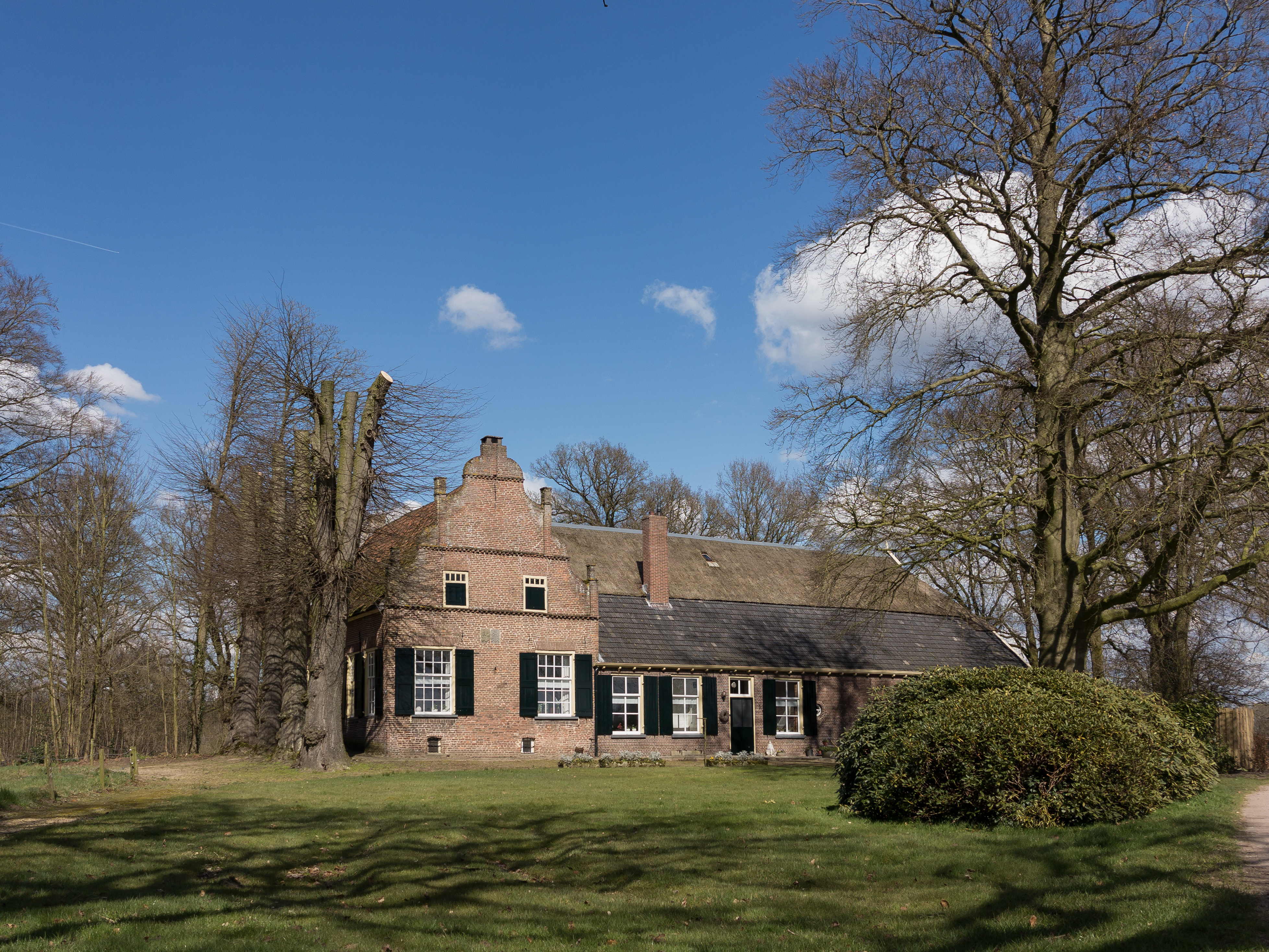
Voorst
Voorst is the kind of place you can drive through twice without realising. It is not a town with a centre so much as a constellation of villages spread along the west bank of the IJssel - sixteen of them, give or take, each barely large enough to need a sign. The biggest, Twello, has just over 11,000 inhabitants. The smallest are a clutch of houses, a church and a windmill. And yet this quiet municipality, halfway between Apeldoorn and Deventer in Dutch Gelderland, has been producing colonial governors, encyclopedia editors, Olympic canoers and Roman Catholic chapels since the eighth century.
Where the IJssel Bends
Voorst owes its shape to the river. Sixteen population centres trace the IJssel and the parallel road from Apeldoorn to Zutphen, a route that has carried armies, traders and pilgrims for well over a thousand years. The eastern edge of the municipality is dyke and water meadow. The western edge runs up against the wooded sand ridges of the Veluwe. In between sits a working agricultural landscape of dairy farms, orchards and reclaimed polders - the kind of land that the Dutch have spent eight hundred years deciding when to flood and when to drain. From above, the municipality looks like a long green ribbon tied to the river.
Saint Lebuinus at the Well
The oldest of the Voorst villages is Wilp, a tiny settlement on the IJssel directly opposite Deventer. Wilp existed by 768, which is when the Anglo-Saxon missionary Lebuinus is said to have built a chapel here. The name itself may be older than the chapel. One theory derives Wilp from wel-apa, meaning well-water, and suggests that prehistoric Celtic or Germanic peoples worshipped a holy spring on the spot long before any Christian arrived. Lebuinus picked his site, in other words, where people were already in the habit of stopping to pray. The tiny old church that stands at Wilp today is not his, but it is the inheritor of his foundation, and the village is older than almost any other settlement in this part of the Netherlands.
The Quiet Producer of People
For a place this rural, Voorst has sent a striking number of its children out into the wider world. Ludolph Sloet van de Beele, born in Voorst in 1806, became Governor-General of the Dutch East Indies from 1861 to 1866 - one of the most powerful colonial offices on earth at the time. Anthony Winkler Prins, born here in 1817, edited the Winkler Prins encyclopedia, which became the Dutch-language equivalent of Britannica and dominated reference shelves across the Netherlands for over a century. Johannes Bastiaans, born just up the road in Wilp in 1812, made his name as one of the country's leading organists and music theorists. More recently, the sprint canoer Jan-Dirk Nijkamp raced at the 1992 Barcelona Olympics, and footballer Jurgen Streppel built a 373-cap career in the Dutch leagues. For a municipality of small villages, that is a long and surprisingly varied honours board.
Things You Find If You Stop
Drive slowly through the back roads and you start to notice what the road map doesn't tell you. At Gietelo, the ruined castle of Nijenbeek leans on the IJssel dyke - what is left of a fourteenth-century stronghold that took a serious shelling in the Second World War. At Posterenk there is a working Dutch windmill near the A1 motorway, somehow surviving the noise. At Teuge, a small airfield is one of the country's main centres for parachute training; on summer weekends the sky over Voorst is dotted with canopies. Bussloo has a recreational lake with a beach. And at Twello, the municipal town hall sits on what was once a horse-and-cart crossroads between Apeldoorn and Deventer, now a small commercial centre with a railway station that does what Dutch railway stations do: arrives on time and goes elsewhere.
Why Voorst Doesn't Try Harder
There is no headline attraction here. No cathedral, no postcard skyline, no must-see. What Voorst offers instead is a working version of the quieter Netherlands - the country between the famous cities, where the IJssel still floods in some winters and the polders still need watching. The Wikipedia entry on Voorst is mostly a list of village names with brief parenthetical notes: "near a wood where nice walks can be taken," "with an old Dutch wind-mill," "with a small lake and beach." That list is the place. Stop the car. Walk the woods. Find the holy well at Wilp if you can.
From the Air
The Voorst municipality straddles the west bank of the IJssel river, centred around 52.2333 N, 6.0833 E, between Apeldoorn (west) and Deventer (east). From cruise it appears as a green corridor along the river, with the Veluwe woodlands rising to the west and Deventer's red-tiled core visible across the river to the east. Teuge International Airport (EHTE) sits inside the municipality and is the nearest aerodrome, used heavily for parachuting and general aviation. The A1 motorway (Amsterdam-Berlin) cuts across the southern part. Best viewed at 2,000-4,000 ft on clear summer days.