Vorkutlag
The name translates bureaucratically: Vorkuta Corrective Labor Camp. The reality was a network of coal mines 160 kilometers above the Arctic Circle, where temperatures dropped to minus 40 and beyond, where the sun vanished entirely in late December and refused to set in midsummer, and where roughly two million prisoners passed through between 1932 and 1962. The Soviet state called it correction. The prisoners called it something else -- when they were still alive to call it anything. Vorkutlag held 73,000 inmates at its peak in 1951, a population larger than most Russian towns, all of them extracting coal to feed the Soviet war machine and its postwar industrial ambitions.
Built on Frozen Ground
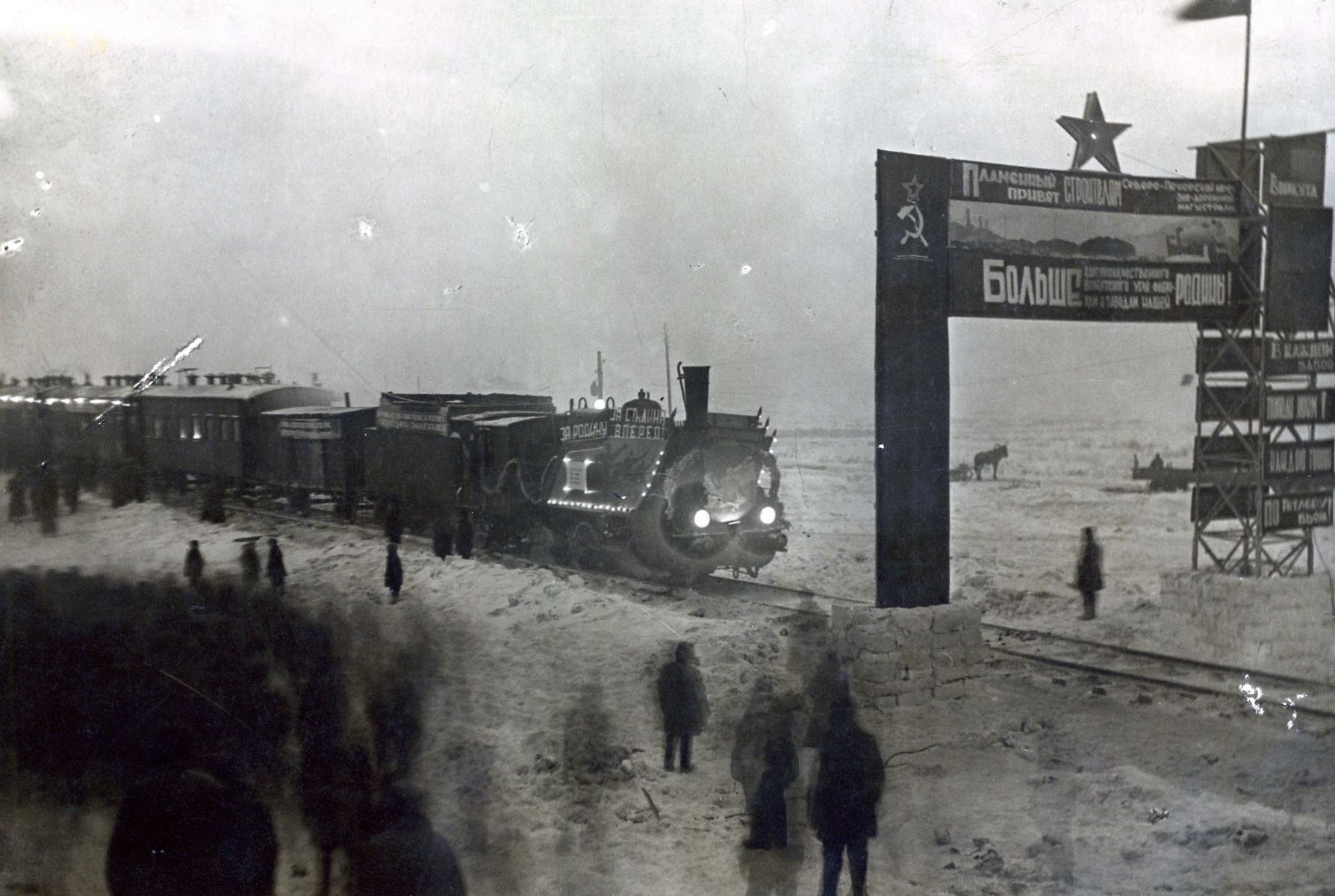
Vorkutlag was formally established on 10 May 1938 by splitting it from the Ukhtpechlag camp complex, though forced labor in the Vorkuta coal basin had been underway since 1932. The camp's remote location was the point: situated in the northeastern tip of the Komi Autonomous Soviet Socialist Republic, roughly 50 kilometers from the Ural Mountains, it was as far from civilization as the Soviet system could manage while still extracting something of economic value. The Pechora Mainline railway, built largely by prisoner labor starting in 1937 and completed in 1941, connected Vorkuta to Moscow via the Northern Railway. The first train arrived on 28 December 1941 -- an event photographed by Yakov Yakovlevich Fomin, who had supervised the railway's construction. That rail link transformed Vorkutlag from a remote punishment into an industrial operation of national significance.
Sixteen Hours Underground
The average working day at Vorkutlag was 16 hours. Prisoners mined coal, built mine infrastructure, and worked in forestry operations under the administration of, successively, the OGPU, the NKVD, and the Ministry of Internal Affairs. The camp population included Soviet political prisoners, Polish citizens arrested after the 1939 occupation, German prisoners of war from the Eastern Front, and American soldiers captured during the Korean War. Rations consisted of rye bread, buckwheat, small amounts of meat, fish, and potatoes -- never enough. Prisoners killed rats and stray dogs to survive. Self-mutilation was a calculated strategy: an injury meant transfer to the hospital, where conditions were marginally less lethal. During World War II, working hours increased further, and the nationwide diversion of food to the Red Army left prisoners on the edge of starvation. The death rate across the Gulag system tells the story in arithmetic: 34.7 per thousand in 1940, then 67.3 in 1941, 175.8 in 1942, and 169.7 in 1943. At Vorkutlag, the cold compounded everything. Prisoners were not given clothing adequate for an Arctic winter. Many froze to death.
Coal for a Crumbling Empire
Vorkutlag's economic logic was grimly straightforward. The Soviet Union's primary coal supplier was Ukraine, but by the end of 1941, the Nazi army had occupied virtually all of Ukrainian territory, cutting Soviet coal production in half. Arctic coal suddenly mattered. Vorkutlag's output became essential to the war economy, and the camp expanded accordingly -- more prisoners, longer hours, less food. The coal that heated Soviet factories and powered Soviet industry came at a cost measured in human lives, though the ledgers recorded only tonnage. Among the prisoners who passed through the system were figures whose names survived: Aleksei Kapler, the screenwriter imprisoned for his relationship with Stalin's daughter Svetlana; Walter Ciszek, an American Jesuit priest arrested in 1941 who survived fourteen years in Soviet captivity; Jaan Kross, who would become Estonia's most celebrated novelist; and Nikolay Punin, the art scholar and partner of the poet Anna Akhmatova, who died at Vorkutlag in 1953.
After the Last Prisoner Left
Nikita Khrushchev's de-Stalinization campaign led to the closure of most Gulag camps, and Vorkutlag was officially liquidated in 1962. Most prisoners were released, but a surprising number stayed. Some had settlement restrictions that prevented them from returning home. Others had no money, no connections, and nowhere else to go. The Russian human rights organization Memorial estimated that of the 40,000 people collecting state pensions in the Vorkuta area, 32,000 were former Gulag inmates or their descendants. The camps themselves crumbled. The wooden barracks rotted, the barbed wire rusted, the watchtowers collapsed. Vorkuta survived as a coal-mining city, but after the dissolution of the Soviet Union, mining companies moved south to more accessible deposits. The population has been in steep decline ever since -- roughly 50,000 by 2019, still shrinking. The ruins of the camp infrastructure are scattered across the tundra, slowly being absorbed by a landscape that was always indifferent to the human suffering imposed upon it.
From the Air
Located at 67.50N, 64.06E, approximately 160 km above the Arctic Circle in the Komi Republic of northern Russia. Vorkuta is visible from altitude as an isolated urban settlement surrounded by tundra and abandoned mining infrastructure. The former camp network extended across multiple sites around the city. Nearest airfield is Vorkuta Airport (UUYW). Best viewed from 5,000-10,000 feet AGL, where the sprawl of abandoned mine buildings, collapsed structures, and the shrinking city itself illustrate the scale of the former camp system. The Pechora Railway line is visible running south from the city.