Voxtrup
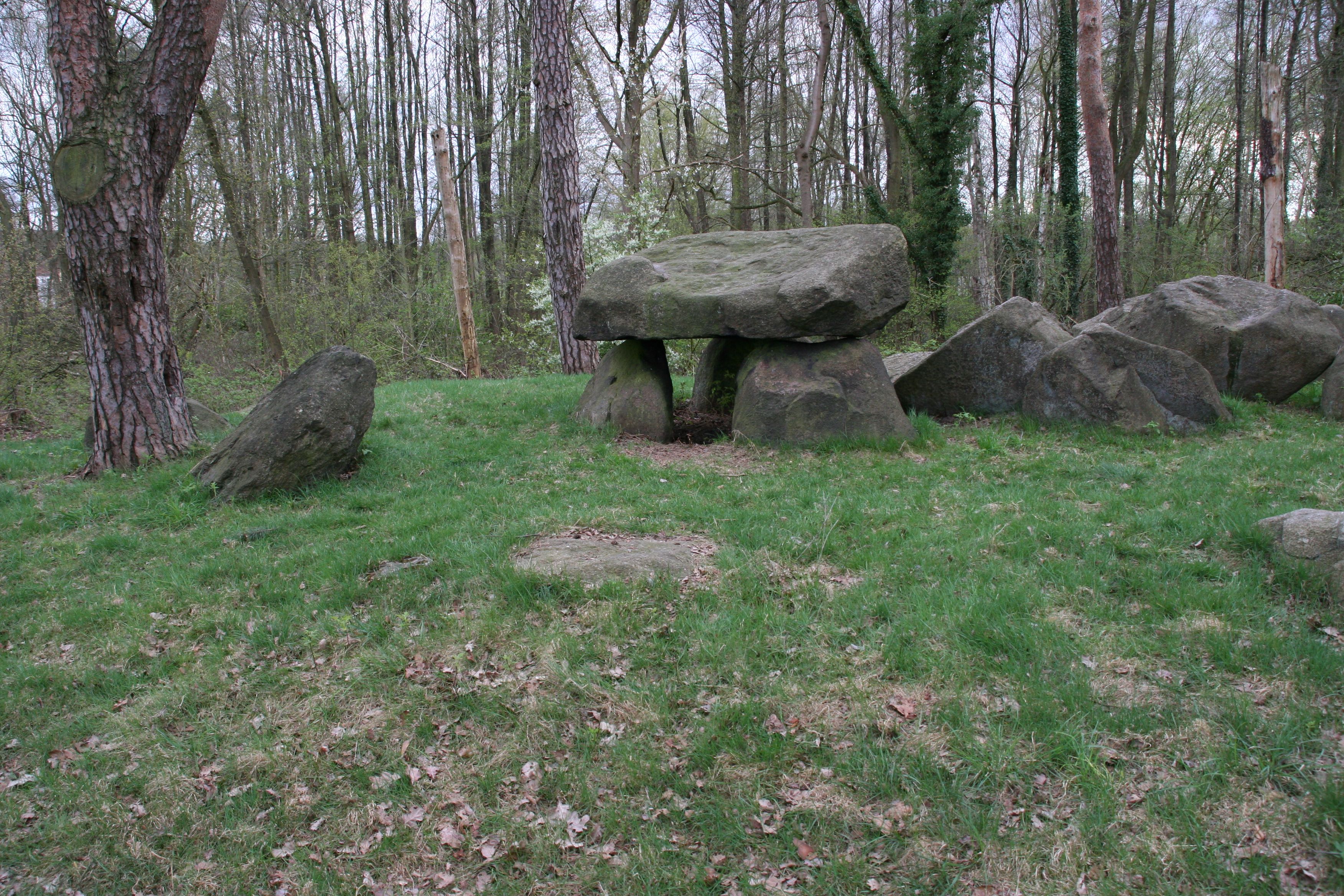
In the woods on the southeast edge of Osnabrück stand the Teufelssteine - the Devil's Stones - a cluster of megaliths from the Funnel Beaker culture, raised by farmers in the fourth or third millennium BC. The settlement that grew up around them eventually got a name: Voxtrup. The court there convened in 1088, presided over a property dispute between a nobleman and a bishop, and the transcribed record of that hearing is the first time the place enters written history. The same woods, the same court, the same stones - now wrapped inside a modern suburban district of seven thousand people on the southeastern edge of Osnabrück city.
Vockestorp, 1088
The earliest mention of Voxtrup survives only through a fourteenth-century copy, but the original document recorded a legal proceeding from 1088. A nobleman named Eberhard agreed to transfer an estate in Bevern to Bishop Benno II in exchange for three pounds; the land would become part of Iburg monastery's holdings. Benno died before the transaction was completed, so it was his successor Bishop Markwart who finalized it. The hearing took place at a court called Vockestorp - or, in a slightly later spelling from 1090, Voccastorp - probably located on the Mahlbrink near the area of the Gelshorn estate, today known as the Waldhof estate. Modern Voxtrup grew from the merger of four old farming hamlets: Molenseten, Düstrup, Hickingen, and another settlement of the same name. A 1147 document lists them together as a coherent unit. The name itself almost certainly predates the Christianization of Saxony - Voxtrup is believed to commemorate the Fokko family, suggesting a pre-Frankish origin sometime before the end of the eighth century.
Five Estates and a Quiet Merger
Through the medieval and early modern centuries, Voxtrup remained what it had always been - a cluster of farming estates rather than a town. The records remember three, possibly five, separate estate names: Arling, Hüdepohl, Werries, Brockmann, and Strickmann. People in the surrounding hamlets of Düstrup and Hickingen worked the same fields their ancestors had cleared a thousand years before. The pattern persisted until 1 July 1972, when the great Lower Saxon municipal reform absorbed Voxtrup, along with seven other small villages, into the city of Osnabrück. The northernmost slice of the district had previously belonged to Schinkel, and there the Lüstringen district railway station once served the Osnabrück-Hannover line until it closed in 1978. The infrastructure of village life faded into the infrastructure of the city next door.
Two Churches, Two Confessions
The Voxtrup of today is small, suburban, and quietly bi-confessional - true to the long pattern of the Osnabrücker Land, where Catholic and Protestant communities have lived as neighbors since the Peace of Westphalia. The Evangelical Margaretenkirche serves one side of the local religious life; the Catholic St. Antonius Kirche the other. Around them are spread the modern amenities of a district of roughly seven thousand: schools, sports facilities, a fire station, a kindergarten. The sports club VfR Voxtrup has been running since 1927 and now offers everything from football and basketball to badminton, tennis, mountain biking, gymnastics, and hiking - the comprehensive German Verein in miniature.
Fire Brigade with a Children's Division
If there is one institution that captures Voxtrup's particular flavor of civic life, it is the volunteer fire brigade. The Freiwillige Feuerwehr Osnabrück-Voxtrup was founded in 1938 and is now based on Holsten-Mündruper-Straße in the heart of the district. The fleet runs to five modern emergency vehicles, three of them substantial machines. Beyond standard firefighting, the brigade provides technical rescue at traffic accidents - the ELW 2 emergency control vehicle, supported by colleagues from Haste and the Neustadt, is specialized for building collapses and rescues from beneath rubble. A youth fire brigade has existed since 1983, and on 21 August 2010 Voxtrup established the first Kinderfeuerwehr - children's fire brigade - in the entire Osnabrück city and district area. Civic engagement starts early here, and apparently it starts with a helmet.
From the Air
Located at 52.25°N, 8.10°E on the southeastern edge of the city of Osnabrück, Lower Saxony. The district lies in the gentle foothills where the city meets open countryside, with the Wiehen Hills rising further to the east. The Teufelssteine megalithic site, part of the Route of Megalithic Culture, is a notable archaeological landmark within the district. Nearest major airport: Münster Osnabrück (ICAO: EDDG), about 40 km southwest. Hannover (EDDV) lies roughly 110 km east. The A30 motorway runs just to the north of central Osnabrück. From altitude, look for the residential cluster of Voxtrup at the southeastern margin of the city's developed footprint.