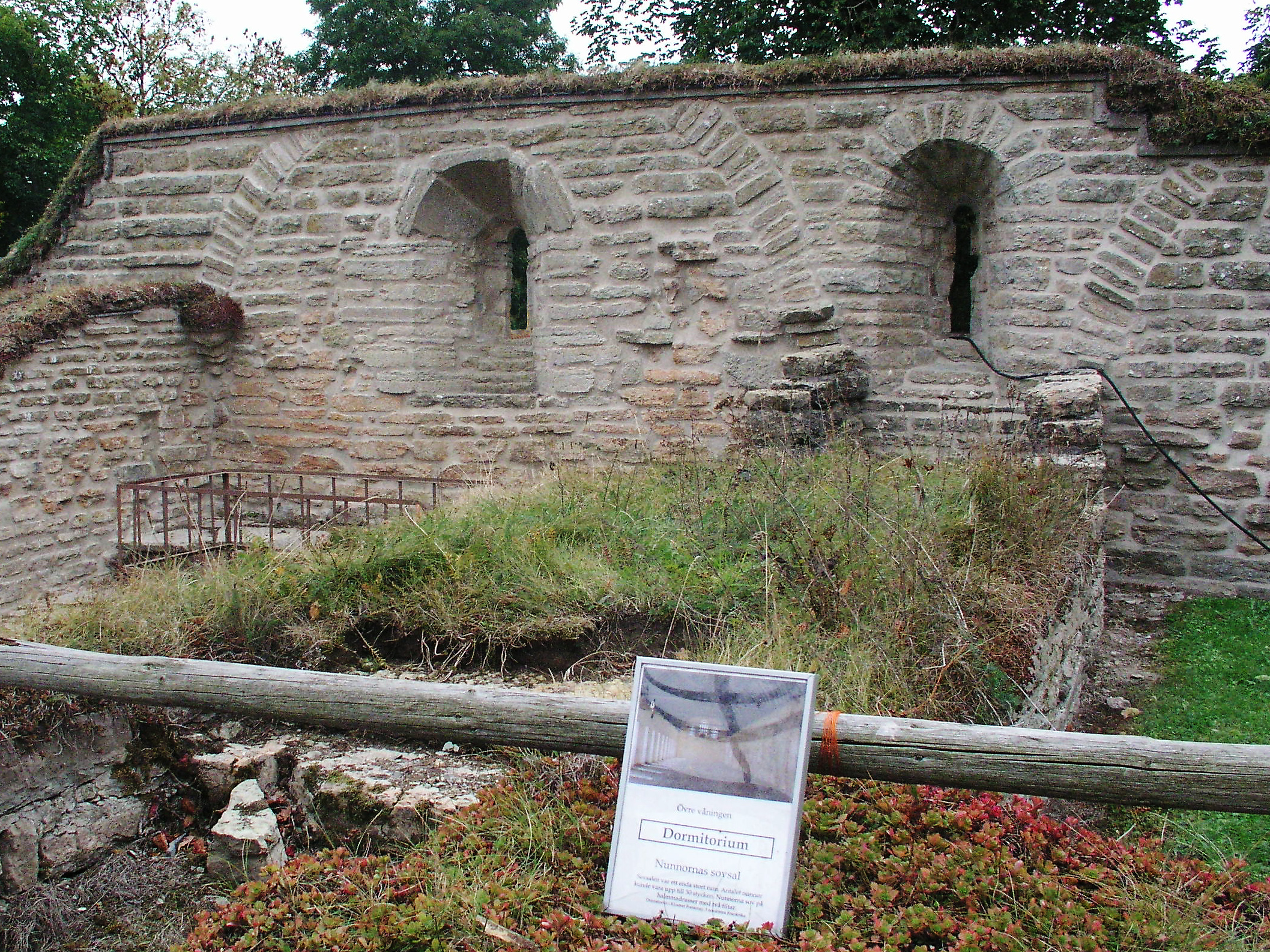
Vreta Abbey
Four Swedish kings lie buried beneath the church at Vreta Abbey, yet it was women who shaped this place for nearly five centuries. Founded around the turn of the twelfth century as Sweden's first nunnery, Vreta became one of medieval Scandinavia's most prestigious religious houses - a place where princesses took the veil, noblemen's daughters received their education, and at least one Danish queen found refuge after her husband's murder. The abbey also earned a darker reputation: during the 13th century, it became notorious as the scene of multiple abductions, where young women were seized from the convent for marriages their families had forbidden.
A Royal Foundation
King Inge the Elder and Queen Helena established Vreta Abbey on the orders of Pope Paschal II, who became pontiff in 1099. Inge died around 1105, placing the foundation firmly in the earliest years of the twelfth century. Originally a Benedictine house, the abbey received substantial donations from the next royal generation - King Inge the Younger and Queen Ulvhild - before fire destroyed the original buildings in the early 13th century. A new church rose from the ashes, dedicated in 1289 in the presence of King Magnus Ladulås and Queen Helvig of Holstein. The kings Inge the Elder, Philip, Inge the Younger, and Magnus Henriksson all rest within its walls, along with princes Ragnvald and Sune.
Sisters of the White Robe
In 1162, Vreta converted from Benedictine to Cistercian observance. The first Cistercian abbess was Ingegerd, sister of King Karl Sverkersson. Her own sister Helena - widow of the murdered Danish King Canute V - entered Vreta as a nun in 1157, seeking sanctuary after her husband's death. Royal and noble connections ran deep: Swedish princess Helena Sverkersdotter later served as abbess. From Vreta's cloisters, daughter houses spread across Sweden: Askeby Abbey near Linköping, Riseberga Abbey in Närke, and Solberga Abbey on the island of Gotland all traced their spiritual lineage to this mother house.
A Gentle Dissolution
The Swedish Reformation treated Vreta with unusual mercy. While other convents faced immediate closure, Vreta was merely forbidden to accept new novices. The abbey continued operating as a school for noblewomen and a retirement home for aging ladies of rank. In 1529, King Gustav I allowed the last abbess, Sigrid Botholfsdotter, to purchase the property outright. When Askeby Abbey and Skänninge Abbey closed in 1529 and 1544, their displaced nuns found refuge at Vreta. Gustav I gave the abbey to his Catholic mother-in-law, Ebba Eriksdotter Vasa, who spent her final years there until her death in 1549. The last two nuns, Brita Gisledotter and Kirstin Månsdotter, died in 1582, ending nearly five centuries of continuous monastic life.
Stones That Remember
The abbey church survived as a Lutheran parish church and still stands today, distinguished by its medieval hagioscope - a narrow opening that allowed the sick or cloistered to observe the mass from a separate space. Excavations between 1916 and 1926 uncovered the remaining monastery ruins north of the church, including an unusual wooden waterpipe now displayed in the adjoining museum. The only complete monastic building besides the church is the barn, though some walls were reconstructed in the 20th century. In a final journey of medieval stone, materials from the former refectory were carried away to build the tower of Linköping Cathedral.
From the Air
Located at 58.48N, 15.52E in the Linköping Municipality of Östergötland, about 5 km north of Linköping city center. The abbey church and surrounding ruins are visible from altitude, set in flat agricultural landscape typical of the Swedish lowlands. Nearby airports include Linköping City Airport (ESSL) approximately 8 km south and Norrköping Airport (ESSP) 35 km northeast. The site sits near the western shore of Lake Roxen. Best viewed from 2,000-4,000 feet AGL, where the medieval church and excavated ruins stand out against the surrounding farmland.