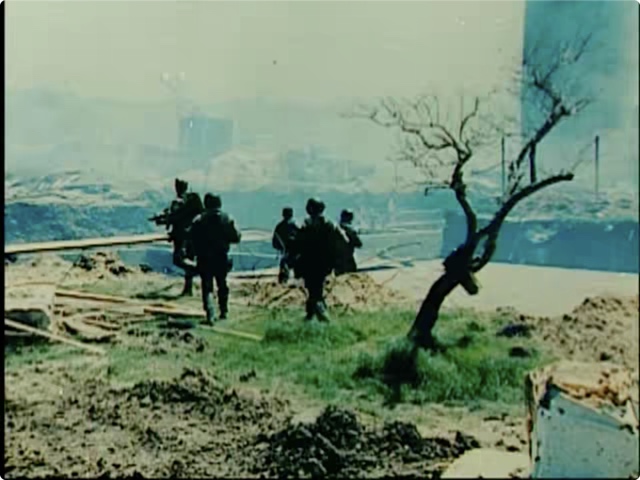
Waco Siege Site
On February 28, 1993, agents of the Bureau of Alcohol, Tobacco and Firearms attempted to raid the compound of the Branch Davidians, a religious sect led by David Koresh, near Waco, Texas. The raid went catastrophically wrong. A gunfight killed four ATF agents and six Davidians. A 51-day standoff followed, with FBI negotiators attempting to persuade Koresh to surrender while his followers fortified their position. On April 19, after negotiations collapsed, FBI tanks began injecting tear gas into the compound. Fire broke out - whether started by Davidians or caused by the assault remains disputed. Seventy-six people died in the flames, including Koresh and 25 children. The siege became a symbol of government overreach to many Americans. Two years later, Timothy McVeigh bombed the Oklahoma City federal building on the anniversary of Waco, killing 168 people in what he called retaliation. The charred remains of Mount Carmel were bulldozed, but the controversy never died.
The Branch Davidians
The Branch Davidians were an offshoot of the Seventh-day Adventist Church, established in the 1930s and based at Mount Carmel Center outside Waco since the 1950s. David Koresh, born Vernon Howell, took control of the group in 1987 after a violent power struggle. He claimed to be the final prophet, able to open the Seven Seals described in the Book of Revelation. He also claimed exclusive sexual rights to all female members, fathering children with multiple 'wives,' some as young as twelve. The group stockpiled weapons, legally purchased, and prepared for the end times. When ATF received reports of illegal weapons modifications, they obtained a search warrant. The raid would be the largest law enforcement operation in ATF history.
The Raid
The ATF planned a 'dynamic entry' - a surprise raid with overwhelming force. But the element of surprise was lost: a television cameraman asking directions revealed the operation to a Davidian who happened to be nearby. Koresh was warned. When 76 ATF agents approached the compound on February 28, they faced armed resistance. A firefight erupted that lasted nearly two hours. Four ATF agents were killed; sixteen were wounded. Six Davidians died. Both sides claimed the other fired first. A ceasefire was negotiated, and the wounded were evacuated. But Koresh refused to surrender. The FBI took over, and the standoff began.
The Siege
For 51 days, the FBI surrounded Mount Carmel, negotiating by telephone while psychological pressure tactics - constant noise, spotlight, and eventually cutting utilities - attempted to force surrender. Koresh promised to come out after writing his interpretation of the Seven Seals; the FBI grew impatient. Attorney General Janet Reno approved a plan to inject tear gas into the compound, believing it would force evacuation. On the morning of April 19, tanks began punching holes in the buildings and spraying CS gas. By noon, fire had engulfed the compound. The blaze spread with stunning speed. Most of those inside - including 25 children - died in the flames or from gunshot wounds. Koresh was found with a bullet wound to the head.
The Controversy
Who started the fire? The FBI insisted Davidians had set it themselves, part of a mass suicide. Survivors claimed the tanks had knocked over lanterns used during the power outage. Independent investigations have reached conflicting conclusions. What's beyond dispute is that the government's approach - from the bungled raid to the psychological warfare to the tear gas assault - contributed to the disaster. Critics from across the political spectrum condemned the operation. For the emerging militia movement, Waco became proof of federal tyranny. Timothy McVeigh, who had visited the site during the siege, bombed Oklahoma City exactly two years later. Waco remains a touchstone for debates about religious freedom, government power, and the limits of law enforcement.
Visiting the Site
The original Mount Carmel compound was located about 10 miles east of Waco, Texas, on Double EE Ranch Road. The burned buildings were bulldozed; a new church was built by surviving Branch Davidians and sympathizers. A memorial lists the names of those who died. The Branch Davidian community, much diminished, still exists and welcomes visitors who approach respectfully. The site is private property; casual tourism is not encouraged. For context, the Texas Ranger Hall of Fame in Waco has exhibits about the siege, and the Waco Mammoth National Monument (unrelated to the siege) is a major attraction. Waco Regional Airport (ACT) serves the area; Dallas/Fort Worth International (DFW) is 100 miles north. The experience of visiting - if one does - is heavy: a place where religious fervor, government miscalculation, and the deaths of children converged in flames.
From the Air
Located at 31.60°N, 96.98°W approximately 10 miles east of Waco, Texas, in rural McLennan County. From altitude, the site appears as a small cluster of buildings in agricultural land - a new church and memorial on the site of the burned compound. The surrounding terrain is rolling Texas prairie. Waco's urban area is visible to the west. Lake Waco is northwest of the city.