Wageningen University & Research
The Netherlands is about the size of Maryland. It contains 17 million people and roughly two cows for every three of them, and it exports more food by value than any country except the United States. None of that is an accident. A great deal of it comes down to a single university in a forest town of 40,000 people on the lower Rhine, where for nearly a century researchers have been finding ways to grow more food on less land, with fewer inputs, in glasshouses that look like spaceships. Wageningen University & Research has ranked first in the world for agriculture and forestry for two decades running. The greenhouse two streets away might be growing the tomato you eat in November.
From Agricultural College to Global Brand
The institution began in 1876 as the Rijkslandbouwschool, a National Agricultural College, set up to give Dutch farmers something more than folk knowledge. In 1896 it became the Hoogere Land- en Boschbouwschool. In 1904 horticulture was added to the name. In 1918 it was elevated to academic status by an act of parliament - 9 March is still celebrated as the founding date. In 1986 it was renamed a university. In 1997 it merged with the former research institutes of the Dutch Ministry of Agriculture to form what is now Wageningen University & Research, WUR for short. The new structure mattered. Most universities do fundamental research and call it a day. Wageningen combined fundamental science with applied research institutes that work directly with industry - on dairy, on biotech, on food safety, on marine biology, on plant breeding. The result is a research engine that publishes papers and ships products.
Why Tiny Wageningen Feeds the World
In September 2017 National Geographic published a cover story called 'This Tiny Country Feeds the World'. The country was the Netherlands. The article kept returning to one campus: Wageningen. The numbers are dramatic. Dutch tomato yields are roughly ten times the world average, thanks largely to research into glasshouse design, LED lighting, water recirculation, and pest biology pioneered here. The Dutch use a small fraction of the water that other countries use to produce equivalent food. Much of the technology that does the work was developed in Wageningen's research institutes - Wageningen Plant Research, Wageningen Food & Biobased Research, Wageningen Livestock Research, Wageningen Marine Research, Wageningen Environmental Research, and the rest. These institutes belong to Wageningen Research Foundation, the non-profit half of WUR, and they contract with governments and companies around the world.
Twelve Thousand Students, One Hundred Countries
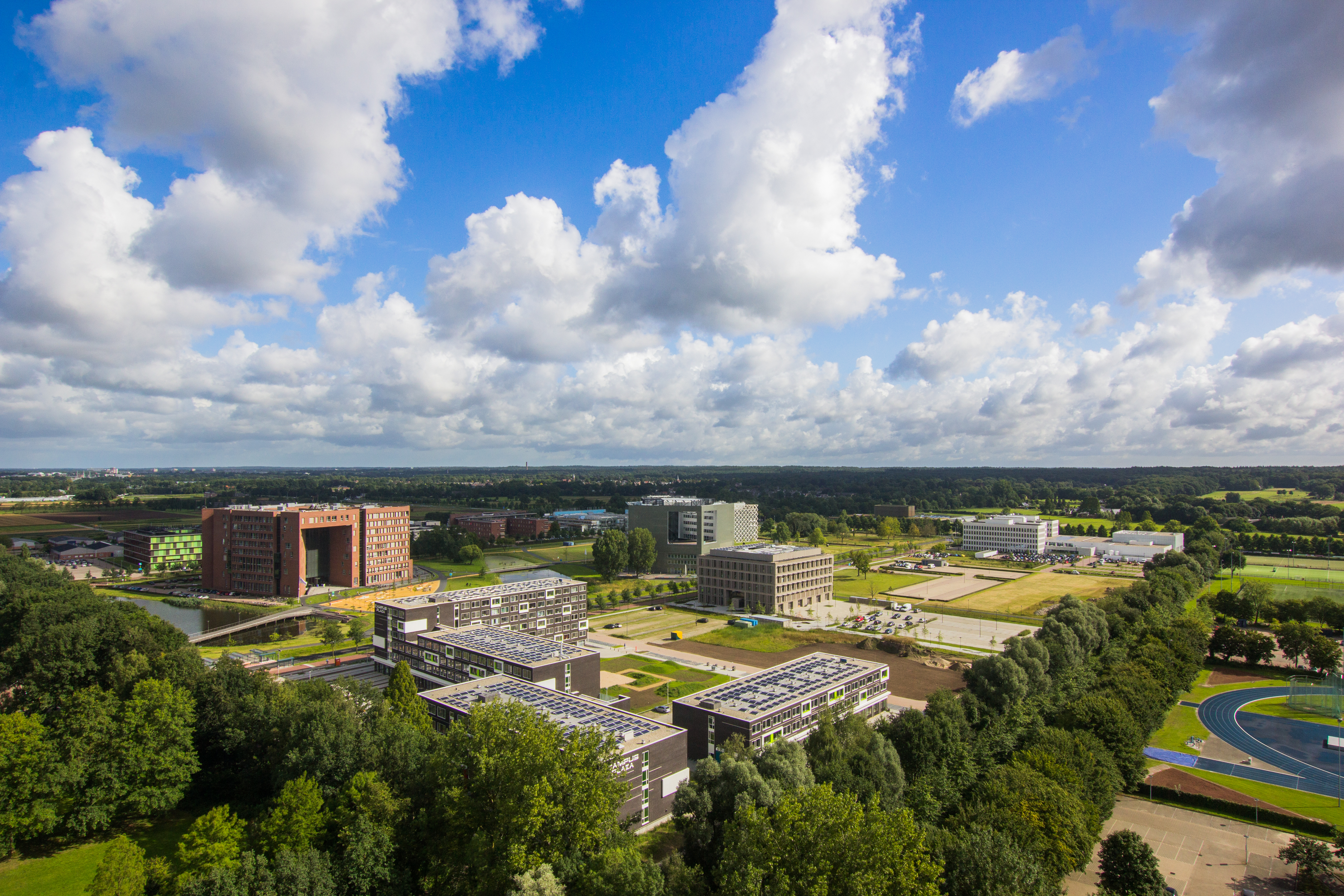
About 12,000 students study at Wageningen, drawn from more than 100 countries. The university teaches almost everything in English - it was the first Dutch institution to receive the European Credit Transfer System label - and offers 19 bachelor programmes and 36 master programmes, almost all of them in some form of life science, environmental science, agriculture, food technology, or sustainability. The campus has a distinct architectural identity: the Forum building with its great open atrium, the Lumen building with its glass-walled greenhouse, the Orion centre opened for the university's centenary in 2018, when the institution presented itself with a carillon. WURwolf is the mascot. The food in the canteens is, predictably, very good.
A Climate Research Powerhouse
Wageningen's specialism positions it directly at the centre of the climate question. Soil carbon, livestock methane emissions, crop tolerance for heat and drought, sustainable fisheries, alternative proteins, urban farming, the future of palm oil - all of these are Wageningen research areas. The university's environmental and ecology programs are ranked at or near the top globally by U.S. News, the QS rankings, and the Shanghai academic ranking. In 2015 Wageningen was named the most sustainable Dutch university for the third year running. The work has not been entirely uncontroversial: in 2018 the magazine OneWorld took the university to court demanding access to its research contracts with Bayer, Syngenta, and Monsanto, on the grounds that industry funding might be shaping research conclusions on neonicotinoid pesticides and bee colony collapse. OneWorld lost the court case. The questions, fairly enough, persist.
A Tropical Memory and a Carillon
Wageningen's nineteenth-century roots reach back to a peculiar imperial moment: the original college was deeply involved in training agricultural specialists for the Dutch East Indies, the Indonesian colony that supplied the empire with coffee, rubber, and palm oil. Many of the early professors had spent careers in the tropics. The university's tropical-agriculture archives are still rich, and a substantial slice of its present-day graduate work continues in low- and middle-income countries through institutes like the former Centre for Development Innovation, now folded into Wageningen Social & Economic Research. Walk across the campus today and you might catch the carillon striking on the hour from its tower outside Orion - the gift Wageningen gave itself at 100. The notes carry over the bicycle paths and the experimental fields. A few of those fields contain crops that, in twenty years, might be the food someone is growing in a drought-stricken country a continent away.
From the Air
The WUR campus sits at 51.99 N, 5.66 E on the northern edge of Wageningen, between the town and the Wageningse Berg woodland. The Forum building (large atrium) and the Lumen greenhouse are the most identifiable structures from low altitude. The Rhine is 3 km south; MARIN's complex is 2 km west. Nearest airport is Schiphol (EHAM) 75 km west; Eindhoven (EHEH) 60 km south.