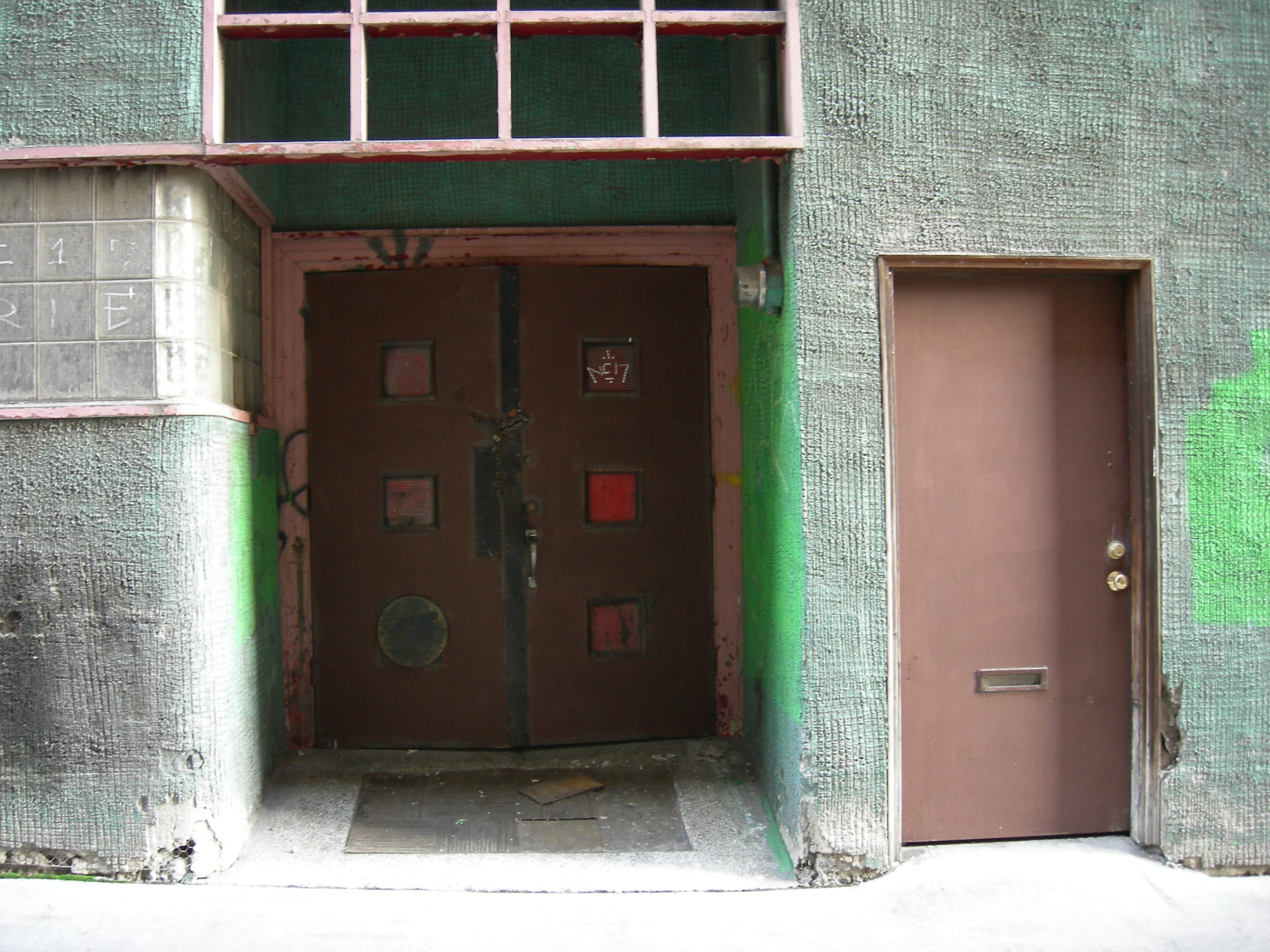
Wah Mee Massacre
Behind an unmarked door on South King Street, a narrow staircase descended into one of Seattle's worst-kept secrets. The Wah Mee Club, tucked inside the basement of the historic Louisa Hotel in the heart of the Chinatown-International District, had operated as an illegal gambling den for decades. On the night of February 18, 1983, fourteen people were inside -- dealers, a cook, doormen, and patrons gathered around the pai gow tables. By the early hours of February 19th, thirteen of them were dead, shot execution-style after being bound with pre-cut nylon cords. It was the deadliest mass shooting in Washington state history, a crime that shattered the close-knit Chinese American community and cast a long shadow over a neighborhood still reckoning with its legacy.
Behind the Unmarked Door
The Louisa Hotel had stood at the corner of South King Street and Maynard Avenue South since 1909, a fixture of Seattle's Chinatown. The building's history mirrored the neighborhood itself -- Prohibition-era murals would later be discovered on its walls, evidence of the layers of life that had played out within. The Wah Mee Club occupied the basement, one of several gambling establishments that operated semi-openly in the district. Patrons were mostly older Chinese American men, many of them members of the Bing Kung Tong, a fraternal organization with deep roots in the community. The club had a manager, a cook, and doormen who controlled access. On any given night, the stakes at the pai gow tables could be significant, and the three men who planned the robbery knew exactly how much cash circulated in that basement room.
Midnight on South King Street
The three perpetrators were Willie Mak, age 22; Benjamin Ng, age 20; and Tony Ng (no relation), age 25 -- all Hong Kong immigrants. Shortly before midnight on February 18th, Mak and Tony Ng entered the club and lingered at the bar on the upper level. Around 12:30 AM, Benjamin Ng arrived carrying a paper bag with pre-cut nylon cords inside. The three men drew their weapons, ordered everyone to the ground, bound them, and robbed the club. Then, in an act of calculated brutality meant to eliminate all witnesses, they shot every person in the room. Among the thirteen killed were restaurateur Moo Min Mar and his wife Jean Bick Chinn, a retired postal worker, a fishmonger, cooks, a theater projectionist, and a former Army sergeant. But one man survived. Wai Yok Chin, a 61-year-old pai gow dealer and former Navy sailor, had been shot but played dead. He would become the prosecution's key witness.
The Hunt and the Trials
Mak and Benjamin Ng were arrested almost immediately. Mak confessed, declaring he had "shot them all" -- a statement he later recanted. Tony Ng fled, evading capture for twenty months before the Royal Canadian Mounted Police arrested him in Calgary, Alberta, where he had been living under the alias Jim Wong and working as an electronics technician. The trials drew national attention. Benjamin Ng was convicted of thirteen counts of aggravated first-degree murder and sentenced to life without parole. Willie Mak was initially sentenced to death by hanging, but the Washington State Supreme Court later ruled the 1983 jury had not properly assessed his role, and he was resentenced to life without parole. Tony Ng was acquitted of murder but convicted of thirteen counts of first-degree robbery and one count of assault, receiving a combined sentence of thirteen life terms totaling 35 years. He was paroled in 2013 and deported to Hong Kong the following year.
A Community's Wound
The massacre devastated Seattle's Chinese American community in ways that extended far beyond the immediate grief. The Wah Mee Club was part of a social fabric -- the gambling dens, whatever their legal status, were gathering places for an immigrant generation that had built lives in a neighborhood shaped by decades of exclusion laws and discrimination. The crime reinforced painful stereotypes and drew unwanted scrutiny to Chinatown's internal affairs. Families who had lost fathers, husbands, and brothers found themselves navigating a justice system that stretched across decades. Relatives of victims spoke at parole hearings as late as 2009, expressing outrage that Tony Ng was nearing release. The Louisa Hotel itself suffered a devastating fire in December 2013, though owners later preserved the exterior and converted the building into apartments, which opened in 2019. The Wah Mee Club space remains sealed, a silent memorial to the thirteen lives taken on that February night.
From the Air
Located at 47.598°N, 122.324°W in Seattle's Chinatown-International District, just south of downtown. The site is at the corner of South King Street and Maynard Avenue South, near the waterfront and Pioneer Square. Look for the cluster of low-rise buildings between the elevated freeway and the railroad tracks south of the downtown core. Nearest airport is Boeing Field/King County International (KBFI), approximately 2nm south. Seattle-Tacoma International (KSEA) is 10nm south. The International District is identifiable by its proximity to the King Street Station rail terminal and the sports stadiums (T-Mobile Park and Lumen Field) immediately to the west.