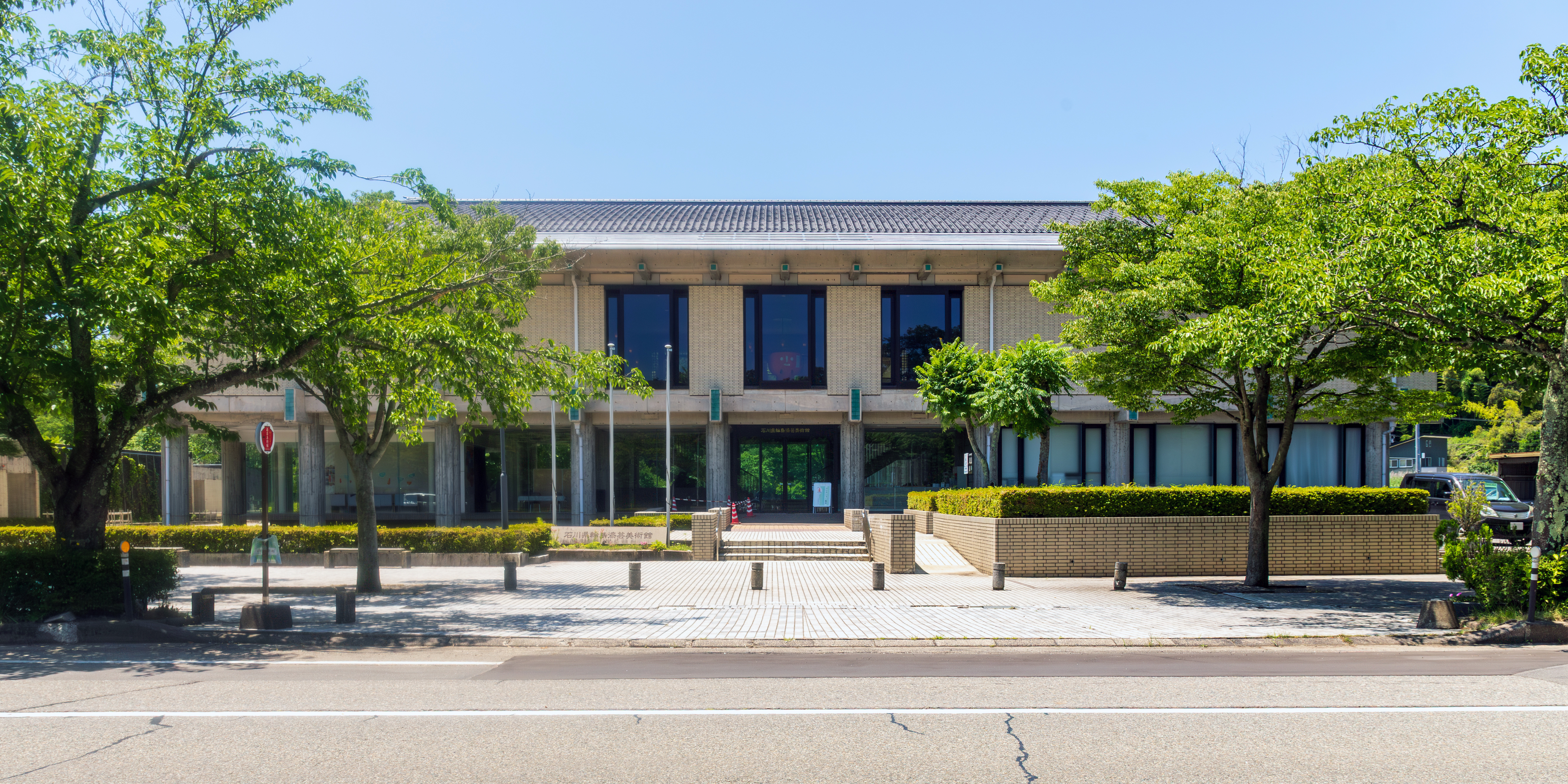
The Wajima Museum of Urushi Art: Japan's Shrine to Lacquer
Each piece of Wajima-nuri lacquerware passes through approximately 124 steps before it is finished -- each coat of urushi sap hand-applied, each layer left to cure in humidity rather than heat, each surface polished to a depth that seems to glow from within. The craft has been practiced in this small city on the northern tip of the Noto Peninsula since the Muromachi period, more than 600 years ago, and in 1991, Wajima opened the only museum in Japan dedicated entirely to the art form. The Wajima Museum of Urushi Art stands as both a celebration and a repository: a place where centuries of lacquer technique are preserved not behind glass alone, but in the living memory of a community that still shapes its identity around tree sap and patience.
Sap, Earth, and 124 Steps
Wajima-nuri is distinguished from other Japanese lacquerware traditions by one critical ingredient: jinoko, a locally sourced diatomaceous earth that is mixed into the urushi base coat. This powdered fossil creates an undercoating of extraordinary durability, producing lacquerware that resists chipping, heat, and even mild acids. The technique was refined around 1630 during the early Edo period, and it is what allowed Wajima products to survive the rough handling of Kitamae-bune trade ships that carried goods along Japan's Sea of Japan coast. By the time the craft was officially designated a Traditional Craft of Japan in 1975, Wajima artisans had spent centuries perfecting a division of labor in which each specialist -- the woodworker, the base-coat painter, the polisher, the maki-e gold decorator -- handles only their stage of the 124-step process.
A Museum Born from Tradition
When the museum opened in 1991, it held 300 works. By 2021, that collection had grown to 1,428 pieces, prompting a ceremony that year to celebrate the expansion of the museum's storage facilities. The building itself draws its design from Shogakuin's school building, grounding the institution in local architectural tradition. Inside, exhibits trace the evolution of urushi art from its earliest origins to contemporary practice, displaying not only Wajima-nuri but lacquerware from across East and Southeast Asia. The museum has hosted exhibitions that range from the scholarly to the personal: a 2015 show featured Edo-period maki-e kaioke wedding sets, while a 2021 exhibition displayed carvings of flowers, cats, and dragonflies created by 153 elementary school students using traditional shikin techniques.
Three Decades of Living Art
The museum marked its 30th anniversary in November 2021 with "Made in Wajima -- The Age of Lacquer," an exhibition tracing the art form's history through 92 works dating from the latter half of the 19th century to the present. A 2020 exhibition had brought together 45 lacquer works from seven countries, including sake sets and bowls, revealing how deeply urushi traditions have traveled across Asia. The museum also hosted the "Wajima Lacquer Art Artists 20th Anniversary" in 2014, celebrating two decades of work by active local artisans. These are not dusty retrospectives. They are the pulse of a living craft tradition, updated annually as new masters emerge and old techniques find new expression.
Shaken but Standing
The Noto Peninsula is earthquake country, and Wajima has been tested repeatedly. A magnitude 6.9 earthquake struck in 2007, cracking airport runways and collapsing roads. A magnitude 6.5 quake followed in 2023. Then, on New Year's Day 2024, a magnitude 7.5 earthquake -- the most powerful to hit the peninsula in modern history -- devastated the city. Of the 103 companies in the Wajima-nuri Commerce and Industry Cooperative, 13 were destroyed outright, 50 were completely or partially wrecked, and nearly all others sustained damage. Workshops that had operated for generations were reduced to rubble. The museum and the craft it celebrates now carry an additional weight: they are not merely a record of what Wajima-nuri was, but a lifeline for what it must become as artisans rebuild from the ground up.
From the Air
Located at 37.39N, 136.89E in the city of Wajima on the northern coast of the Noto Peninsula. Noto Airport (RJNW) lies approximately 5 nautical miles south-southeast of the museum. From altitude, Wajima is visible as a compact coastal city along the rugged northern shoreline of the peninsula, facing the Sea of Japan. The museum is in the central part of the city. Best viewed at 3,000-5,000 feet AGL approaching from the sea to appreciate Wajima's position on the peninsula's exposed northern coast.