Wakayama Castle
The hill is called Torafusayama -- "Crouching Tiger Mountain" -- because seen from the sea, its silhouette resembles a tiger lying at rest. At 48.9 meters above sea level, it is not especially tall, but in 1585 Toyotomi Hideyoshi recognized what the shape concealed: a natural strongpoint commanding the Kinokawa River, the Kii Channel trade routes, and the restive communities of warrior-monks and matchlock-wielding rebels who had just given his predecessor Oda Nobunaga the fight of his life. The castle Hideyoshi ordered built here has been burned by lightning, bombed by American aircraft, and rebuilt in concrete, yet Wakayama Castle still anchors the center of Wakayama City, the white tower rising above its original stone walls like a statement about persistence.
Monks, Guns, and a Flooded Fortress
Before there was a castle, there was a theocratic rebellion. During the Muromachi period, Kii Province was nominally ruled by the Hatakeyama clan, but the real power belonged to armed monks from Negoro-ji temple and the Saiga Ikki, followers of the Ikko-ikki movement who wanted to overthrow the feudal order and govern themselves. The Saiga Ikki built Ota Castle near the future site of Wakayama Castle and armed themselves with thousands of matchlock guns. When Nobunaga attacked in 1577, their guerrilla tactics and devastating firepower drove him back. It fell to Hideyoshi to finish the job. In 1585, he invaded with a massive army, razed Negoro-ji, then laid siege to Ota Castle with a ruthless innovation: he ordered dams built on three sides, diverting the river to flood the fortress. Starving and drowning, the defenders surrendered. Fifty warrior monks charged out in a final suicidal assault. Hideyoshi gave the province to his brother Hidenaga, who chose this tiger-shaped hill for his new seat of power.
The Tokugawa Guardians
After the Battle of Sekigahara in 1600, the castle passed through the hands of the Asano clan -- who expanded it with a three-story tenshu, originally painted black -- before Tokugawa Ieyasu installed his tenth son, Tokugawa Yorinobu, as lord in 1619. Yorinobu founded the Kii Tokugawa clan, one of the three elite Gosanke branches authorized to provide a shogun if the main line failed. This was not an honorary title. Kishu Domain was expected to watch over all of western Japan and hold the Kansai region against rebellion until reinforcements arrived from Edo. Yorinobu, a veteran of the Siege of Osaka, strengthened the walls, expanded the northwest enclosure, and hired displaced ronin to bolster the domain. He even planned a southern expansion -- until rumors that he was plotting a rebellion forced him to stop. The 1651 Keian Uprising, in which a conspirator used Yorinobu's name without permission, made further castle-building politically impossible.
Two Shoguns and an Uninvited American
Kishu Domain delivered on its promise of succession. Tokugawa Yoshimune, born at Wakayama Castle in 1684, became the eighth shogun in 1716 and launched sweeping financial reforms that stabilized the struggling Tokugawa government. More than a century later, Tokugawa Iemochi left these same walls to become the fourteenth shogun in the turbulent Bakumatsu period -- though he ultimately could not prevent the collapse of Tokugawa rule. Between these two shoguns came an episode both strange and consequential. In 1791, American captains John Kendrick of the Lady Washington and William Douglas of the Grace sailed into Kushimoto harbor, hoping to open trade with Japan. News was rushed to Wakayama Castle, which dispatched troops -- but Kendrick and Douglas had already departed two days earlier. This first recorded visit by Americans to Japan left little diplomatic mark, but for Japan it triggered a new system of coastal alarms and patrols that tightened the nation's isolation under sakoku.
Lightning, Bombs, and Concrete
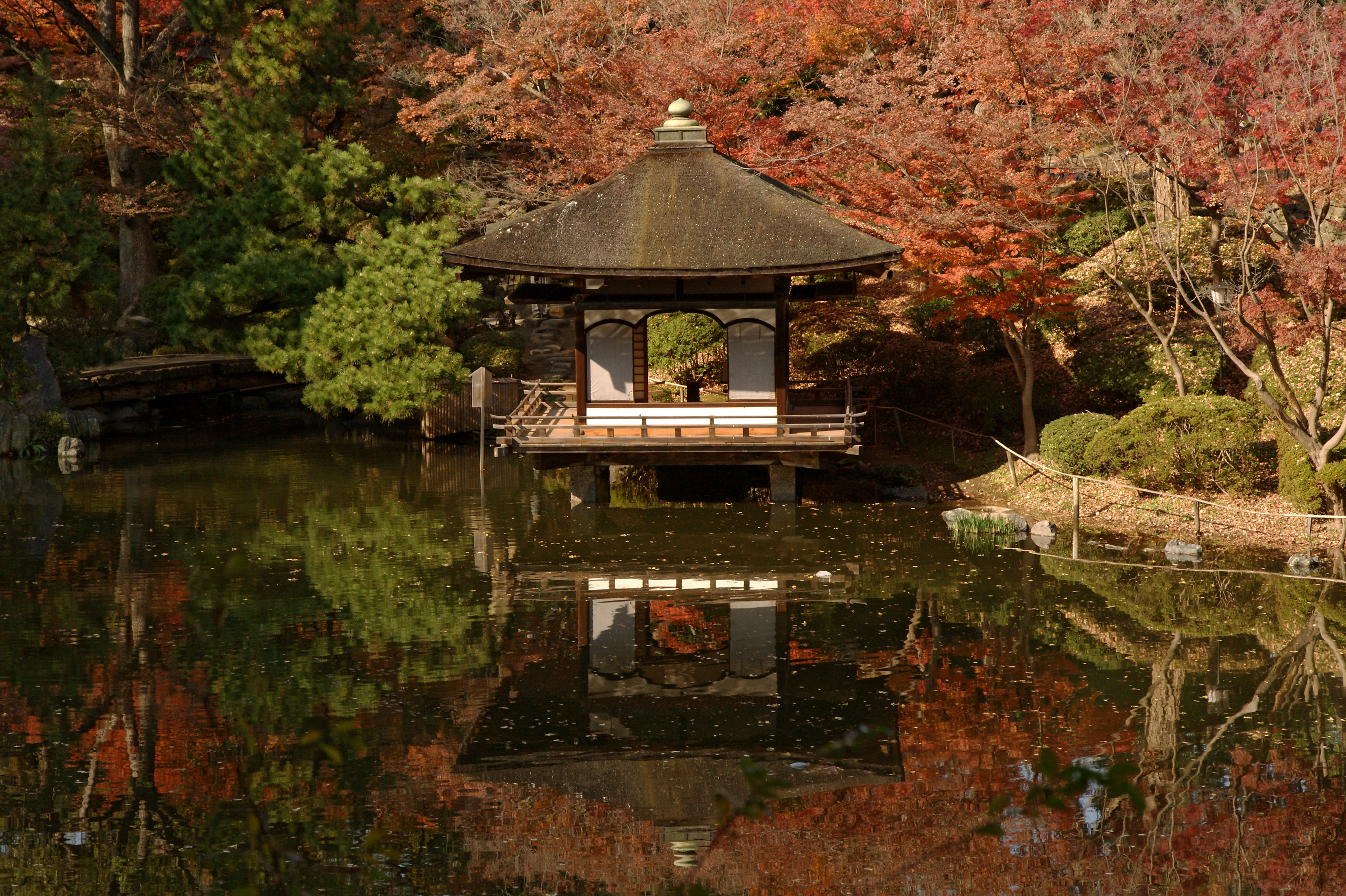
Wakayama Castle has a habit of burning down and coming back. In 1846, a lightning strike destroyed most of the complex, including the tenshu. Because the Kii Tokugawa held the rare status of Gosanke, the shogunate made an exception to its general prohibition on castle reconstruction, and the keep was rebuilt by 1850. That reconstructed tenshu was designated a national treasure in 1935. Ten years later, American bombers set it ablaze in the Wakayama Air Raid of 1945, reducing the keep, tower, and surrounding structures to rubble. What stands today is a 1958 reinforced concrete reconstruction -- white where the Asano original was black, modern where the timber original was ancient. The Okaguchi Gate, one of only two original structures to survive, was designated a National Important Cultural Property in 1957. And the Nishi-no-Maru Garden, known as Momiji-Dani or the Valley of Autumn Leaves, was named a National Place of Scenic Beauty in 1987, its maples blazing red and gold each November around the castle's original stone foundations.
From the Air
Located at 34.228N, 135.172E in central Wakayama City. The castle sits atop Torafusayama hill (48.9m elevation) and is identifiable from the air by the white tenshu tower surrounded by moats and green parkland. The Kinokawa River runs along the north side of the city. Nearest major airport: Kansai International Airport (RJBB), approximately 30nm north across Osaka Bay. Nanki-Shirahama Airport (RJBD) lies approximately 55nm south along the coast. The castle grounds are best viewed at 2,000-4,000 feet. The urban grid of Wakayama City radiates outward from the castle, making it a clear visual anchor.