Wakkanai
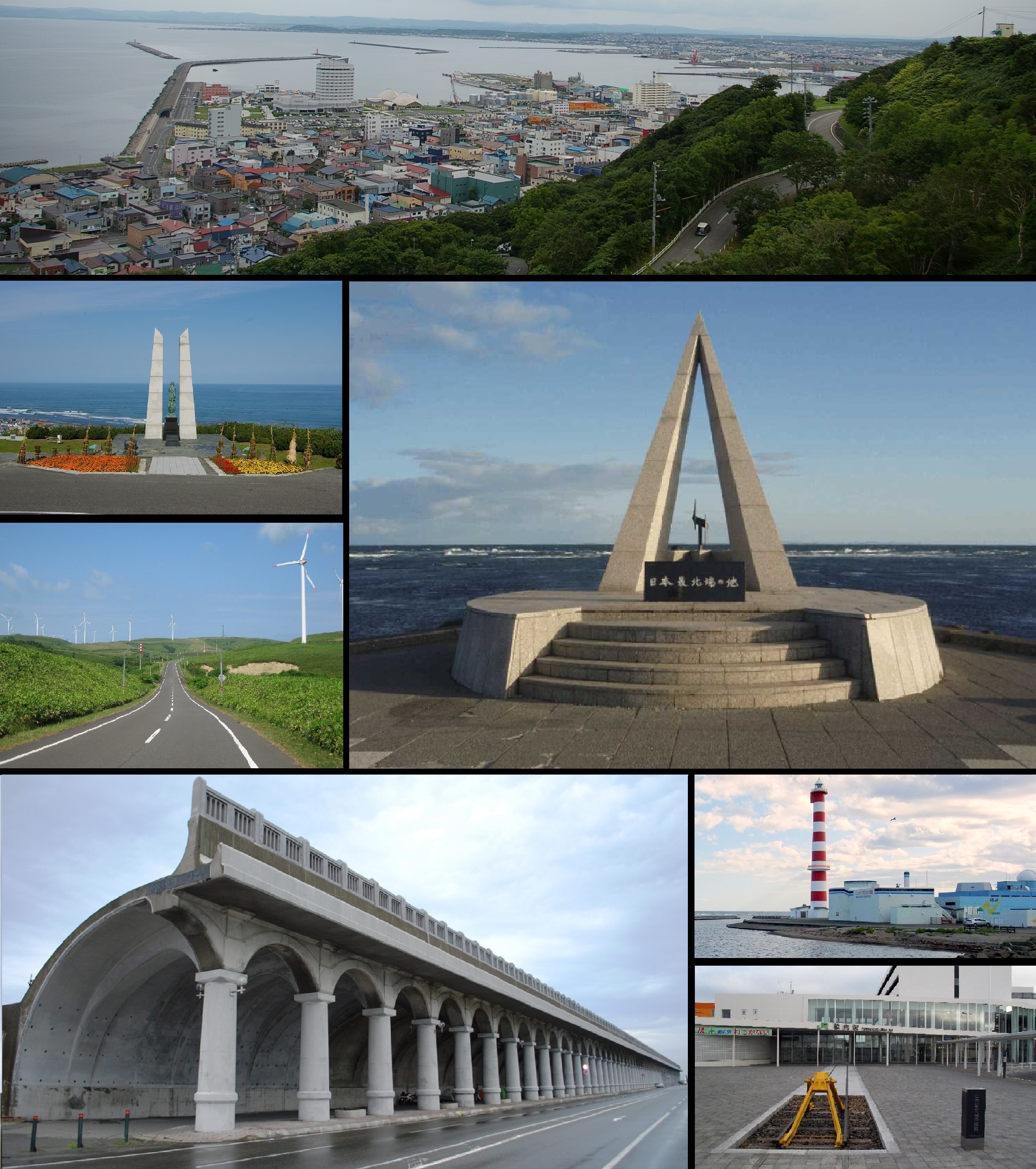
The railway tracks end here. Wakkanai Station, perched on the northern tip of Hokkaido, carries a small marker designating it as the northernmost point in Japan's entire rail network. Beyond the platform, there is only the Sea of Japan, the wind, and on clear days a ghostly silhouette on the horizon: Sakhalin Island, Russian territory just 43 kilometers away. This is where Japan runs out of land and begins negotiating with the sea.
A Frontier Trading Post
Wakkanai's story begins with the Ainu, the indigenous people who inhabited much of Hokkaido long before Japanese settlers arrived. In the seventeenth century, the site became a frontier trading post where Japanese merchants exchanged goods with Ainu communities. The modern city was formally established in 1900, but its fortunes surged five years later when Japan recaptured southern Sakhalin after the Russo-Japanese War. Suddenly Wakkanai was the main transit point to the new Karafuto prefecture, with regular steamer service to Otomari, now the Russian port of Korsakov. When the Soya railway line finally reached the city in 1926, Wakkanai became a genuine gateway. That status vanished overnight with Japan's defeat in 1945 and the Soviet seizure of Sakhalin. The city shrank into a windswept military outpost, home to a small garrison of American troops during the Cold War.
Monuments to Memory
Wakkanai Park, on the hill above the harbor, contains a collection of memorials that reads like a compressed history of twentieth-century Northeast Asia. The Statue of Nine Women honors the nine telegraph operators at a Sakhalin station who took their own lives when Soviet troops overran Karafuto in 1945, choosing death over capture. Nearby, the Ice and Snow Gate is a bronze figure of a woman gazing north toward Sakhalin, representing the Japanese colonists expelled from their homes. Less freighted with wartime sorrow is the Monument to Taro and Jiro, two Sakhalin huskies left behind by an Antarctic expedition. When their handler returned the following year expecting to bury them, the dogs ran to greet him, having survived an entire Antarctic winter alone. Their story became the 1983 film Nankyoku Monogatari.
The Northernmost Point
Cape Soya, roughly 30 kilometers east of Wakkanai's center, is the northernmost point of Japan's main islands. A monument marks the spot, and tourists arrive by the busload in summer to photograph themselves at the geographic extremity. But the hills behind the cape hold heavier stories. The Tower of Prayer memorializes the 269 passengers and crew of Korean Air Flight 007, shot down by Soviet fighters over nearby Moneron Island on September 1, 1983. Beside it stands the Bell for World Peace, a replica of the bell in the garden opposite the United Nations headquarters in New York. There is also the Wahoo Peace Memorial, dedicated jointly to the American submarine USS Wahoo, sunk off this coast by Japanese forces in October 1943, and to the Japanese who died from her attacks. At Japan's northern edge, the memorials face outward in every direction.
Wind, Seaweed, and the Sea
The wind defines daily life in Wakkanai. Winter gales off the Sea of Okhotsk make temperatures that rarely drop below minus ten Celsius feel far colder, and summer evenings can surprise visitors with a chill that demands more than a light jacket. The city's economy revolves around the ocean: fishing fleets chase crab, octopus, and herring, while family operations along the northern coast dry seaweed on wooden racks, the source of the kombu and nori that flavor Japanese cuisine nationwide. Cycling the coast road north from the city center, past these drying operations, you reach a lighthouse and an aquarium with views of Rishiri and Rebun Islands. On especially clear days, the mountains of Sakhalin materialize across the strait. In February or March, drift ice from the Sea of Okhotsk arrives along the coast, a seasonal spectacle that transforms the harbor into an Arctic scene.
Gateway to the Wild Islands
Wakkanai's ferry terminal, just east of the train station, is the departure point for Rishiri-Rebun-Sarobetsu National Park, Japan's northernmost national park. Ferries operated by the Heartland Ferry Company shuttle visitors to Rishiri Island, dominated by a near-perfect volcanic cone that rises from the sea, and Rebun Island, known for alpine wildflowers that bloom at sea level due to the extreme latitude. In the 1990s, a ferry route to Sakhalin reopened, and trade with Russia began growing slowly but steadily. Wakkanai remains a city shaped by its position at the edge: the last stop on the train line, the nearest Japanese city to Russia, and the starting point for some of Hokkaido's most remote and beautiful landscapes. The population has dwindled to around 34,000, but the ferry terminal keeps filling with travelers headed somewhere wilder.
From the Air
Located at 45.42°N, 141.67°E at the northern tip of Hokkaido. Wakkanai Airport (RJCW) serves the city with domestic flights. Cape Soya, Japan's northernmost point, is visible 30 km to the east. Rishiri Island's volcanic cone (1,721 m) is a prominent landmark to the west. On clear days, Sakhalin Island (Russia) is visible across La Perouse Strait to the north. Recommended viewing altitude: 10,000-15,000 ft for coastline detail and island views.