Walkway Over the Hudson: The Abandoned Bridge That Became a Sky Park
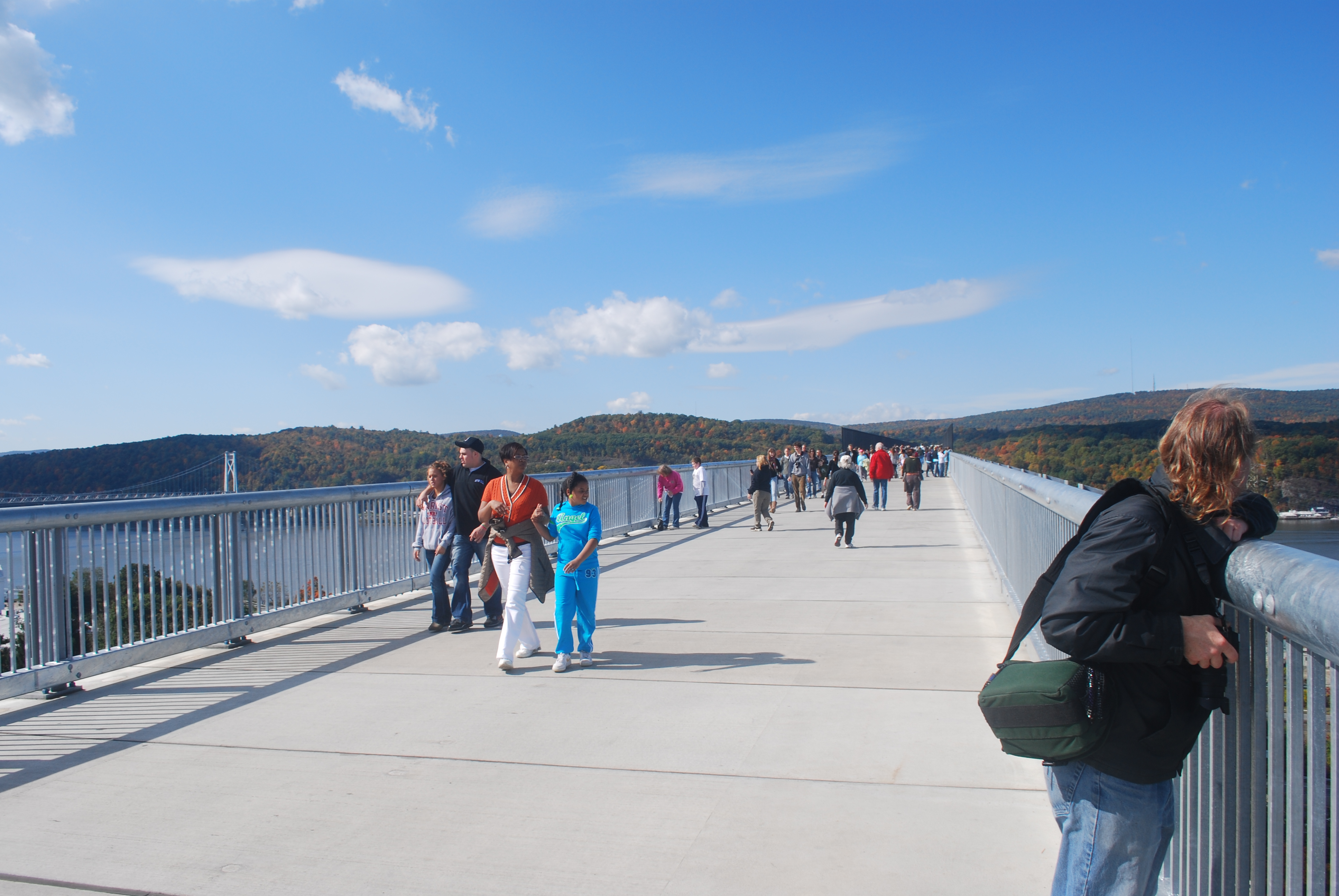
For 35 years, the Poughkeepsie-Highland Railroad Bridge sat abandoned over the Hudson River, rusting, off-limits, too expensive to demolish, too dangerous to ignore. A fire in 1974 had burned its wooden deck, leaving steel girders spanning 1.28 miles of nothing. Then someone had an idea: instead of tearing it down, why not turn it into a park? The Walkway Over the Hudson opened in 2009 as the world's longest elevated pedestrian bridge - a linear park 212 feet above the water, connecting two towns that hadn't been linked since the fire. The abandoned eyesore became a destination, the impossible idea became reality, and 500,000 people annually now walk where trains once ran.
The Bridge
The Poughkeepsie-Highland Railroad Bridge opened in 1889 as a crucial link in the northeastern rail network, allowing freight to bypass the congested New York City area. At 6,768 feet, it was the longest bridge in the world when completed. The cantilever design was cutting-edge; the construction cost dozens of workers' lives. For 85 years, freight trains crossed high above the Hudson, connecting New England with the coal fields and factories of the industrial heartland. By the 1970s, rail traffic was declining, and the bridge was redundant.
The Fire
On May 8, 1974, a fire started on the bridge's wooden deck, possibly from a spark off a passing train. The creosote-soaked timbers burned for days; the deck was destroyed. The steel structure survived, but the bridge was unusable. The owner, Penn Central (itself in bankruptcy), had no incentive to rebuild. The bridge sat - a 1.28-mile sculpture of rust suspended above the river. Trespassers crossed the exposed girders at their peril; several fell to their deaths. The bridge was dangerous, expensive to maintain, and apparently without purpose.
The Transformation
The idea of converting the bridge to pedestrian use emerged in the 1990s but seemed impossible - the structure needed major rehabilitation, funding was uncertain, and skeptics abounded. Bill Sepe, a local elevator mechanic, championed the vision for decades, eventually attracting support from Dyson Foundation funding. The Walkway Over the Hudson Greenway opened on October 3, 2009, exactly 135 years after the railroad bridge first opened. The deck was rebuilt with recycled materials; elevators provide accessibility; the views extend for miles in every direction.
The Experience
Walking the Walkway Over the Hudson is surprisingly peaceful despite its height and urban surroundings. The deck is 1.28 miles long and 24 feet wide, with views of the Catskill Mountains to the west, the Hudson Highlands to the south, and the mid-Hudson Valley in every direction. The height - 212 feet above the river - creates a sense of floating; wind can be significant on exposed days. Sunrise and sunset are popular; the bridge can be crowded on perfect weather weekends. The connection to the Hudson Valley Rail Trail extends hiking and biking options for miles.
Visiting Walkway Over the Hudson
Walkway Over the Hudson State Historic Park spans the Hudson River between Poughkeepsie and Highland, New York. Access is available from both sides: the east side (Poughkeepsie) via parking on Washington Street; the west side (Highland) via parking on Haviland Road. The walkway is open sunrise to sunset year-round (weather permitting). Entry is free. Elevators on both ends provide accessibility. Biking is permitted; dogs must be leashed. The Hudson Valley Rail Trail connects from the west side. Metro-North trains serve Poughkeepsie from New York City (90 minutes). The walkway can be combined with visits to the Culinary Institute of America, Vanderbilt Mansion, or Hudson Valley wineries.
From the Air
Located at 41.71°N, 73.94°W spanning the Hudson River between Poughkeepsie and Highland, New York. From altitude, the Walkway Over the Hudson is clearly visible as a linear structure crossing the river - its pedestrian deck distinguishable from the adjacent railroad bridges. The Hudson River flows south toward New York City; the Catskill Mountains rise to the west. Poughkeepsie spreads along the eastern bank; Highland occupies the western side. The walkway's height (212 feet) is apparent from the shadow it casts. This was the longest bridge in the world when built; it's now the longest elevated pedestrian bridge, visible from altitude as the improbable park it has become.