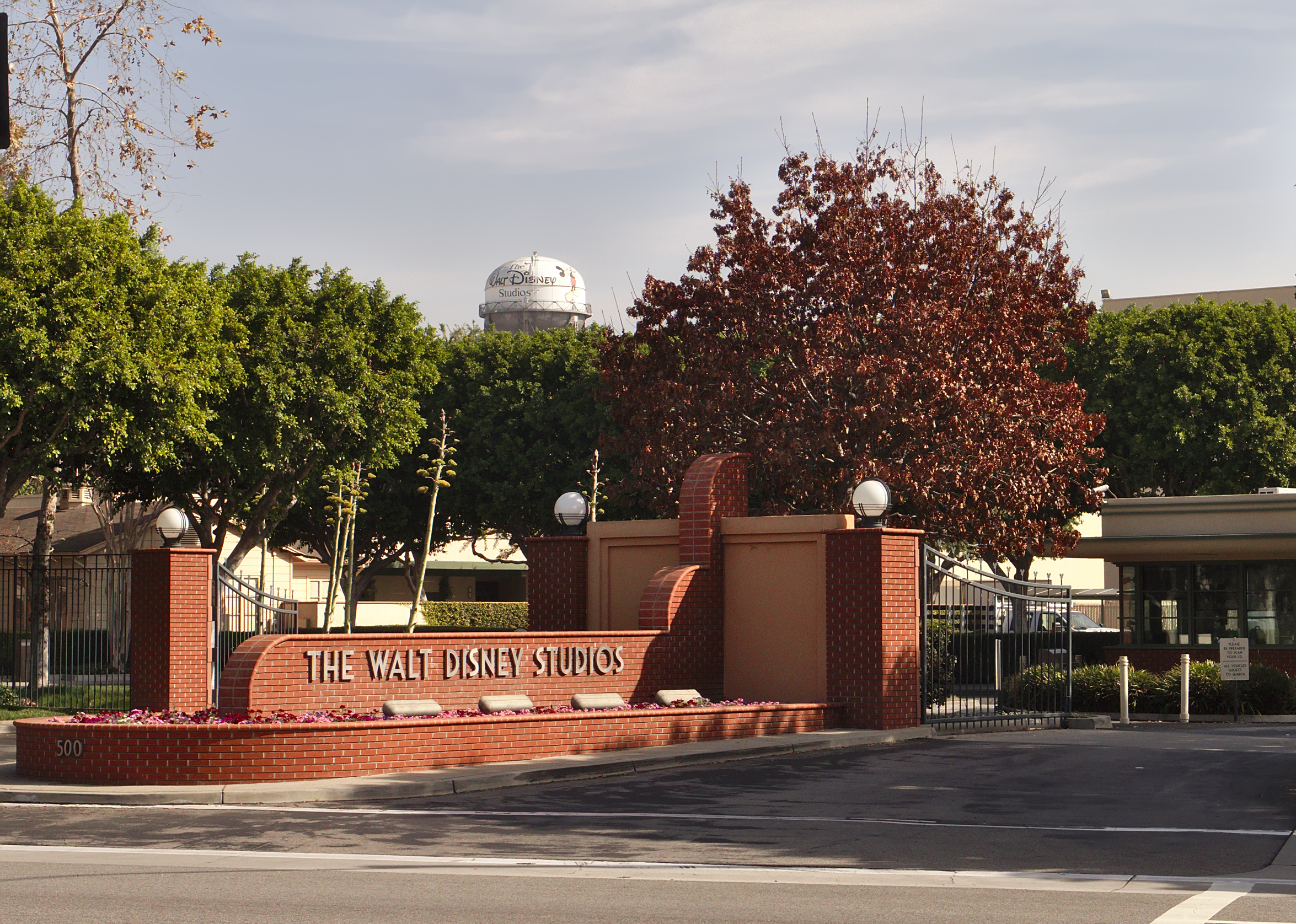
Walt Disney Studios (Burbank)
Suite 3H on the third floor has a hidden kitchenette behind wood paneling that retracts at the touch of a button. Walt Disney ate lunch at his desk here, developing ideas for films, television shows, and theme parks in his working office while keeping a separate formal corner office for signing contracts and meeting important visitors. After 5:00 pm, he would relax with a Scotch Mist and a back massage from the studio nurse before heading home. When Walt died in 1966, the suite was closed and not reused until 1970, after his personal items had been carefully archived. In 2015, it was restored to the condition in which he left it.
Built by a Princess
The 51-acre studio lot at 500 South Buena Vista Street exists because of a fairy tale. Snow White and the Seven Dwarfs, released in 1937, was America's first full-length animated feature film. Walt Disney used the earnings from its unprecedented success to finance construction of a purpose-built studio in Burbank. He and his staff began moving from the cramped Hyperion Avenue location in Silver Lake between December 1939 and January 1940. Designer Kem Weber worked under Walt and his brother Roy's supervision to create buildings that would survive from the Golden Age of filming. Walt personally supervised the Animation Building's eight-wing "double H" design, ensuring as many rooms as possible had windows for natural light to help the animators. It worked. Dumbo, Bambi, Cinderella, Peter Pan, Sleeping Beauty, and dozens more classics emerged from those sun-lit rooms.
The Hidden Corners
The Animation Building held secrets beyond Walt's suite. Its private rooftop annex, The Penthouse Club, was a perk for male employees who could afford membership fees. It featured a gymnasium with a full-time athletic instructor, a bar, barber shop, steam baths, massage tables, pool and poker tables, and an outdoor patio members used for nude sunbathing. The entrance displayed a mural painted by animator Fred Moore depicting nude and semi-nude women surrounding a drunken man bearing a certain resemblance to Moore himself. Below ground, a utility tunnel linked the Animation Building with the neighboring Ink and Paint Building and Camera and Cutting departments. Built to protect original animation drawings and painted cels from weather and other outside elements during transport, the tunnel is still maintained and a portion remains open to D23 tours.
The Nunnery
The Ink and Paint Building was where animators' drawings were inked onto transparent cels and then painted. It was built with high ceilings and a sophisticated central ventilation system so staff would not be overcome by toxic paint fumes. In the early 1940s, Disney employed over 100 women at a starting salary of $18 a week, compared to $300 a week for experienced animators. A Disney employment brochure of the time stated plainly: "Women do not do any of the creative work in connection with preparing the cartoons for the screen, as that work is performed entirely by young men." Men and women at the studio were not encouraged to fraternize, and the cloistered atmosphere led wags on the lot to call it "The Nunnery." The last Disney animated feature to fully employ hand-inked and painted cels was The Little Mermaid in 1989.
Landmarks and Legends
At the southwestern end of the Animation Building, Pluto's Corner features three paw prints embedded in the street beneath a fire hydrant. A hind paw print is missing, suggesting Pluto marked his territory. Nearby stands a signpost at Mickey Avenue and Dopey Drive, installed as a temporary prop for The Reluctant Dragon in 1941 and never removed. Roy Disney insisted the Water Tower be built with six legs instead of the usual four, claiming it was more aesthetically pleasing. Completed in 1939 at a cost of $300,000, it was one of the first structures on the new lot. Stage 1, the original soundstage completed in 1940, was built to film Leopold Stokowski's segments in Fantasia. During World War II, it was used for repairing army vehicles. In 2013, it was dedicated to Mousketeer Annette Funicello.
Still Making Magic
The Buena Vista Cafe opened in 1940 as Walt Disney's Studio Restaurant and remains one of the few original buildings still serving its initial purpose. Walt's favorite dish, chili served with crackers, remains on the menu after an extensive 2011 remodel. In 2013, Marvel Studios moved into the Frank G. Wells Building, joining Walt Disney Pictures, Walt Disney Animation Studios, ABC, Disney Channel, Freeform, and other divisions on the lot. The Walt Disney Feature Animation Building, opened in 1995 across the street, features a 122-foot-tall version of the Fantasia Sorcerer's hat and displays "ANIMATION" in giant letters visible from the Ventura Freeway. Following Roy Disney's death in 2009, it was renamed in his honor. The studio remains the only major lot from Hollywood's Big Five that does not offer regular public tours.
From the Air
Located at 34.157N, 118.325W in Burbank, California. The distinctive Water Tower and Animation Building are visible from the air, adjacent to the Ventura Freeway (US-134). Hollywood Burbank Airport (KBUR) lies 2 miles to the northwest. Best viewed from 3,000-4,000 feet AGL when approaching from the southeast along the freeway corridor. The 122-foot Sorcerer's Hat on the Feature Animation Building serves as a prominent visual landmark.