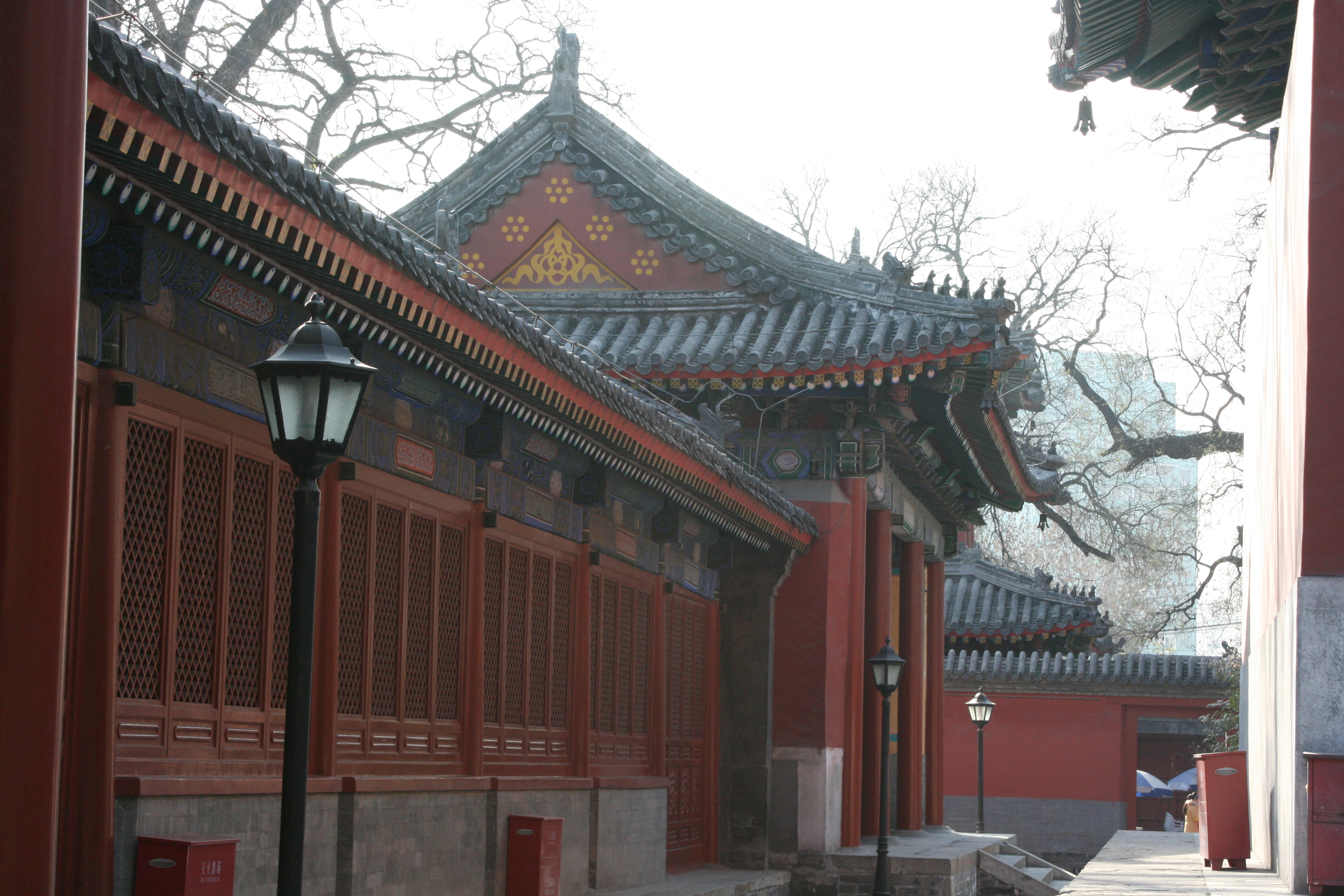
Wanshou Temple
Wanshou Temple was built for words. In 1577, during the reign of the Ming dynasty's Wanli Emperor, the temple was erected specifically to house Buddhist scriptures -- not as a place of worship in the ordinary sense, but as a sacred library. Over the following centuries, however, the temple's purpose shifted. It became a permanent celebration venue for imperial rulers, a place where the Qing dynasty's court marked occasions of state. Today, having survived both uses, the temple serves a third function: it houses the Beijing Art Museum, its halls filled with Ming and Qing dynasty paintings, calligraphy, weavings, embroideries, and a collection of ancient coins from China and beyond.
A Sacred Archive
The decision to build a temple for the purpose of storing scriptures reflects a particular moment in Chinese Buddhism -- one where the preservation of texts was considered an act of devotion as significant as prayer. The Wanli Emperor, one of the longest-reigning rulers of the Ming dynasty, commissioned Wanshou Temple during a period of extensive palace and temple construction. The scriptures it held were Sino-Buddhist texts, written in Chinese and representing the particular synthesis of Indian Buddhist thought and Chinese philosophical tradition that characterized Buddhism's evolution in East Asia. That a building constructed to protect paper and ink has itself survived more than four centuries speaks to the quality of its construction and the enduring respect accorded to its purpose.
From Scripture Hall to Celebration Palace
Under the Qing dynasty, Wanshou Temple's role expanded beyond its original function as a scriptural repository. The temple became a permanent celebration venue for the imperial court, hosting ceremonies and festivals. This transition from quiet library to site of imperial pageantry brought architectural enhancements and elevated the temple's prestige. It became recognized as one of Beijing's most important temples, a status formalized in August 1979 when it was declared one of the city's Key Cultural Heritage sites for Preservation. The temple's location on Wanshousi Road in the Zizhuyuan subdistrict of Haidian District placed it within the network of imperial and scholarly sites that defines northwest Beijing.
Art Behind Temple Walls
The Beijing Art Museum now occupies the temple's halls, and its collections draw from the same imperial traditions that built the temple itself. Chinese paintings and calligraphy from the Ming and Qing dynasties -- spanning from 1368 onward -- fill the galleries, alongside weavings and embroideries that demonstrate the textile arts at their most refined. A collection of ancient coins from China and other countries adds an unexpected dimension, tracing trade connections that linked Beijing to the wider world across centuries of commerce. The temple underwent a five-year renovation and reopened in 2022, restoring its reputation as the 'Little Forbidden City of Western Beijing.' Walking its courtyards and hallways, visitors experience the particular pleasure of seeing art displayed in a setting that is itself a work of art -- the Ming dynasty architecture framing the Ming dynasty paintings, each giving context to the other.
From the Air
Coordinates: 39.945N, 116.305E. Located in Haidian District, northwest Beijing, near Purple Bamboo Park. Not individually visible from typical cruising altitude, but the surrounding area features identifiable green spaces along the Changhe River corridor. Nearest major airport is Beijing Capital International (ZBAA/PEK), about 30 km northeast.