War Remnants Museum
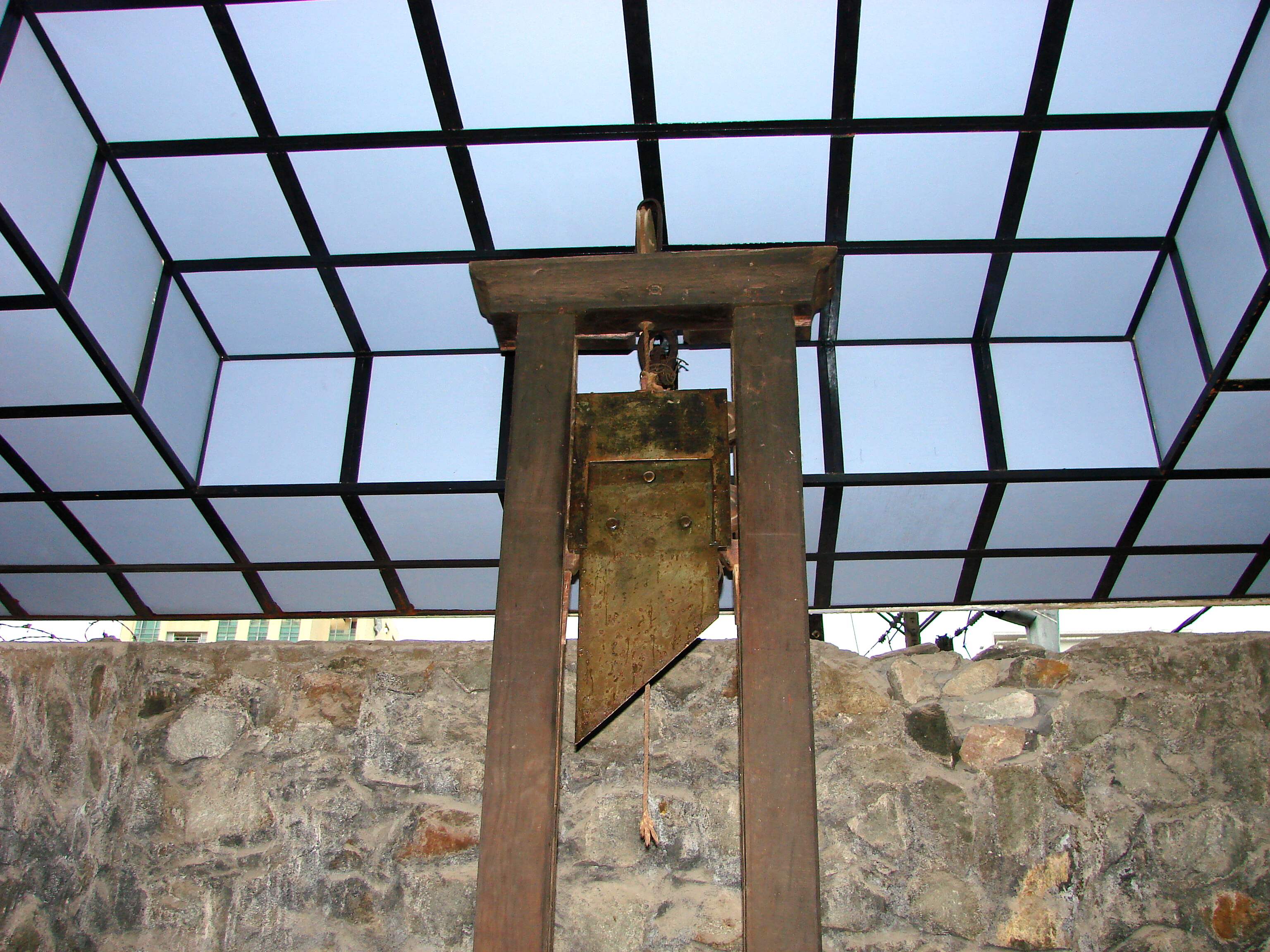
The guillotine sits behind glass, its blade still sharp. It was used first by the French colonial administration, then by the South Vietnamese government, to execute prisoners. There is no way to look at it casually. That is the point of the War Remnants Museum at 28 Vo Van Tan Street in Ho Chi Minh City - nothing here allows you to look casually. From the courtyard full of captured American tanks, helicopters, and artillery pieces to the interior galleries lined with photographs of suffering, the museum insists that visitors reckon with what happened in this country across decades of war.
Born from the Ashes
The museum opened on September 4, 1975, less than five months after the fall of Saigon, under a name that left nothing to interpretation: the Exhibition House for US and Puppet Crimes. It occupied the former United States Information Agency building, a pointed choice of location. The exhibition followed a tradition that the North Vietnamese government had maintained since the French colonial era - public displays documenting the war crimes of foreign powers operating in Vietnam, first the French and then the Americans, whose involvement dated back to 1954. The museum was not conceived as a neutral historical archive. It was, and remains, a statement told from the perspective of the victors. In 1990, the name was softened to the Exhibition House for Crimes of War and Aggression, dropping the specific references to the United States and its South Vietnamese allies.
What the Photographs Show
The museum's most devastating exhibits are its photographs. Images document the effects of Agent Orange and other chemical defoliants that the United States military sprayed across vast stretches of Vietnamese forest and farmland. Photographs of napalm and white phosphorus burns confront viewers with the reality of weapons designed to cling and keep burning. The My Lai massacre, in which American soldiers killed hundreds of unarmed Vietnamese civilians in March 1968, is documented through photographs taken during the atrocity itself. Among the photographic collections is work by Japanese war photojournalist Bunyo Ishikawa, who donated his images to the museum in 1998. Each photograph carries text in English, Vietnamese, and Japanese. These are not abstract depictions of conflict - they show specific people in specific moments of anguish, and they demand that viewers see the war not as geopolitics or strategy but as something that happened to human beings.
Iron and Steel in the Courtyard
Before entering the building, visitors walk through an outdoor collection of captured American military hardware. An M41 Walker Bulldog tank sits alongside artillery pieces and armored vehicles. Military aircraft are displayed nearby, the machines that once filled Vietnamese skies now grounded permanently, stripped of menace, rendered into monuments. Defused ordnance lines the pathways - bombs, shells, and rockets that were meant to explode but now serve as evidence. For Vietnamese visitors, this hardware represents a war they won against a technologically superior enemy. For American visitors, the experience is more complicated: these are the weapons their country deployed, displayed here as instruments of aggression. The courtyard creates a strange intimacy with the machinery of war, allowing visitors to stand close enough to touch the rivets on aircraft fuselages and read the stenciled markings on bomb casings.
A Name That Keeps Changing
The museum's evolving name traces Vietnam's shifting relationship with its wartime past and with the world. From the accusatory bluntness of its 1975 title, through the 1990 revision that removed direct references to the United States, to its current designation as the War Remnants Museum - a name adopted as Vietnam normalized diplomatic relations and opened to international tourism - each renaming reflects a country negotiating between memory and reconciliation. The exhibits still present the war firmly from the Vietnamese perspective, but the tone has broadened. Visitors now arrive from dozens of countries, including Brazil, Turkey, and South Africa, drawn by the museum's reputation as one of the most affecting war museums in the world. The dioramas depicting detention conditions in South Vietnamese prisons remain. The photographs of massacre victims remain. The guillotine remains. What has changed is the framing - less about assigning blame to a specific enemy, more about documenting the human cost of armed conflict.
The Weight of the Visit
The War Remnants Museum is not an easy place to spend an afternoon. It is designed to be difficult, to create the kind of discomfort that lingers after you leave. The museum sits in a busy neighborhood of Ho Chi Minh City, surrounded by cafes, shops, and the ordinary rhythms of a metropolis that has largely moved on from the war that defined the 20th century for this country. That contrast is itself a kind of exhibit - the city thriving around a building dedicated to remembering what nearly destroyed it. Millions of visitors have passed through these galleries since 1975, and for many it remains the single most memorable experience of a visit to Vietnam. Whatever one thinks of the museum's perspective, the evidence it presents is real. The photographs are real. The weapons are real. The guillotine is real.
From the Air
Located at 10.780N, 106.692E in central Ho Chi Minh City's District 3, the museum sits near the intersection of Vo Van Tan and Le Quy Don streets. From the air at 2,000-3,000 feet, the museum's courtyard with its collection of military hardware is identifiable among the dense urban grid. Tan Son Nhat International Airport (ICAO: VVTS) is approximately 7 km to the northwest. The Saigon River curves to the south and east, providing orientation. Reunification Palace (the former Independence Palace) is roughly 500 meters to the southwest.