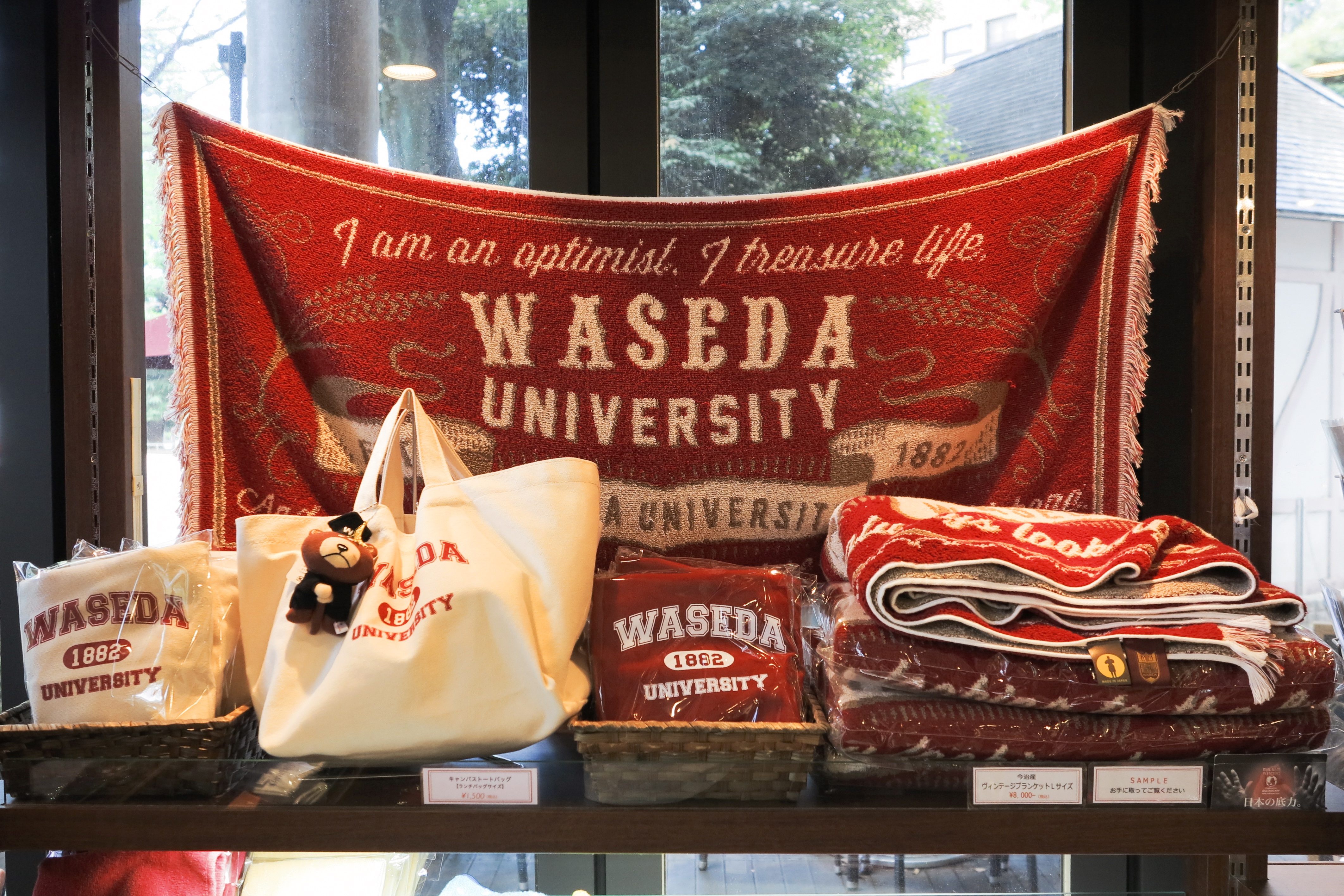
Waseda University
The clock tower of Okuma Auditorium rises exactly 125 shaku -- about 38 meters -- above the Shinjuku campus, a height chosen not for structural reasons but to honor a peculiar conviction of the university's founder. Okuma Shigenobu, a samurai-turned-politician who served twice as Prime Minister of Japan, believed that the human body was designed to last 125 years, reasoning that every animal lives five times the length of its growth period, and since humans take 25 years to mature, the math was clear. He died at 83, somewhat short of his own target, but the tower has outlasted both its maker and the city that surrounded it when it was built -- the original auditorium opened in 1927, survived the firebombings that leveled much of Tokyo in World War II, and stands today as a designated Important Cultural Property of Japan.
A Samurai's Classroom
Okuma Shigenobu founded the Tokyo Senmon Gakko on October 21, 1882, in a district then known as Waseda Village, near the site of his own villa. He was a man of the Meiji Restoration, a samurai scholar who understood that Japan's future demanded Western-style education delivered in Japanese. The school opened with three departments -- political science and economics, law, and physical science -- along with an English language course. Physical science closed within three years for lack of applicants. Literature arrived in 1890, education in 1903, commerce in 1904, and science and engineering in 1908. By 1902 the school had formally adopted the name Waseda University, becoming alongside Keio University one of the first private universities in Japan. Much of the campus was destroyed during World War II, but the university was rebuilt and reopened by 1949. Today it operates 13 undergraduate schools, 23 graduate schools, and 21 research institutes across campuses in Shinjuku, Tokorozawa, Kitakyushu, and beyond, with more than 47,000 students enrolled.
The Square Cap and the Golden Badge
Okuma wanted his students recognized on sight. He commissioned the chief tailor of Takashimaya, a man named Yashichiro, to design a distinctive academic cap in three days. The result was a square cap stamped inside with the student's name, department, the school seal, and the legend: 'This certifies that the owner is a student of Waseda.' It functioned as identification, status symbol, and trademark -- literally, as the cap with its gold-braided badge was formally registered. The spirit of that visible identity extends far beyond headwear. Waseda alumni number over 600,000, organized into more than 50 alumni groups on six continents. The university's library holds 4.5 million volumes, including a collection that survived the Tokyo firebombings when many other institutional libraries were lost. In the front hall of the old library building, visitors encounter the masterpiece 'Meian,' painted in 1927 on the world's largest hand-made washi paper -- 4.45 meters in diameter -- by artists Yokoyama Taikan and Shimomura Kanzan, who donated their work for free.
Prime Ministers and Page-Turners
The alumni roster reads like a directory of modern Asian power. Nine prime ministers of Japan graduated from Waseda, from Tanzan Ishibashi to Fumio Kishida. Three prime ministers of South Korea also walked these halls. Masaru Ibuka co-founded Sony after attending Waseda; Tadashi Yanai, the founder of Uniqlo and the richest person in Japan, studied here; Lee Byung-chul and Lee Kun-hee, who built Samsung into a global empire, both came through the university. Chiune Sugihara, the Japanese diplomat who issued transit visas that saved 5,558 Jews during the Holocaust, was a Waseda man. So was Haruki Murakami, who studied drama at the Faculty of Literature and went on to become one of the most translated living novelists. Zhou Enlai, the first Premier of the People's Republic of China, studied at Waseda. On the athletic side, Yuzuru Hanyu -- two-time Olympic champion figure skater in 2014 and 2018 -- enrolled at the university, continuing a tradition where excellence in sport and intellect share the same campus.
Where the Fencing Hall Met the Olympics
Waseda's Memorial Hall, built in 1957 adjacent to the Okuma Auditorium, served as the fencing venue for the 1964 Tokyo Summer Olympics. The auditorium itself carries a longer story: originally scheduled for completion on the university's 40th anniversary, it opened five years late because the 1923 Great Kanto earthquake shattered Tokyo and delayed construction. When it finally opened on October 20, 1927, it seated 1,435 people in its main hall, with a secondary underground auditorium accommodating 382 more. A seven-story clock tower stands beside it. In 1999, the auditorium and the old library were designated as the first and second historical buildings under the Tokyo Metropolitan Landscape Regulations. By 2007, the auditorium had earned recognition as an Important Cultural Property of Japan. Nearby, the Okuma Garden -- originally a half-Japanese, half-Western garden from a feudal lord's Edo-period mansion, redesigned by Okuma himself -- was donated to the university after his death and remains a quiet retreat for students between classes.
The Rivalry That Fills the Stadium
Twice a year, in spring and autumn, Waseda's baseball team meets Keio University in the Sokeisen series at Meiji Jingu Stadium, and students from both schools treat the games as the most important events of the academic calendar. Waseda's baseball program has won 43 Tokyo Big6 Baseball League championships as of 2012, holding the league's highest winning percentage. The rivalry extends across sports: Waseda's rugby club has reached the final of the All-Japan University Rugby Championship 31 times, winning 15, with Keio and Meiji University serving as traditional rivals. The university's karate club, one of the oldest in Japan, was founded in 1931 under Gichin Funakoshi, the father of modern karate. In football, Waseda won the Emperor's Cup in 1964 and 1967. Even in bandy -- a sport almost unknown in Japan -- Waseda students founded the country's first university team in 2016, playing rink bandy because no regulation-sized field exists.
From the Air
Located at 35.709N, 139.719E in Shinjuku, Tokyo. The campus appears from altitude as a cluster of mid-rise academic buildings northwest of central Tokyo, near the Takadanobaba area along the Yamanote Line. The distinctive clock tower of Okuma Auditorium is the campus's most recognizable landmark from above. Nearest airport is Tokyo Haneda (RJTT), approximately 18 km south. Narita International (RJAA) is about 65 km east-northeast. Nearby visual landmarks include Shinjuku's skyscraper district to the south and Meiji Jingu Stadium to the southeast.