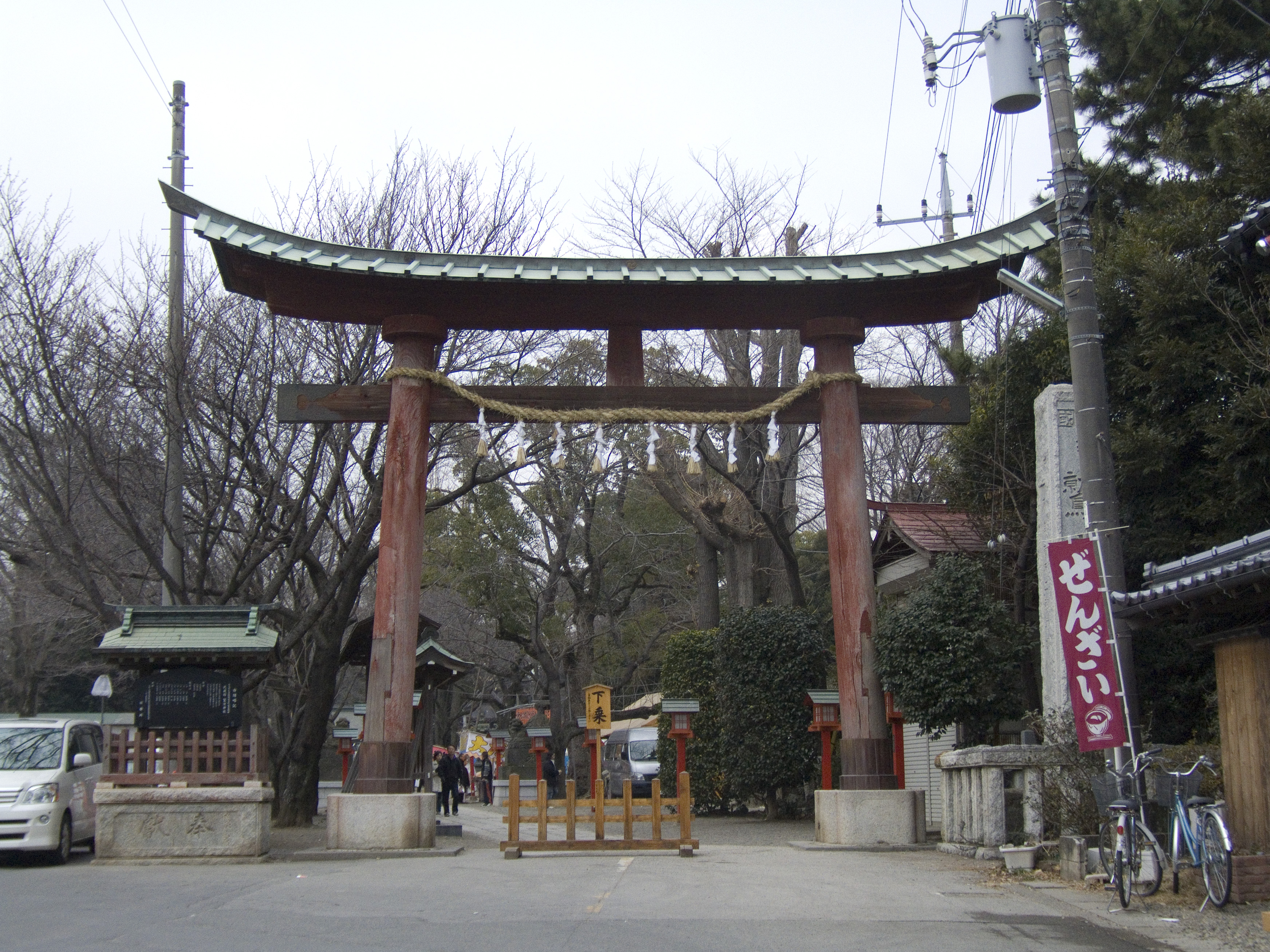
Washinomiya Shrine
The wooden ema prayer tablets hanging at Washinomiya Shrine tell two very different stories. Some bear the careful brushwork of traditional petitioners asking for health, success in exams, or blessings for the new year. Others are covered in hand-drawn anime characters -- big-eyed schoolgirls in shrine maiden outfits, hearts and stars in colored marker, messages in Japanese, English, Korean, and Chinese. This is what happens when one of the oldest shrines in the Kanto region collides with a 2007 anime called Lucky Star. The result is not chaos but a surprisingly harmonious coexistence, a place where centuries of Shinto tradition and 21st-century fan culture share the same sacred ground.
Roots in the Azuma Kagami
Washinomiya Shrine sits in the city of Kuki, Saitama Prefecture, in what was formerly the town of Washimiya. Its age is difficult to pin down precisely, but scholarly consensus places its origins at more than 2,000 years ago, making it one of the oldest continuously maintained Shinto shrines in the Kanto region. The earliest written reference appears in the Azuma Kagami, the official historical chronicle of the Kamakura Shogunate, establishing that the shrine already held significant status during the medieval period. It enjoyed the patronage of the imperial family and later of Shogun Tokugawa Ieyasu himself. The shrine's Saibara-Kagura dance, performed at festivals and passed down through generations of local families, has been designated a national intangible folk-culture asset. During the New Year season, more than 100,000 visitors pass through the shrine's gates.
The Lucky Star Effect
In April 2007, an anime television series called Lucky Star began airing. Based on Kagami Yoshimizu's manga, it followed the daily lives of a group of high school girls with a knowing, self-referential sense of humor that resonated deeply with otaku culture. Washinomiya Shrine appeared prominently: its torii gate featured in the opening sequence, and two of the main characters, the Hiiragi twins, worked as miko -- shrine maidens -- at a shrine modeled directly on Washinomiya. When the anime magazine Newtype published directions to the real-life locations that July, the floodgates opened. Fans began arriving in waves, photographing every angle of the shrine to match it against anime screenshots, some in full cosplay. The phenomenon became one of the earliest and most widely studied examples of anime-induced tourism, known in Japanese as seichi junrei -- sacred place pilgrimage.
Pilgrims of a Different Kind
What made the Washinomiya phenomenon remarkable was not the fan interest itself but the community's response. Rather than resenting the sudden influx of cosplayers and camera-toting otaku, local residents and shrine administrators largely embraced it. Shops began stocking Lucky Star merchandise. The Hajisai summer festival, traditionally centered on carrying a mikoshi portable shrine through the streets, added a Lucky Star-themed mikoshi to the parade. On December 2, 2007, manga creator Kagami Yoshimizu and four Lucky Star voice actors held an official visit, with voice actresses Emiri Kato and Kaori Fukuhara -- who played the Hiiragi sisters -- guiding fans through the real shrine their characters called home. Every year since, Lucky Star fans have traveled to Kuki to help carry both the traditional and the anime-themed mikoshi side by side. Both were featured at the 2010 Shanghai Expo.
The Gate Falls, the Spirit Holds
In August 2018, the shrine's iconic torii gate -- the very gate that appeared in Lucky Star's opening animation and had become the most photographed structure in Kuki -- collapsed. The timber structure had stood for decades, and its sudden fall sent shockwaves through both the local community and the international anime fan community. Social media erupted with concern and nostalgia. The gate was subsequently replaced, and the shrine carried on as it has for millennia. The collapse and rebuilding became, unintentionally, a fitting metaphor for the shrine itself: a place that has weathered centuries of change, absorbing new influences without losing its core identity. Washinomiya remains a working Shinto shrine, its rituals unbroken, its kagura dance still performed, even as anime fans continue to arrive with their prayer tablets and their cameras.
From the Air
Located at 36.10N, 139.65E in Kuki, Saitama Prefecture, roughly 50 km north of central Tokyo on the Kanto Plain. The shrine grounds are surrounded by the low-rise residential neighborhoods of the former town of Washimiya. The flat agricultural landscape of northern Saitama is distinctive from the air, with rice paddies and suburban grids stretching toward the distant mountains to the north and west. Nearest major airports: Tokyo Haneda (RJTT, ~65 km south), Narita International (RJAA, ~60 km southeast). Recommended altitude 3,000-5,000 ft to observe the contrast between the dense suburban fabric of the southern Kanto Plain and the more agricultural character of the northern reaches.