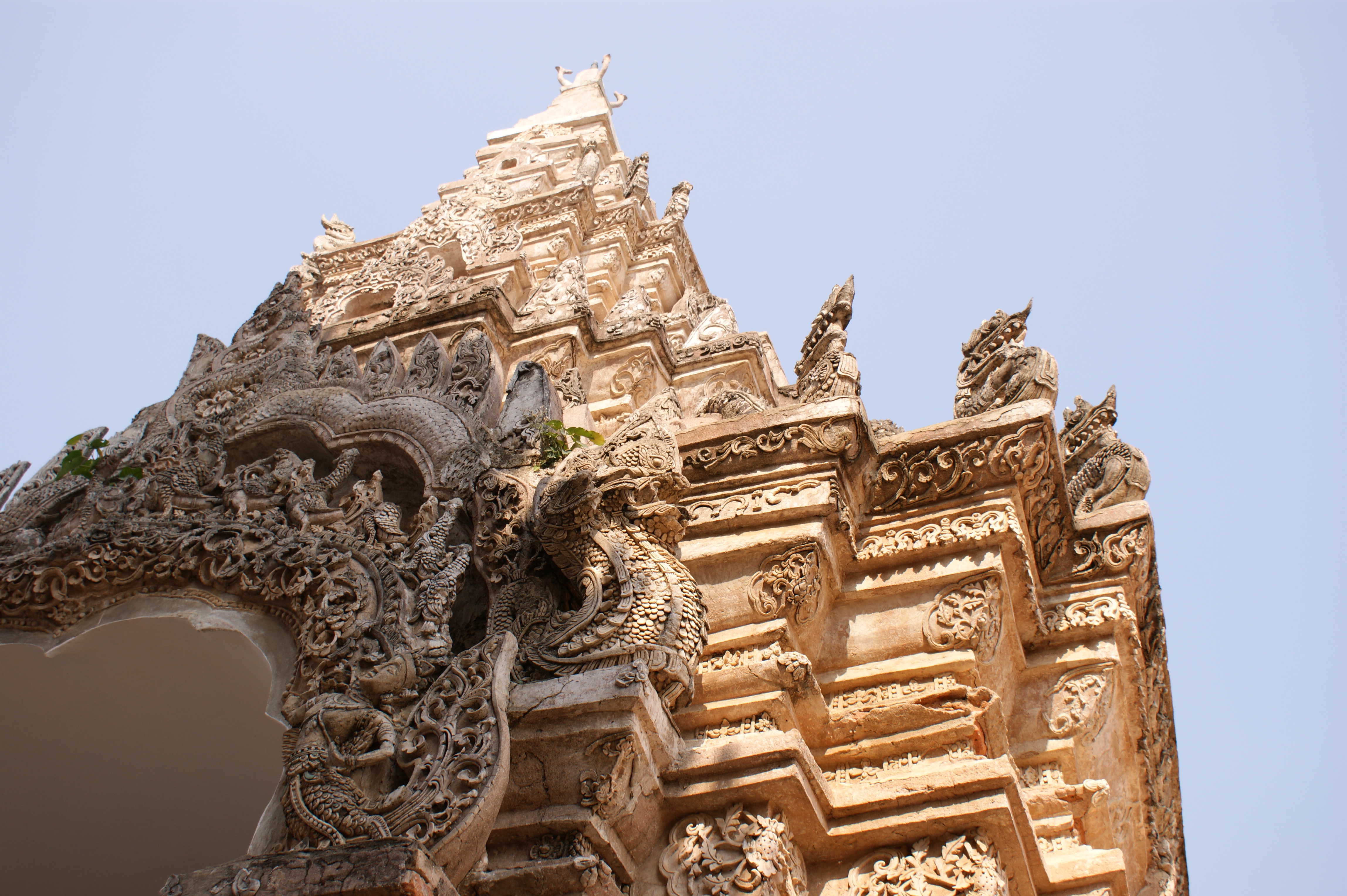
Wat Phra That Lampang Luang
Bullet holes scar the railing of Wat Phra That Lampang Luang. They have been there since 1732, when a man named Thipchang -- known as the Divine Elephant -- sneaked into this temple with a band of fighters, shot the Burmese commander, and liberated Lampang. The holes remain unrepaired, not from neglect but from intention. At one of northern Thailand's best-preserved Lanna-style temples, even the damage is sacred.
Before the Bullet Holes
The temple was founded in the 15th century, fifteen kilometers from the northern city of Lampang, in a region that once belonged to the Hariphunchai Kingdom. Its central golden stupa, bell-shaped in the classic Lanna style, rises from a lotus-shaped base sheathed in bronze or copper that catches sunlight in a warm shimmer. According to tradition, the stupa enshrines relics of the Buddha himself -- bones and ashes believed gathered after his cremation. The temple complex around it preserves what centuries of modernization elsewhere have erased: wooden prayer halls with tiered roofs, carved ornamentation reflecting the interplay between faith and artistry, and a spatial arrangement that has remained essentially unchanged for over five hundred years. Among Lanna temples, few offer a more authentic window into the architecture and culture of the old northern kingdoms.
The Night Thipchang Changed Everything
In 1732, Burmese armies swept through the region, taking Chiang Mai and Lamphun. They turned their attention to Lampang, which at the time was deserted and leaderless, and occupied the temple grounds as a military camp. It was a strategic site but a tactical miscalculation -- the Burmese did not expect a counterattack from within. Thipchang, a local leader who would later take the title Phraya Chaisongkhram, gathered his men and infiltrated the temple complex. The raid was swift and decisive: Thipchang shot the Burmese commander, the army collapsed, and Lampang was freed. Thipchang became the city's ruler and founded the Chet Ton dynasty, also known as Thippachak. A statue of him stands in the temple complex today, a few paces from the bullet marks that made him a hero.
Honey, Hair, and Holy Ground
The temple carries a founding legend that reaches back far earlier than the 15th century. According to local tradition, the Buddha once passed through this area, and the indigenous Lawa people offered him honey in a wooden tube. He discarded the tube, announced that the place would be known as Lampakappa Nakhon, and gave the people a single hair from his head. They placed it in a gold casket and buried it in an underground tunnel with other valuables. The great stupa of Wat Phra That Lampang Luang was later built over this spot. Devotees believe the hair relic remains at the base of the chedi, alongside ashes from the Buddha's right forehead and neck. Whether one reads the story as history or devotion, it explains the reverence the site commands -- this is not merely a beautiful temple but, for believers, ground the Buddha himself consecrated.
Light Through the Walls
Inside the Ho Phra Phutthabaht pavilion, an optical phenomenon draws visitors: an image of the temple's exterior appears projected upside-down on the interior wall, created by a pinhole-camera effect from a small opening. The effect is a quiet marvel, the kind of thing that stops conversation. Elsewhere in the complex, the main prayer hall houses Phra Chao Lan Ton, a revered Buddha image whose presence anchors the daily rhythm of worship. The naga staircase at the entrance, flanked by serpent balustrades in the Lanna tradition, sets the tone before visitors even enter -- a passage from the ordinary world into consecrated space. The temple remains an active place of worship, not a museum. Monks chant here. Incense burns. The tiered wooden roofs darken with age and weather while the golden stupa continues to catch the light, as it has for centuries.
From the Air
Wat Phra That Lampang Luang is located at 18.22N, 99.39E, approximately 15 km southwest of Lampang city center. The golden stupa is a recognizable landmark from low altitude. Lampang Airport (VTCL) is about 15 km northeast. The temple sits in the Ping River valley amid agricultural land. Best viewed at 1,500-3,000 feet AGL. The broader Lampang area is flanked by forested hills to the east and west.