Watchung Reservation
The Lenape called them the Wach Unks -- the high hills. Two ridges of volcanic basalt, remnants of lava flows that poured across New Jersey during the early Jurassic, bracket a valley where Blue Brook still carves through red sandstone and shale laid down more than 200 million years ago. Between those ridges, in one of the most densely populated counties in America, nearly 2,000 acres of forest remain largely intact. Watchung Reservation is Union County's largest nature preserve, and its layers of history run almost as deep as its geology.
Written in Stone
The Feltville Formation -- red beds of sandstone and shale named for a ghost town within the reservation itself -- crops out along the brook and an abandoned mill race on its north bank. On the south side, fractured flows of Orange Mountain Basalt tell of ancient volcanic eruptions. In the 1970s, paleontologist Paul E. Olsen uncovered dinosaur fossils here, evidence that these hills sheltered life long before any human walked them. Today, the Ruth Canstein Yablonsky Self-Guided Geology Trail lets visitors read these stone chapters firsthand. The brook, the bedrock, the fossils -- Watchung Reservation is a 200-million-year geological library tucked inside the New Jersey suburbs.
The Deserted Village and Its Hidden Murals
In 1845, David Felt built a printing factory along the brook and a small company town on the bluff above it. By 1850, about 175 people called Feltville home. After Felt retired in 1860, successive business ventures failed, and the settlement earned its lasting nickname: the Deserted Village. Warren Ackerman revived it as a summer resort called Glenside Park in 1882, but the Jersey Shore and the automobile killed mountain tourism, and Glenside closed in 1916. The strangest chapter came next. Edward J. Grassmann, a local civil engineer with a passion for Latin America, purchased several buildings and persuaded Nicaraguan-Mexican artist Roberto de la Selva to paint murals throughout one cottage's first floor. These vivid scenes of Mexican life, the only known murals by the sculptor-turned-painter, were eventually wallpapered over and forgotten for decades, rediscovered in the 1970s. Preservation New Jersey has named them among the state's ten most endangered historic sites.
Missiles, Highways, and the Fight to Preserve
Twice, the federal and state governments carved into the reservation over fierce local opposition. In the late 1950s, the U.S. Army built a Nike missile base to defend the skies over New York City during the Cold War. The base operated from 1957 to 1963; today its cleared site hosts the county-owned Watchung Stables and 26 miles of equestrian trails. A more permanent wound came in the 1980s when the New Jersey Department of Transportation pushed Interstate 78 through the reservation's northern fringe. Wildlife crossings were built to reconnect the severed halves of the forest, an acknowledgment that even in the service of progress, the land's ecological integrity demanded respect. Beech-maple-pine forest still dominates, sheltering painted turtles, red-tailed hawks, and white-tailed deer -- though the bog turtle, once sighted near Lake Surprise, has been extirpated by habitat degradation.
Trails, Water, and the Loop
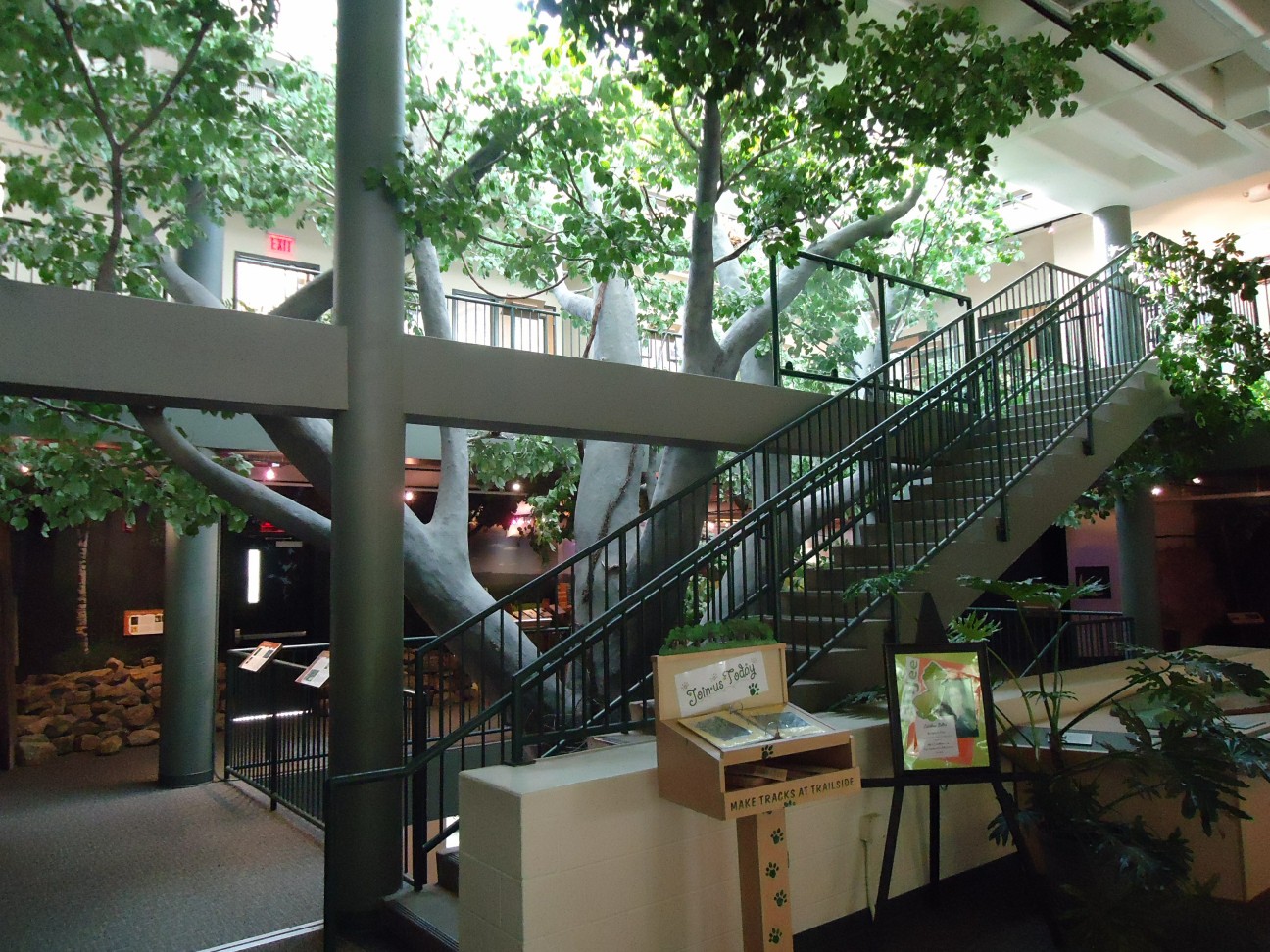
A dam near Blue Brook's headwaters creates Lake Surprise, where fishing, kayaking, and boating are permitted alongside two smaller ponds. The reservation's trail network draws hikers and horseback riders across its rugged terrain, though mountain biking on trails remains illegal -- a point that sparked heated controversy in 2017 when advocates proposed carving 13.5 miles of bike-only trail through untouched forest. Environmentalists and hiking groups pushed back, citing the lack of impact studies and the Olmsted landscape legacy that shapes the reserve's design. At the center sits the Loop, a large recreation area with picnic grounds and a playground. The Trailside Nature and Science Center, built in 1941 along Coles Avenue in Mountainside, holds the distinction of being the oldest nature center in New Jersey. Nearby, Rutgers Master Gardeners tend demonstration plots that include herb gardens, cutting gardens, and a community sharing garden where vegetables are grown for donation.
From the Air
Watchung Reservation sits at approximately 40.686N, 74.373W, filling the valley between the First and Second Watchung Mountains in Union County, NJ. From the air, look for the dense forest patch bounded by suburban development, with Lake Surprise visible as a dark water body near the center. I-78 clips the northern edge. Newark Liberty International Airport (KEWR) lies about 10 miles east. Recommended viewing altitude: 3,000-5,000 feet AGL for best perspective of the volcanic ridgelines.