The Sign Post Forest: 100,000 Messages from Home
In Watson Lake, Yukon, at the junction of the Alaska Highway and the road to the Northwest Territories, a forest of signs grows from the gravel. Over 100,000 signs - street markers, town limits, handmade declarations, license plates, business logos - cover wooden posts that stretch for acres. It started in 1942, when a homesick American soldier rebuilding the Alaska Highway put up a sign pointing toward his home in Danville, Illinois. Others followed. For 80 years, travelers have added their own signs - declarations that somewhere else exists, that home is real, that this lonely junction connects to everywhere. The Sign Post Forest is accidental art, crowd-sourced geography, and the most touching roadside attraction in the North.
The First Sign
Private Carl K. Lindley was working on the Alaska Highway in 1942, part of the desperate effort to build a road to Alaska after Pearl Harbor made the territory suddenly vulnerable. He was a long way from Danville, Illinois - probably the farthest he'd ever been from home. So he made a sign pointing back: 'Danville, Ill.' with an arrow and the mileage. He mounted it on a post near Watson Lake. Other soldiers added their hometowns. When the highway opened to civilian traffic after the war, the tradition continued. What started as homesickness became institution.
The Growth
The Sign Post Forest grew steadily through the decades. Local government built posts; travelers filled them. By the 1990s, there were over 10,000 signs. By 2022, over 100,000. The forest expands every year - new posts added, new signs arriving. Some are official street signs 'borrowed' (or purchased) from home. Others are handmade: painted plywood, burned wood, inscribed metal. Some are simple: a town name and distance. Others are elaborate: family photos, messages to future travelers, declarations of love or loss. The forest has become a destination in itself - people drive the Alaska Highway specifically to add their sign.
The Geography
Walk through the Sign Post Forest and you walk through the world. Every continent is represented. Every US state, every Canadian province. Cities from Auckland to Zurich. Villages no one outside their region has heard of. Japanese, German, French, Spanish, languages from everywhere. The geography is random - California next to Russia, Texas beside Australia - but patterns emerge. German tourists clearly love the Alaska Highway. Australians too. American servicemembers from nearby bases have contributed thousands. The randomness is the point: every sign connects this remote junction to somewhere else, building a web of presence that spans the planet.
The Meaning
Why do people do this? Part of it is tradition - the Sign Post Forest is famous enough that travelers come prepared, signs in their luggage. Part of it is the need to mark presence, to say 'I was here' in a landscape that swallows humans without noticing. Part of it is homesickness, the same impulse that started it all - a reminder that somewhere else exists, that this junction is not the whole world. The signs are declarations of origin, identity, and connection. In a landscape of infinite wilderness, they insist on the human scale.
Visiting the Sign Post Forest
The Sign Post Forest is located in Watson Lake, Yukon, at the junction of the Alaska Highway (Highway 1) and Highway 37 to British Columbia. It's free, open always, and enormous - allow at least an hour to explore. Bring your own sign if you want to add one (the tradition is encouraged). The visitor information center can provide posts for new signs. Watson Lake has services including gas, food, and lodging - it's a supply stop on the long Alaska Highway. Whitehorse is 450 kilometers northwest; Fort Nelson is 540 kilometers southeast. The highway is long, the distances vast, and the Sign Post Forest is a reminder that at least 100,000 people have made this journey before you.
From the Air
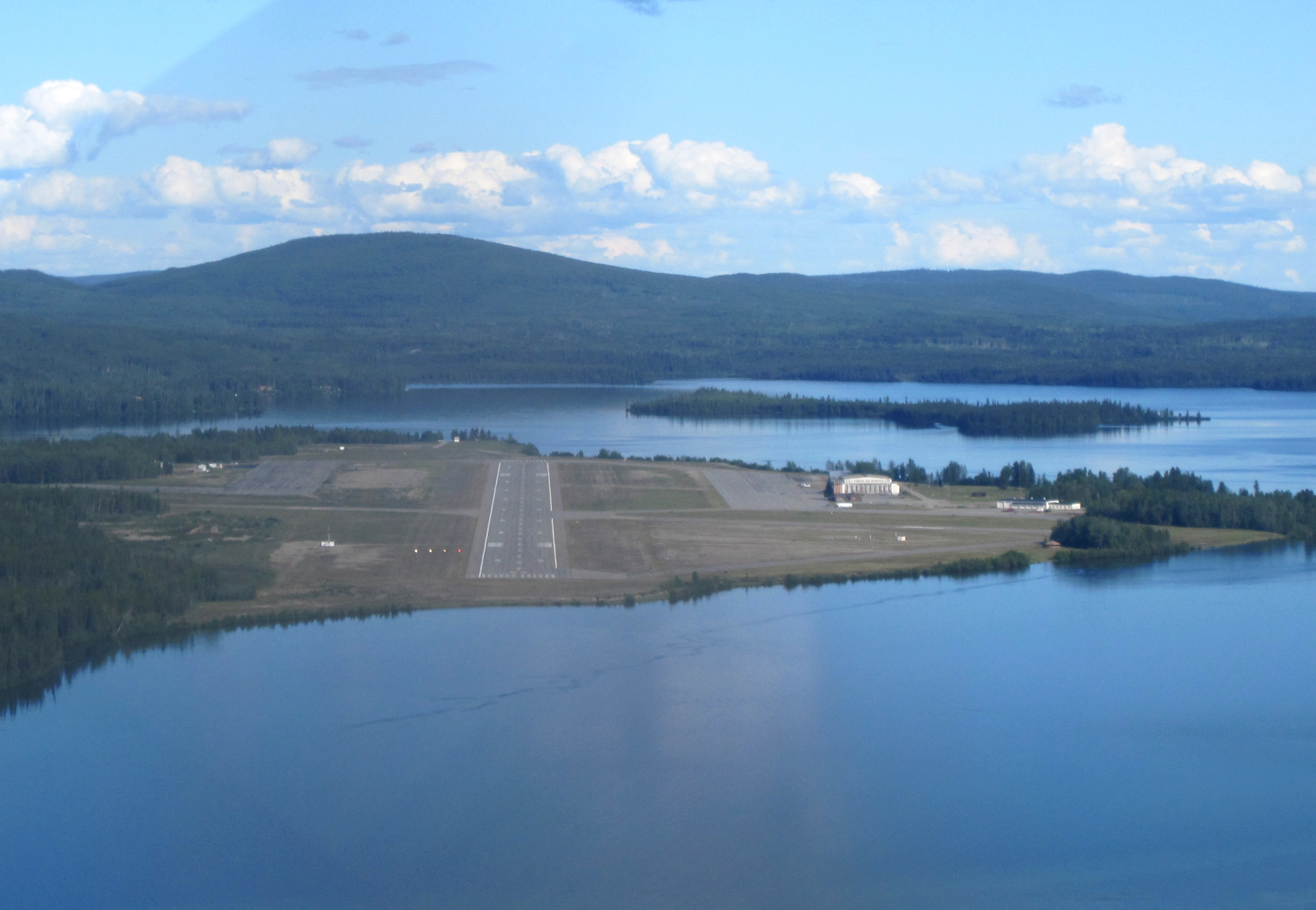
Located at 60.06°N, 128.71°W in Watson Lake, Yukon. From altitude, the Sign Post Forest appears as an unusual cluster of vertical elements near the highway junction - too regular to be natural trees, too extensive to be anything else. Watson Lake is a small highway town, visible as a cluster of buildings at the junction. The Alaska Highway stretches northwest toward Whitehorse; Highway 37 descends to British Columbia. The terrain is subarctic: boreal forest, lakes, and the transition zone between the Yukon and northern BC. The isolation is apparent - this is a supply stop in vast wilderness. The Sign Post Forest is a human mark in an unhuman landscape.